From Monologue to Magnum Opus: Bringing ‘Prima Facie’ to the Big Screen

Adapting a theatrical phenomenon into a feature film is a task fraught with peril. When that source material is a one-woman show—a singular, heart-stopping monologue that has conquered the West End, Broadway, and stages across the globe—the difficulty is compounded. Yet, filmmaker Susanna White has taken on the challenge with Prima Facie, a cinematic transformation of Suzie Miller’s Olivier and Tony-winning play.
Premiering at the 2026 Toronto International Film Festival, the film marks a significant evolution for the story, expanding Miller’s sharp critique of the legal system and its failures toward victims of sexual violence. While the stage version relied entirely on the tour-de-force performance of Jodie Comer, White’s film shifts the gaze, casting the formidable Cynthia Erivo as Tessa Ensler, a high-powered barrister whose life is irrevocably shattered by the very system she serves.
The Genesis of an Adaptation
The journey from stage to screen began long before the play reached its zenith in London. Susanna White recalls being introduced to Miller’s script when it was still in its nascent stages in Australia. "I fell in love with the passion of Suzie’s writing, her intelligence, her sense of mission, and her lightness of touch," White told IndieWire.
The primary hurdle was the form: a play consisting of a solitary voice. Translating that into a visual medium required more than just expanding the cast; it required a total reimagining of the narrative’s visual and auditory language. White’s approach was to pivot toward a more intimate, psychological study. "I needed to have confidence that the camera can see somebody’s thoughts, that it can see behind their eyes," she explained. Drawing inspiration from the psychological intensity of Darren Aronofsky’s Black Swan, White utilized a system of imagery and sound design to keep the audience rooted firmly in Tessa’s perspective, even as the world around her expands to include new characters and locations.

A Chronology of a Crisis
The film’s structure follows a deliberate, almost jarring arc. In the first act, we are introduced to Tessa at the height of her professional power. She is an elite barrister, comfortable in the trappings of a successful life in London, maneuvering through the legal system with a mix of pragmatism and ambition.
White worked closely with Miller to "open up" the narrative. While the play focused on the internal monologue of the protagonist, the film introduces a family dynamic and a budding romance with her colleague, Julian (Daniel Engs). This decision was strategic: "I wanted the movie, in the first act, to feel like a romantic comedy," White noted. "You want it to work out for them until it takes the turn."
That turn—the moment of sexual assault—serves as the film’s tectonic shift. It is here that White’s commitment to authenticity becomes most apparent. Rather than relying on stylized violence, White and her team focused on the chilling reality of the event. By utilizing an intimacy coordinator, Lizzy Talbot, and constructing a dedicated bedroom set that could be "demolished" at the end of the shoot, the production ensured that the emotional weight of the scene was handled with the necessary safety and gravity.
Authenticity and the Legal System
To capture the sterile, intimidating atmosphere of the courtroom, White leaned heavily into research. She spent significant time shadowing real barristers, observing the mundane, often indifferent nature of their daily work. This informed the casting of supporting roles, where White often opted for non-actors—real policemen, doctors, and nurses—to ground the film in objective reality.

"The touchstone is about veracity and authenticity," White said. "I observed that for barristers, this is just another job. Whereas for the people on the stand, their life can change from that experience." This contrast between the institutional nonchalance of the law and the visceral destruction of the victim is the heartbeat of the film.
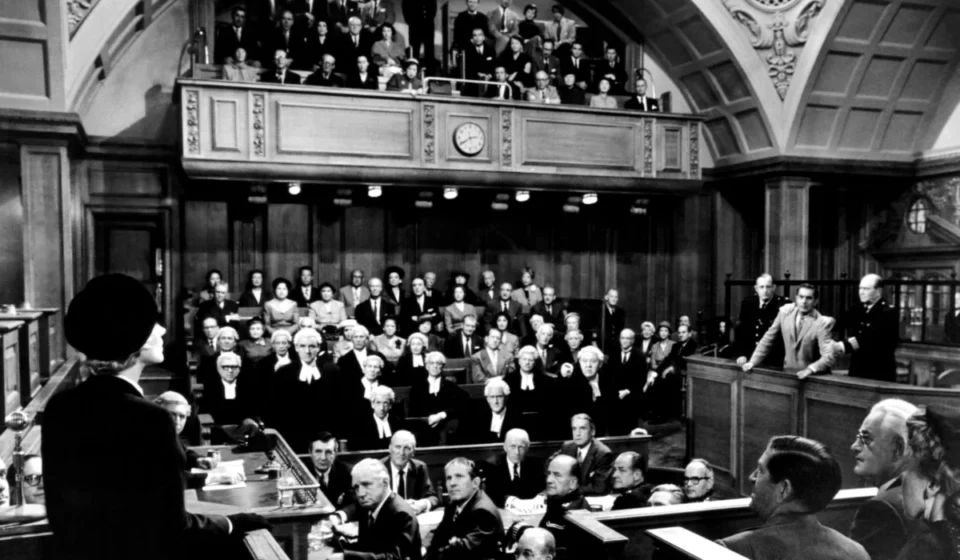
The film also captures the architectural intimidation of the Old Bailey. White, standing in the footsteps of directors like Billy Wilder—who famously utilized the location for Witness for the Prosecution—sought to highlight the rigidity of the legal system. "The law is really set very solidly in stone in these marble halls," White observed. "The message of the film is that we want the law to evolve and be organic."
The Erivo Factor: New Layers of Complexity
Casting Cynthia Erivo in the role of Tessa brought an entirely new dimension to the narrative. In the play, Tessa’s struggle was one of gender and class; in the film, race is added to the crucible.
"Tessa is an outsider in many ways," White explained. "She’s a woman in a man’s world, she’s working class in a world of people who are often quite entitled. Now we’re adding this other area of race." Erivo’s contribution to the screenplay was substantial, with the actress providing personal insights into her experiences, which Miller then integrated into the script. This collaborative process transformed the character into a multidimensional figure whose fight for justice is inextricably linked to her identity.

Implications for the Audience
The production team recognized early on that they were dealing with heavy subject matter that touches a significant portion of the population. One in three women, globally, has experienced some form of sexual violence, and this reality permeated the set. "We had to do a lot of looking after, not just in terms of the main cast, but in supporting our crew," White shared. "Often, we would have crew members in tears when we were shooting scenes because it was resonating for them."
The goal, according to White, is not merely to document trauma but to spark a broader, more urgent conversation. The film does not provide easy answers; instead, it leaves the audience with the discomfort of a system that is often ill-equipped to provide true justice.
"The ambition is that it’s a cinematic experience, but also that it’ll provoke conversations and stay with people," White said. "I hope they leave the cinema having those conversations."
Looking Ahead
As Prima Facie makes its rounds on the festival circuit, it remains in search of U.S. distribution, a process that will likely be bolstered by the critical reception of Erivo’s performance and the film’s unique blend of theatrical heritage and cinematic urgency.

When asked if Jodie Comer—the face of the play’s success—has seen the film, White admits she hasn’t yet, but expresses a clear hope that she will. The story of Tessa Ensler has become a living document, a narrative that has been adapted into over 50 countries and now, through White’s lens, has found a new, permanent form. Whether on the stage or on the screen, the core message remains the same: the law, as it stands, is failing the people it is meant to protect, and the time for a shift in perspective is long overdue.