

Becoming Captain: Paul Wesley on the Evolution of James T. Kirk in Star Trek: Strange New Worlds

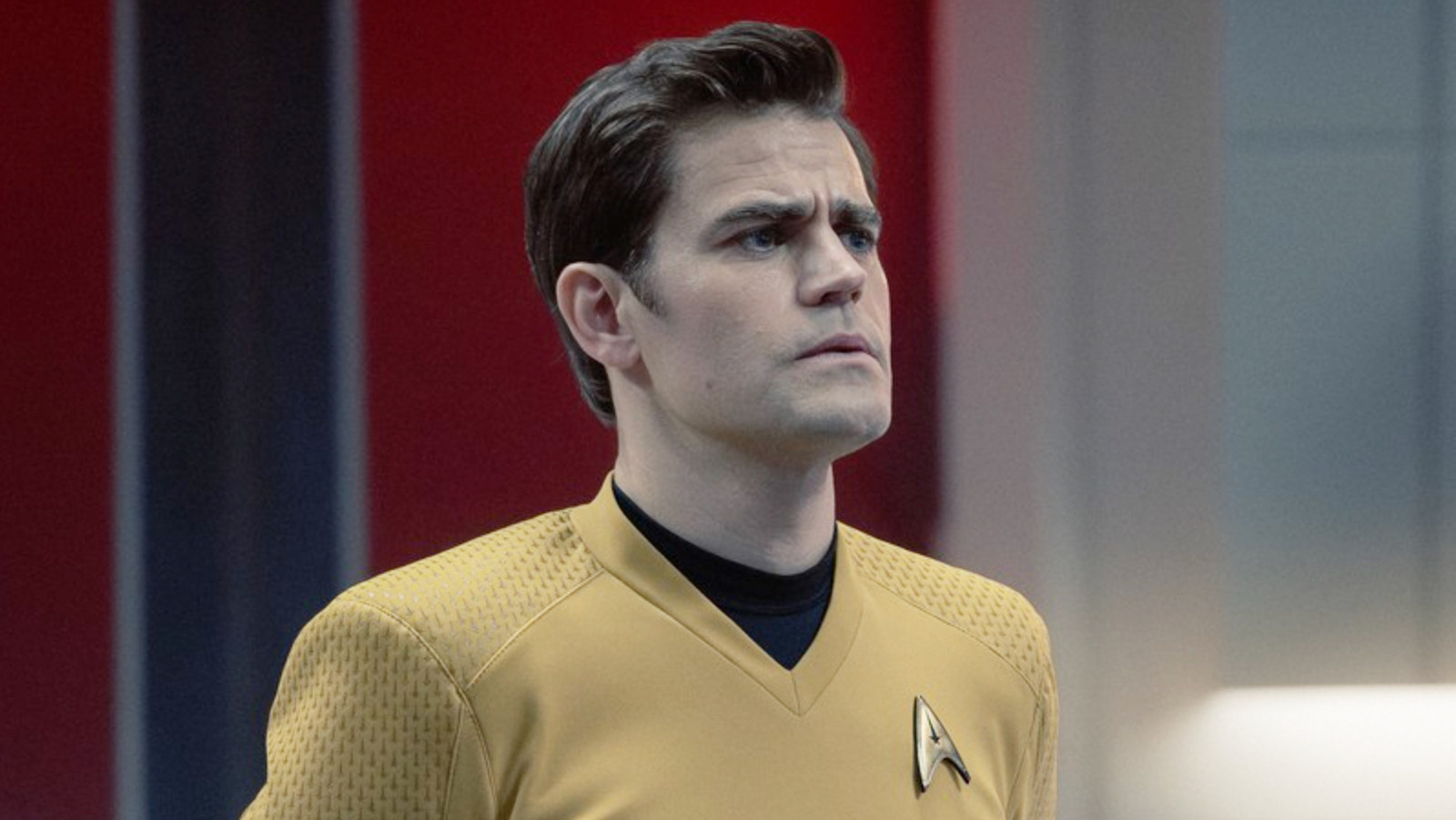
The mantle of James T. Kirk is perhaps the most iconic weight an actor can carry within the Star Trek franchise. Since William Shatner first stepped onto the bridge of the USS Enterprise in the 1960s, the character has become the archetype for the swashbuckling, intellectually daring, and deeply moral Starfleet captain. When Star Trek: Strange New Worlds announced the casting of Paul Wesley to portray a younger, pre-command version of Kirk, the weight of expectation was immense. However, as the series progresses into its fourth season, it has become clear that Wesley is not interested in a mere impression. Instead, he is crafting a nuanced, evolving portrait of a man who is not yet the legend we know, but a soldier on the path to becoming one.
In the pivotal eighth episode of Season 4, "Orders of Magnitude," Wesley’s Kirk is thrust into a crucible that tests not only his tactical acumen but his fundamental understanding of his own identity.
The Foundation: A Kirk in Development
To understand the significance of "Orders of Magnitude," one must first discard the notion that this is the finished, polished version of James T. Kirk that graced the original series. As Paul Wesley articulates, the current iteration of the character is defined by a lack of total self-assurance.
"I actually don’t think he’s the Captain Kirk we know and love yet," Wesley explained in an exclusive interview. "The Captain Kirk we know from The Original Series is a man who understands himself implicitly. He has a core of steel that doesn’t bend. The Strange New Worlds Kirk is still in a state of flux. He is trying to project the confidence of a captain to his crew, but internally, he is still navigating the gap between his ambition and his lived experience."
This distinction is crucial for the series’ narrative strategy. By showing Kirk as a man who must "earn" his unflinching nature, the writers provide a psychological depth that was rarely explored in the episodic format of the 1960s. For Kirk to become the leader who makes split-second decisions without second-guessing, he first needs to experience the agonizing weight of doubt.
Chronology of a Crisis: The Events of "Orders of Magnitude"
The narrative arc of "Orders of Magnitude" places Kirk in a high-stakes scenario that serves as the perfect foil for his character development. As he assumes the role of acting First Officer on the USS Enterprise, Kirk is forced to contend with Admiral Simon Reeger, portrayed by the legendary Joe Morton.
The conflict arises from a classic Star Trek moral dilemma: Admiral Reeger issues orders that involve the destruction of an entire planet. While the seasoned veteran expects blind obedience, the younger Kirk finds himself at a moral impasse. This serves as the primary catalyst for his growth.
- The Confrontation: Kirk is initially placed in a position of subservience to Admiral Reeger. The dynamic is designed to make the young officer feel "less-than," a tactic often used by authority figures to test the mettle of their subordinates.
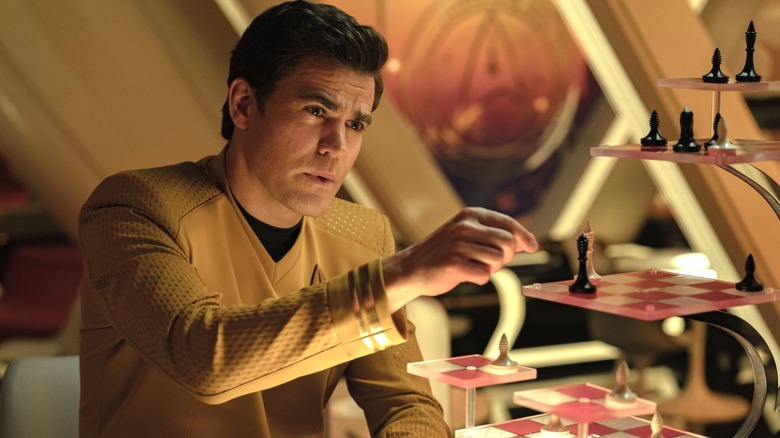
- The Tactical Chess Match: Realizing that he cannot challenge the Admiral through rank alone, Kirk must pivot to intellectual maneuvering. He treats the situation like a game of chess, using his wits to out-maneuver a superior officer who holds the keys to his career.
- The Revelation: Parallel to the tactical struggle, a deep-seated personal mystery regarding the Kirk family lineage begins to unravel. Kirk and his brother, Sam (Dan Jeannotte), uncover evidence that their father, George Kirk, was a much more significant figure in Starfleet history than they previously believed.
- The Resolution: The episode concludes not with a simple victory, but with a fundamental shift in Kirk’s perception of his own legacy, setting the stage for his eventual rise to command.
Supporting Data: The Impact of Vulnerability
The success of "Orders of Magnitude" hinges on the deliberate inclusion of vulnerability in a character traditionally known for his bravado. In modern television, the "invincible hero" trope is often viewed as a relic of a bygone era. Audiences today demand characters who are susceptible to emotional turbulence and tactical failure.
Paul Wesley notes that the scene work with Joe Morton was instrumental in grounding this episode. "I felt like I was doing a play," Wesley shared. "It was a really great one-on-one, just head-to-head. Having to go up against someone with the gravity of Joe Morton forced me to find a different register for Kirk. He had to be vulnerable, he had to feel the weight of that intimidation, and then he had to find the strength to rise above it. It’s an empowering arc for him because he doesn’t win by force, he wins by evolving."
This approach to the character also solves the "prequel problem" inherent in the Star Trek universe. If the characters are too self-aware of their eventual status, the audience becomes detached. By focusing on the "human" behind the "hero," Strange New Worlds maintains tension. We know Kirk survives to command the Enterprise, but we don’t know how he processes the trauma of his formative years.
The Familial Anchor: Redefining the Kirk Legacy
Perhaps the most surprising and resonant aspect of the episode is the exploration of the Kirk family dynamic. For decades, the lore surrounding George Kirk was sparse, leaving the audience—and the characters themselves—to wonder about the foundation of James T. Kirk’s drive.
The revelation that George Kirk’s career was suppressed due to the political machinations of figures like Admiral Reeger serves as a profound psychological breakthrough for James. "It provides some closure for Kirk," says Wesley. "He always struggled with the idea of his father. He wondered, ‘How am I going to be special if my dad wasn’t special?’ When he realizes that his father was special, and that his potential was artificially capped by the system, it shifts James’s entire worldview. He realizes that his own path to greatness is not just a fantasy; it is a legacy he is reclaiming."
This subplot effectively bridges the gap between the character’s personal insecurities and his professional ambition. It suggests that Kirk’s famous "cowboy diplomacy" may be a reaction to the bureaucratic injustice he witnessed early in his life.
Implications for the Future of Strange New Worlds
The implications of "Orders of Magnitude" are significant for the remainder of the season and beyond. By stripping away the layers of the "legend," Strange New Worlds is setting up a version of Kirk that feels earned. We are watching the distillation of a man who is learning which rules to follow, which to bend, and which to break.
As the series continues, the integration of Kirk into the Enterprise crew—and his burgeoning relationship with characters like Spock and Pike—will be viewed through the lens of this newfound maturity. He is no longer just a cameo appearance meant to elicit cheers from fans; he is an active participant in the moral philosophy that makes Star Trek endure.
The showrunners have successfully navigated the minefield of bringing a legacy character into a modern serialized drama. By allowing Paul Wesley to treat Kirk as a "work in progress," the series has transformed the prequel format from a restrictive box into a fertile ground for character exploration.
Conclusion: A Performance of Nuance
Paul Wesley’s portrayal of James T. Kirk is a testament to the idea that iconic roles are never truly finished. Through his performance in "Orders of Magnitude," he has demonstrated that the most interesting part of a hero’s journey is not the destination, but the arduous, often painful process of becoming.
As Star Trek: Strange New Worlds marches toward its season finale, the audience is left with a clearer understanding of why Kirk is the way he is. He is not a man born to command; he is a man who was forged in the fire of doubt, vulnerability, and the search for truth. With new episodes streaming every Thursday on Paramount+, the journey of the future Admiral is far from over, and if this episode is any indication, the best is yet to come.


















