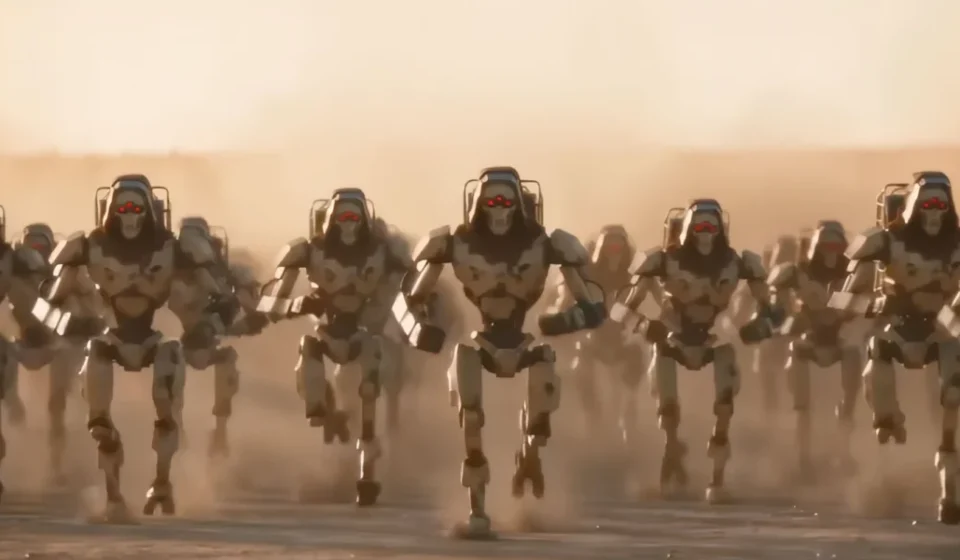
Beyond the Prompt: Autodesk Flow Studio Redefines AI Filmmaking Through 3D Control

The promise of generative AI in cinema has long been hampered by a fundamental disconnect: the "black box" nature of text-to-video models. For filmmakers, the ability to summon a dreamlike sequence from a few words is impressive, but the inability to iterate on that sequence with surgical precision has kept AI relegated to the realm of novelty rather than professional production.
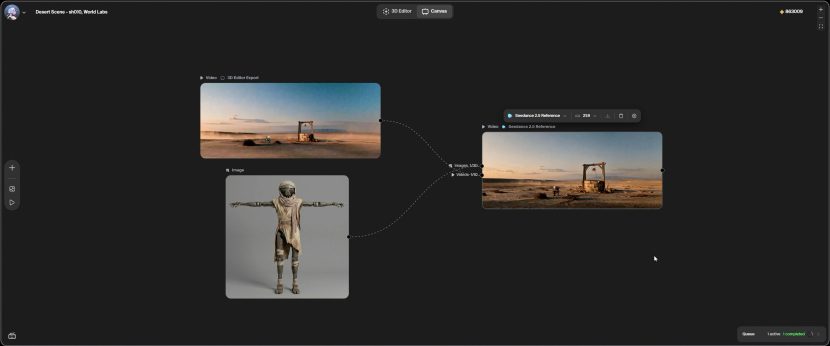
Autodesk is moving to shatter this ceiling with the evolution of Autodesk Flow Studio. By integrating a sophisticated 3D Editor with a node-based Canvas, the platform is shifting the industry’s focus from prompt-based generation to directable, scene-aware creation. This isn’t about replacing the director; it is about giving them the controls back.
The Evolution of Directable AI
In a recent episode of the fxpodcast, Nikola Todorovic—co-founder of Wonder Dynamics and a pivotal figure in Autodesk’s current generative strategy—outlined a new vision for production. The goal is not to "make a movie from a single prompt," but to embed generative AI into a robust, professional workflow.
"The system is designed for the filmmaker who knows exactly what they want," says Todorovic. By combining interactive 3D scene construction with the high-fidelity visual power of generative 2D models, Flow Studio bridges the gap between traditional pre-visualization and final-pixel output. This is a departure from the "statistically safest interpretation" that often plagues generative AI—a phenomenon critics frequently dismiss as "AI slop." Instead, Flow Studio demands creative specificity, allowing artists to reach into a shot and manipulate its DNA.

Solving the "Final 20 Percent"
A common refrain in the AI space is the "80/20 rule." Generative models can reach 80% of a desired result with incredible speed, but the final 20%—the specific, nuanced adjustments required to make a shot "work"—is where current tools collapse.
When a director demands a shift in a character’s gaze, a change in lighting temperature, or a slight adjustment to a camera path, prompt-only systems often force the user to start over, sacrificing the integrity of the original generation. Autodesk Flow Studio addresses this by grounding the process in 3D space. By defining cameras, blocking actors, and staging scenes in a 3D environment, the "final 20 percent" becomes a matter of technical adjustment rather than a game of prompt-based roulette.
Chronology: From Wonder Dynamics to Autodesk
The trajectory leading to Flow Studio is rooted in the success of Wonder Dynamics, which pioneered the integration of CG characters into live-action footage using a suite of 25+ machine learning and computer vision systems. That platform proved that AI could automate the heavy lifting of rotoscoping and lighting, provided it was anchored to a real performance.
Flow Studio represents the logical next step in this timeline:

- The Foundation: Wonder Dynamics established the viability of automated performance transfer.
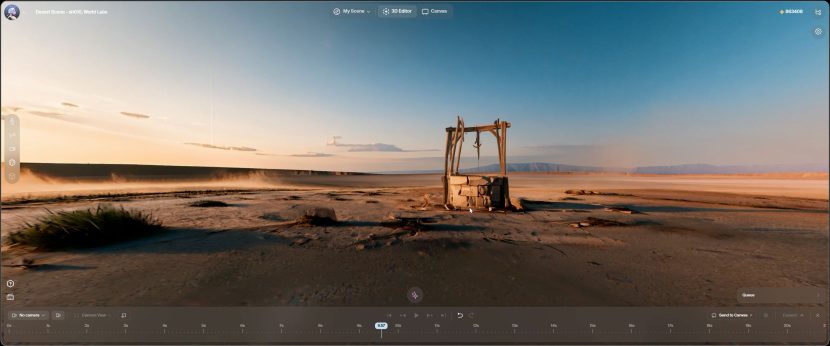
- The 3D Shift: Autodesk recognized that automation is insufficient without spatial awareness. The 3D Editor was developed to allow creators to assemble shots using existing animation, motion-capture data, and camera tracks.
- The Integration: The introduction of the "Canvas"—a node-based 2D environment—allows artists to leverage the best of generative video (lighting, atmosphere, simulation) as a layer on top of the 3D foundation.
- The Future: With the current iteration, Flow Studio has begun incorporating Gaussian splat-based worlds, utilizing technology like World Labs’ Marble to create spatially coherent environments for layout and design.
Performance Before Prompting
One of the most compelling arguments Todorovic makes is the necessity of human performance in a digital age. There is a prevailing trend toward "audio-driven" or "prompt-driven" animation, which often results in generalized, uncanny gestures.
Flow Studio takes a different approach. The workflow prioritizes recorded human performance. By capturing the timing, intent, and subtle physical nuances of an actor, and then using that data to drive the character, the platform preserves the soul of the performance. The AI is then used to "reshape" the final appearance, rather than "inventing" the performance from scratch. This focus on performance ensures that the output retains the idiosyncratic behavior that defines great acting—something a text prompt can rarely replicate.
Supporting Data and Production Utility
Flow Studio is designed to be cloud-based, ensuring that the 3D Editor remains highly responsive, even when handling complex scene data. While generation times for the final "Canvas" output vary depending on the model, resolution, and shot length, the platform is optimized to reduce the "time-to-first-frame" significantly.
The platform targets a wide spectrum of users, ranging from individual filmmakers and small creative teams of three to five people, all the way to massive, multi-departmental studio pipelines. Todorovic notes that the adoption curve follows a familiar pattern:
- Social/Experimental: Early adopters use the tools for rapid prototyping and social media content.
- Commercial/Independent: The tools move into higher-budget music videos and indie film productions, where iteration speed is critical.
- Studio Pipelines: Finally, the technology is stress-tested and integrated into major studio workflows, where consistency and control are the highest priorities.
Implications for the Industry
The shift toward 3D-directed AI has profound implications for the future of filmmaking.
1. Democratizing Complexity
Traditional CG pipelines often require an artist to construct an entire environment, even if the camera only captures a fraction of it. Flow Studio allows storytellers to focus their efforts precisely where the frame demands it, solving technical complexity in the background. This doesn’t replace the filmmaker; it empowers them to utilize complex techniques—like ray-traced lighting or advanced simulations—without needing a PhD in computer graphics.
2. The Death of "AI Slop"
The term "AI slop" has become a pejorative for the generic, over-smoothed, and oddly inconsistent imagery produced by unguided generative models. By providing a 3D architecture, Flow Studio forces a standard of spatial and cinematic coherence. If the camera is at a specific focal length, the 3D system ensures the perspective is correct. If the lighting is mapped to a 3D environment, the shadows will behave according to physical laws. This marriage of AI and physics is the antidote to the "slop" era.
3. A New Role for the Artist
As the barrier to technical execution lowers, the value of the "Director" role increases. When the machine handles the rendering and the physics, the human artist is free to obsess over blocking, composition, and performance. We are witnessing a shift where the role of the VFX artist evolves from "pixel pusher" to "virtual cinematographer."
Official Response and Future Outlook
Autodesk’s positioning of Flow Studio is clear: they are not trying to replace the film industry, but to modernize its tools. By providing a platform that respects the traditional language of cinema—camera lenses, staging, acting, and lighting—while harnessing the power of generative AI, they are creating a bridge between the old guard and the new.
"Filmmakers have always relied on specialists without personally solving every physical equation involved," Todorovic emphasizes. "The opportunity here is to give more storytellers access to that level of complexity."
As the platform matures, we can expect deeper integration of source-performance audio and even more granular control over the generative layers. For the independent creator, this means a studio-level production house in their web browser. For the industry at large, it marks the end of the "prompt-and-pray" era and the beginning of a more deliberate, directed approach to AI-assisted storytelling.
For those interested in the technical nuances of this transition, the full fxpodcast interview with Nikola Todorovic offers a deep dive into the underlying systems of Flow Studio, from the mechanics of performance capture to the future of real-time environmental generation. Whether you are a solo creator or part of a global studio, the message from Autodesk is clear: the future of filmmaking is not about the prompt—it is about the direction.