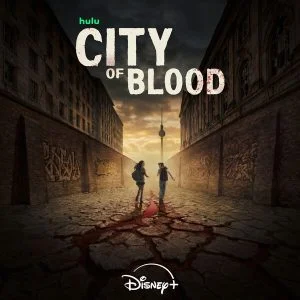
The Sonic Dystopia of Berlin: Michael Kadelbach’s Score for Disney+/Hulu’s ‘City of Blood’

In the ever-expanding landscape of prestige television, the fusion of atmospheric world-building and evocative sound design has become the hallmark of successful genre storytelling. This September, Disney+ and Hulu are set to push the boundaries of the dystopian thriller with their highly anticipated German original series, City of Blood. To underscore the tension of this high-stakes narrative, Hollywood Records has officially released the series’ original soundtrack, composed by the acclaimed Michael Kadelbach.
The album, now available across all major digital streaming and download platforms, provides a haunting window into a fractured version of Berlin. As the series gears up for its U.S. debut on September 16, the music offers an early, immersive look at the sonic identity of a city trapped in a cycle of corruption and survival.
Main Facts: The Sound of a Dystopian Capital
The release of the City of Blood soundtrack marks a significant milestone for Hollywood Records as it continues to curate scores that elevate international productions for a global audience. Michael Kadelbach, a composer known for his versatility in works such as Brick, One Trillion Dollars, and The Next Level, has crafted a score that serves as more than mere background accompaniment. It is a fundamental character in the series, reflecting the psychological toll of the narrative’s claustrophobic setting.
The series itself, an eight-part thriller, is a collaborative masterclass helmed by creators Philipp Kadelbach—who also serves as the lead director—and Elena Lyubarskaya. The narrative centers on two sisters navigating a dystopian Berlin, where the veneer of civilization is rapidly peeling away to reveal entrenched, life-threatening power structures. As the sisters uncover the truth, they are thrust into a conflict that threatens not only their lives but the very fabric of their society.
The ensemble cast is as formidable as the premise, featuring standout performances from Lea Drinda, Soma Pysall, Franz Hartwig, David Schütter, Jördis Triebel, Mouataz Alshaltouh, Dagmar Manzel, Jenny Schily, Melika Foroutan, Jan Georg Schütte, and Lars Eidinger.
Chronology of Production and Release
The journey of City of Blood from concept to global screen has been one of rigorous precision.
The Development Phase
The project was greenlit as part of Disney’s aggressive expansion into high-quality, region-specific European content. The vision of Philipp Kadelbach and Elena Lyubarskaya was to create a vision of Berlin that felt both grounded and terrifyingly futuristic. Throughout the writing process, the thematic motifs of the score were developed in tandem with the visual aesthetic of the show.
Scoring the Dystopia
Michael Kadelbach began the scoring process during the early stages of post-production. His approach was to utilize the architecture of Berlin—both its historical weight and its modern, cold glass-and-steel aesthetic—to inform the orchestration. By blending electronic synthesis with organic, often discordant orchestral elements, he captures the "blood" and "membrane" of the city described in the track titles.
The Marketing Push
- Early August 2026: Initial teasers are released, showcasing the visual intensity of the show.
- Late August 2026: The digital soundtrack is released via Hollywood Records, providing fans a chance to engage with the musical themes ahead of the premiere.
- September 16, 2026: The official launch of the series on Hulu in the United States and on Disney+ in international territories.
Supporting Data: The Musical Architecture
The album consists of 23 tracks, each serving as a narrative chapter. The progression of the music suggests a descent into a darker, more complex mystery.
| Track Number | Title | Duration |
|---|---|---|
| 1 | City of Blood | 0:32 |
| 6 | Lawal | 5:32 |
| 7 | Szen | 6:10 |
| 11 | A Place We Both Belong | 6:43 |
| 16 | Blood Membrane | 4:50 |
| 17 | Blood Rain | 6:06 |
| 23 | The Sun Is Up | 5:18 |
The tracklist suggests a narrative arc: starting with the brief, titular opening "City of Blood," the score expands into long-form, atmospheric pieces like "A Place We Both Belong" and "Blood Rain," suggesting moments of emotional weight or intense action sequences. The titles—ranging from "Disinfection" and "Safe House" to "They Are Monsters"—hint at the paranoia that defines the sisters’ journey.
Official Responses and Creative Vision
Philipp Kadelbach, in early press notes for the series, emphasized the importance of silence and sound as a tool for suspense. "In a city that is constantly watching you, the music shouldn’t just tell you how to feel," he noted. "It should make you feel the pressure of the environment."
Michael Kadelbach has spoken about the challenge of scoring a dystopian Berlin, noting that the city already carries so much history that the score needed to avoid clichés. "The goal was to create a sound that felt like it was emanating from the concrete itself," the composer stated. "It’s not just about the sisters; it’s about the city as a living, breathing, and occasionally hostile organism."
The inclusion of tracks like "Bea’s Transformation" and "Finding Phoebe" highlights the personal nature of the score, focusing on the character arcs that ground the high-concept dystopian elements.
Implications: The Future of International Thrillers
The release of City of Blood and its accompanying score is indicative of a broader shift in the television industry. With major platforms like Disney+ and Hulu investing in non-English language programming, the "prestige" tag is no longer exclusive to Hollywood-produced content.
Impact on Global Consumption
By releasing the soundtrack on global platforms such as Amazon, Disney is inviting international audiences to engage with German talent on a level playing field. The music acts as a bridge; even for viewers who may be unfamiliar with the German language, the emotional resonance of the score provides an entry point into the series’ intense narrative stakes.
The Role of Dystopian Fiction in Modern Media
The dystopian genre serves as a mirror for modern anxieties. By choosing a city as culturally and historically significant as Berlin, the creators of City of Blood are tapping into universal fears regarding surveillance, power, and the loss of individual autonomy. The score, characterized by its industrial undertones and moments of fleeting, fragile melody, reflects the fragility of the democratic ideal in the face of hidden, monolithic power.
A New Standard for Soundtracks
The digital-first release strategy for soundtracks is becoming the standard, allowing for instant gratification for fans who are increasingly seeking deeper connections with the media they consume. As streaming algorithms begin to prioritize "mood-based" playlists, the City of Blood soundtrack is perfectly positioned to reach audiences who appreciate dark, atmospheric, and tension-filled instrumental music, regardless of their familiarity with the show itself.
Conclusion: A Sonic Landscape Worth Exploring
As the September 16 premiere approaches, the release of the City of Blood soundtrack provides a compelling preview of what promises to be one of the most visually and sonically distinctive thrillers of the year. Michael Kadelbach’s score is a masterful achievement, capturing the cold, relentless pulse of a city in the throes of a transformation.
Whether listeners are diving into the album to prepare for the series or simply seeking a high-quality, immersive musical experience, the 23 tracks serve as a testament to the power of collaborative storytelling. As the sisters of City of Blood navigate the shadows of their dystopian home, they will be accompanied by a score that ensures the audience feels every beat of their struggle, every whisper of their secrets, and every drop of the blood that the title promises.
With a strong creative vision, a talented ensemble cast, and a score that demands to be heard, City of Blood is poised to become a landmark series for Disney+ and Hulu. As the sun comes up on this new, fictional Berlin, the music remains—a haunting reminder that in the city of blood, nothing is ever truly as it seems.