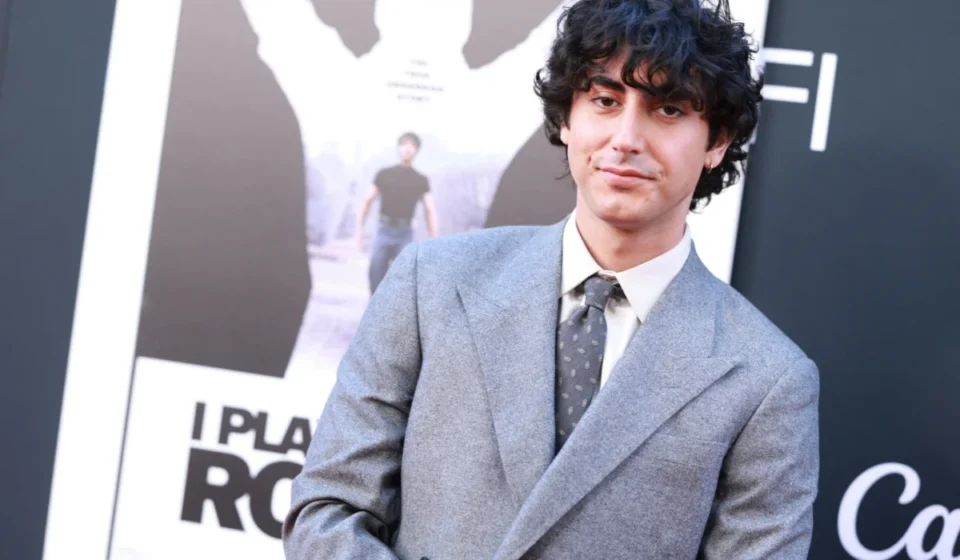
The Making of an Icon: Anthony Ippolito on Channeling Sylvester Stallone in ‘I Play Rocky’

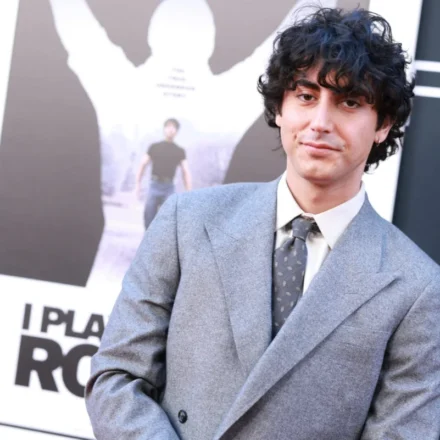
In the high-pressure ecosystem of Hollywood, where actors are often relegated to three-minute promotional soundbites, twenty minutes can feel like an eternity. When actor Anthony Ippolito overheard his allotted interview time before our meeting, his audible reaction—a surprised, “20 minutes?”—revealed the humble reality of an emerging talent suddenly thrust into the spotlight.
Ippolito, who previously gained industry attention for his portrayal of Al Pacino in the Paramount+ series The Offer, now finds himself at the precipice of true stardom. He has taken on the mantle of one of the most recognizable figures in cinema history: Sylvester Stallone. In the upcoming Amazon MGM film I Play Rocky, directed by Peter Farrelly, Ippolito doesn’t just play a character; he captures the grit, the desperation, and the singular, unyielding vision of a man fighting to bring his own creation to the world.
The Narrative Arc: From Nobody to Legend
I Play Rocky centers on the definitive “make-or-break” moment of Stallone’s career. Before he was the global action icon defined by his roles in Rambo or The Expendables, he was a struggling actor with a script that every studio in town wanted—but which no studio wanted him to star in.
The central conflict of the film is a masterclass in professional defiance. MGM was desperate to secure the rights to the Rocky screenplay, offering the then-unknown Stallone increasingly massive sums of money to relinquish the lead role. The industry consensus was clear: the script was gold, but the man was unproven. Stallone’s refusal to sell his dream, choosing instead to risk financial ruin for the sake of his artistic integrity, serves as the heart of the film.

For Ippolito, capturing this spirit required more than just mimicry; it required a deep dive into the psyche of a young man who had everything to lose.
A Chronology of Preparation: The Method Behind the Muscles
When asked about his preparation, Ippolito emphasizes his focus on a specific era of Stallone’s life. "I really tried to stay focused on a period of time," he explains. He spent hours rewatching the franchise, but specifically honed in on the raw vulnerability of the early films.
Interestingly, Ippolito cites the later installment, Rocky Balboa (2006), as a key touchstone. "It’s one of the best movies of the franchise," he notes. "It’s really powerful that he was able to come back many years later, after the fifth one, and make this incredible movie."
Ippolito’s audition process was, in many ways, a reflection of the film’s central theme: relentless, unauthorized persistence. He sent in multiple tapes, utilizing an old punching bag and boxing gloves to convey the physicality of the character before he even had the full script. "I was just really passionate about the project," Ippolito recalls. "I wanted to put myself out there in a way… and then continuously send them stuff until they relented."

Supporting Data: The Professional Ecosystem
The production of I Play Rocky was not without its own meta-drama. In a bizarre turn of events, there was a public communication breakdown regarding Stallone’s involvement. A year prior to the film’s release, reports surfaced that Stallone claimed to know nothing about the project.
According to Ippolito, director Peter Farrelly had met with Stallone early on to discuss his level of involvement. The goal was to ensure the film felt authentic and uncompromised, leading to an agreement that Stallone would remain at a distance. When Stallone later told the press he was unaware of the film, it wasn’t a snub—it was a misunderstanding of that "separation" agreement. "Peter was like, ‘What are you doing?’ And Stallone said, ‘You told me to separate myself.’ And Peter was like, ‘Not that far, man!’" Ippolito laughs.
Once the air was cleared, Ippolito had the opportunity to speak with the legend himself. "He was really, really generous and disarming and very willing to share what that period of time was like for him," Ippolito shares. The most revealing insight came from Stallone’s discussion of his early days as an usher, where he studied filmmaking and screenwriting. "Hearing his perspective and his clinical breakdown of how he approaches a script… it was hugely informative."
The "Rhinestone" Factor: Beyond the Boxing Ring
Our conversation takes a turn toward the eclectic corners of Stallone’s filmography, specifically the 1984 musical comedy Rhinestone, in which Stallone starred alongside Dolly Parton.

"I think Dolly Parton is spectacular in that," Ippolito says. "She has such a warmth to her. They are dynamic." The mention of Rhinestone highlights a broader truth about the subject: Stallone’s career is not merely a trajectory of muscle-bound action, but a strange, fascinating experiment in genre and celebrity.
When asked if he would ever consider a hypothetical "I Play" series—perhaps I Play Cobra or I Play Nick Martinelli—Ippolito remains playfully guarded but acknowledges the thematic weight of his current role. He believes there is a universal lesson for actors in the Rocky story: the necessity of having a support system.
"As much as you want to see Stallone persevere and be a lone wolf, there’s a lesson to be found in Sasha [Stallone’s then-wife, played by AnnaSophia Robb]. You need that person sometimes in your life. You need someone to remind you to believe in yourself."
Implications for the Industry
The success of I Play Rocky hinges on whether modern audiences will connect with the "starving artist" archetype in an age where the mechanics of fame have become entirely algorithmic.

By grounding the film in the gritty reality of 1970s Hollywood—a time when an unknown could theoretically demand the keys to the kingdom through sheer willpower—the movie challenges the current studio model. It serves as a reminder that the most "commercial" products often originate from the most stubborn individual visions.
For Ippolito, the film is a stepping stone into a new tier of acting. He speaks with admiration about filmmakers like Martin Scorsese, Richard Linklater, and Derek Cianfrance—directors who possess a "singular" voice. He aspires to work with those who take risks, much like the version of Stallone he portrays.
As we wrapped up our twenty minutes, it became clear that Ippolito had successfully navigated the interview with the same quiet intensity he brought to the screen. He isn’t just playing a legend; he is learning from the blueprint of one.
I Play Rocky is set for release by Amazon MGM Studios. It will arrive in select theaters on Friday, November 6, before a wide release on Friday, November 20. Whether or not the film achieves the box-office dominance of the original Rocky, it has already succeeded in doing one thing: proving that Anthony Ippolito is a talent capable of holding his own in the ring with a giant.