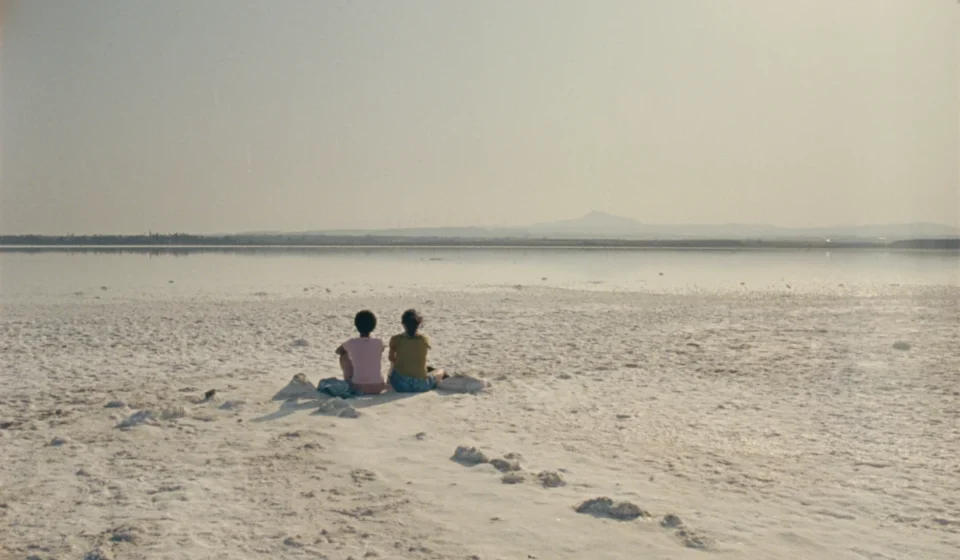
Beyond the Hierarchies of Pain: Tonia Mishiali’s ‘The Lion at My Back’ Debuts at Karlovy Vary

The 58th Karlovy Vary International Film Festival (KVIFF) continues its tradition of showcasing socially conscious cinema that bridges the gap between personal trauma and geopolitical reality. Among the most anticipated entries in this year’s prestigious Crystal Globe competition is The Lion at My Back, the second feature film from acclaimed Cypriot director Tonia Mishiali. Following her well-received debut Pause (2018), Mishiali returns with a poignant, albeit tonally complex, exploration of two women living on the fringes of society in Cyprus.
The Lion at My Back is a film that challenges the viewer to reconsider the "hierarchy of suffering." By juxtaposing the life of a young African asylum seeker with that of a local recovering addict, Mishiali suggests that pain is not a competitive sport, but rather a bridge—provided those experiencing it are willing to look past their differences. While the film has garnered attention for its raw performances and observational grit, it has also sparked debate regarding its stylistic shifts and a third-act lurch into melodrama.
Main Facts: A Study in Contrasts
At its core, The Lion at My Back is a dual character study set against the sun-bleached but often harsh backdrop of modern-day Cyprus. The narrative follows two protagonists: Mariama (played by Sokhna Diallo), a young refugee of African descent, and Stella (played by Elena Kallinikou), a cynical, middle-aged local woman working at a refugee processing center.
The film’s primary thesis is the dismantling of perceived barriers between the "native" and the "migrant." Mishiali uses the relationship between these two women to explore how shared vulnerability can supersede cultural and linguistic divides. Produced under the banner of Cypriot cinema—a region increasingly recognized for its "weird wave" and social realism—the film aims to humanize the statistics of the Mediterranean migrant crisis without losing sight of the domestic struggles of the Cypriot working class.
Key Production Details:
- Director: Tonia Mishiali
- Lead Cast: Sokhna Diallo, Elena Kallinikou
- Genre: Social Drama / Neo-Noir
- Festival Status: In Competition, Crystal Globe (Karlovy Vary International Film Festival)
- Setting: Cyprus
Chronology: From Celebration to the Underworld
The film’s narrative structure is built on a series of intersecting orbits that gradually pull the two women into a shared, often dangerous, gravity.
The Threshold of Adulthood
The story begins with a deceptive sense of warmth. Inside a modest refugee center, staff and residents gather to celebrate the 18th birthday of Mariama. Mariama, who speaks with a distinct French accent, carries herself with a buoyant optimism that belies her precarious situation. However, the celebration is short-lived. In a brutal display of bureaucratic indifference, Mariama’s transition to adulthood means she is no longer eligible for the center’s protection. She is evicted almost immediately, left to navigate the streets of an unfamiliar country with no resources.
The Silent Observer
Watching this unfold is Stella, an employee at the center whose "steely-eyed" demeanor suggests a deep-seated burnout. Stella is a woman of few words, struggling with a history of drug addiction and the agonizing separation from her young daughter. While she initially appears indifferent to Mariama’s plight, a lingering gaze shared during the birthday party suggests a subterranean connection. When Stella finds Mariama sleeping on the center’s doorstep the following morning, she doesn’t offer immediate salvation, but her silent observation hints at a growing moral conflict.
The Unlikely Alliance
As Mariama attempts to build a life—showing a remarkable, perhaps naive, ability to find work and make friends—she remains tethered to Stella. Whether it is Mariama’s intuition or a calculated attempt to stay close to someone with "insider" status, the two begin an uneasy friendship. Stella eventually helps Mariama find housing and employment, but as their bond deepens, the roles of "helper" and "helped" begin to blur.
The Descent into Melodrama
The final act of the film marks a significant tonal shift. Stella, desperate to secure a lease for a flat to regain custody of her daughter, finds herself in financial ruin. Ignoring the safer, albeit slower, help Mariama offers, Stella retreats into her past, seeking out a former pimp. Here, the film sheds its observational skin and adopts the tropes of a crime thriller—complete with neon-lit underworlds and high-stakes exchanges—leading to a climax that many critics argue feels disconnected from the grounded realism of the first two acts.
Supporting Data: Thematic and Technical Analysis
To understand the impact of The Lion at My Back, one must look at the specific directorial choices and social contexts Mishiali employs.
The "Wise Foreigner" Trope
One of the more contentious elements of the film is its portrayal of Mariama. Critics have pointed out a tension in the writing: Mariama often risks becoming the "wise foreigner" cliché—a character who possesses an innate spiritual wealth and resilience that serves primarily to heal the "broken" Westerner (Stella). However, Mishiali attempts to subvert this by giving Mariama her own agency and showing that her optimism is a survival mechanism rather than a lack of depth.
Observational Realism vs. Neo-Noir
For the majority of its runtime, the film utilizes a handheld, observational style. This approach keeps the camera close to the protagonists, capturing the micro-expressions of Elena Kallinikou, whose performance is a masterclass in suppressed rage and longing. The sudden shift in the final act to a "film noir" aesthetic—characterized by stylish lighting and a faster pace—serves to mirror Stella’s internal chaos but has been criticized for undermining the "raw and visceral quality" of the established bond between the women.
Socio-Political Context of Cyprus
Cyprus serves as a vital character in the film. As a frontline state for migration into the European Union, the island is a pressure cooker of humanitarian need and local economic anxiety. By placing a Cypriot addict and an African refugee in the same frame, Mishiali highlights that both are victims of systemic failures, albeit in different ways.
Official Responses and Critical Reception
The reception at Karlovy Vary has been a mixture of high praise for the performances and caution regarding the film’s concluding chapters.
The Director’s Vision:
In press statements, Tonia Mishiali has emphasized that the film is about "the invisible threads that connect us." She sought to explore how two people from entirely different universes could find a common language in their shared trauma. Her goal was to move away from the "pity" often associated with refugee stories and focus instead on "everyday courage."
Critical Consensus:
- Performance: Sokhna Diallo and Elena Kallinikou have been widely lauded. Diallo brings a refreshing energy to the role of Mariama, while Kallinikou provides the film’s emotional anchor.
- Tone: The primary critique involves the "sentimental flourishes" and the "unnecessarily melodramatic final act." Reviewers from outlets like Variety noted that the film is "at its best when it stops short of waxing lyrical about the beauty of connection."
- The Ending: The concluding images, which lean heavily into themes of motherhood, have been described by some as "putting a neat bow" on a story that was far more interesting when it was messy and unresolved.
Implications: The Future of Social Realism in Cinema
The Lion at My Back serves as a significant case study for the current state of European social cinema. Its presence in the Crystal Globe competition signals a continued appetite for narratives that tackle the migrant crisis, but its reception suggests that audiences and critics are becoming more discerning about how these stories are told.
The Danger of the "Neat Ending"
The film’s struggle to maintain its grounded tone in the face of a "crime film" finale suggests a broader industry pressure to provide "satisfying" or "dramatic" resolutions to stories that, in reality, rarely have them. The implication is that for social realism to remain potent, it must resist the urge to fall back on genre tropes to sustain interest.
Redefining Solidarity
The film’s most lasting implication is its successful argument against the "hierarchy of suffering." By showing that a local woman with citizenship can be just as "lost" as a stateless refugee, Mishiali promotes a brand of solidarity based on shared human frailty rather than political alignment.
A Milestone for Cypriot Film
Regardless of the critiques regarding its final act, The Lion at My Back is a landmark for the Cypriot film industry. It proves that small-nation cinema can tackle global themes with world-class acting and a sophisticated visual language. Tonia Mishiali remains a vital voice in Mediterranean cinema, pushing the boundaries of how we perceive the "other" in an increasingly fractured world.
As the Karlovy Vary festival concludes, The Lion at My Back will likely continue its journey through the international circuit, sparking necessary conversations about the intersection of friendship, trauma, and the cinematic representation of those the world often chooses not to see.