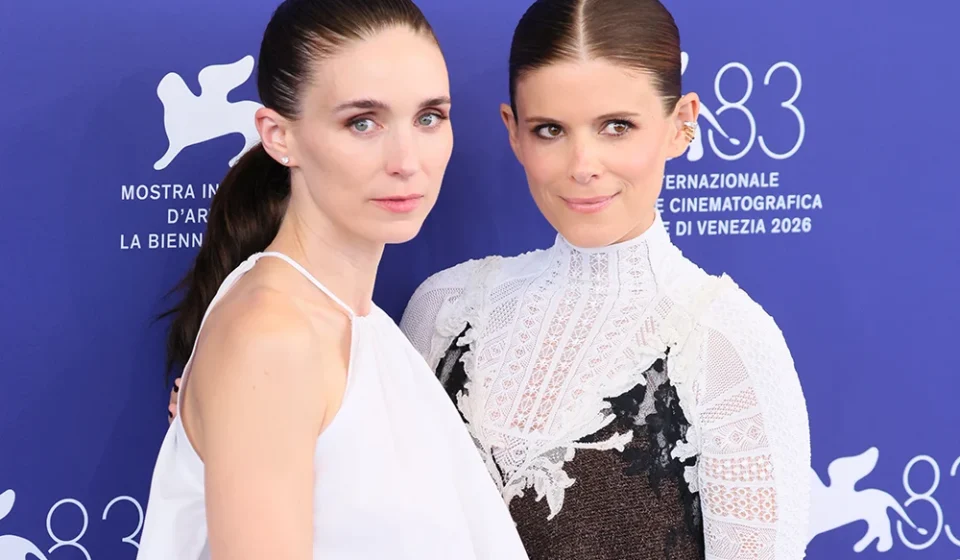

At the 81st Venice Film Festival, the Lido was electrified not merely by the presence of legendary German auteur Werner Herzog, but by the surreal, highly anticipated premiere of his latest feature, Bucking Fastard. The film, a bizarre and hypnotic exploration of twin identity, marks a historic cinematic milestone: the first time sisters Rooney and Kate Mara have shared the screen.
For Herzog, a filmmaker whose career has been defined by the pursuit of the "ecstatic truth" in documentaries and the fever-dream intensity of features like Aguirre, the Wrath of God and Nosferatu the Vampyre, this project represents a long-gestating obsession. The film follows two sisters whose lives are so inextricably intertwined that they share the same dreams, the same romantic obsessions, and, most notably, the ability to speak in perfect, chilling unison.
The Genesis of a Singular Vision
The path to Bucking Fastard was far from linear. Herzog revealed during a Venice press conference that the concept had been gestating for years, trapped in the ether of his imagination. "I have carried this idea with me for a long time," Herzog noted, his signature gravelly voice commanding the room. "But it was only when I met the Mara sisters that it became clear that this could be done. There is a, how shall I say, a spectral resonance between them that cannot be manufactured."
The film is loosely inspired by the true, tragicomic story of British identical twins Freda and Greta Chaplin. In the mid-20th century, the sisters became tabloid sensations in the United Kingdom after developing an all-consuming, dual fixation on their neighbor. Their shared obsession eventually spiraled into a legal nightmare, culminating in a restraining order. The film’s provocative title—Bucking Fastard—is derived from a notorious, simultaneous spoonerism uttered by the twins during their court proceedings, a moment that encapsulates the film’s blend of absurdity and profound psychological isolation.
The Mechanics of Unison: A Performance Challenge
For the Mara sisters, the prospect of playing characters who function as a single unit was initially met with trepidation. Rooney Mara, known for her meticulous approach to roles in The Girl With the Dragon Tattoo and Carol, admitted that the premise felt "daunting."
"The idea that we were going to be playing this kind of single person, split across two bodies, felt like an impossible technical hurdle," Rooney explained. "But we found, quite quickly, that we didn’t need to ‘act’ the connection. We have a lifetime of history, a childhood of playing together, and an unspoken world between us. We didn’t have to work very hard to create that syncopation; it was already there."
Kate Mara, whose extensive credits include House of Cards and American Horror Story, described the process of learning to speak in unison as a "musical" endeavor. "It felt like a song," she remarked. "We had this rhythm together that felt almost involuntary. It was surprisingly natural—more so than we ever expected."
Herzog, famously known for his intense and sometimes unorthodox directing style, expressed complete faith in his leads. Although the production had allotted two weeks for the sisters to rehearse their synchronized dialogue, Herzog famously cut the process short after only five days. "I had complete confidence in them," the director stated. "They hardly needed any rehearsal. When you have two performers who are already operating on the same frequency, to over-rehearse is to risk killing the magic."
Supporting Data and Production Context
The film’s supporting cast adds weight to its surreal narrative, with Orlando Bloom and Domhnall Gleeson playing pivotal roles in the sisters’ orbit. The inclusion of such high-caliber talent highlights the industry’s ongoing fascination with Herzog’s unique methodology.
Production-wise, Bucking Fastard stands out for its deliberate, almost stage-like blocking, which emphasizes the sisters’ physical proximity. By utilizing long takes, Herzog forces the audience to confront the unsettling nature of their synchronicity. This is not a film of quick cuts; it is a film of endurance, demanding that the viewer sit with the discomfort of two people who are, for all intents and purposes, the same person.
The film also serves as a testament to the sisters’ individual versatility. Rooney Mara’s history of portraying internal, quiet characters is perfectly balanced by Kate Mara’s background in high-tension drama, creating a synergy that elevates the script’s more outlandish elements into something deeply poignant.
Herzog’s Legacy and the Venice Connection
Werner Herzog’s return to the Venice Film Festival is, in many ways, a homecoming. The festival has long served as a launchpad for his most daring works. From the 1991 premiere of Scream of Stone to the 2009 black comedy Bad Lieutenant: Port of Call New Orleans, Herzog has consistently used the Lido to challenge the boundaries of narrative cinema.
However, the mood at this year’s conference was tempered by a somber reflection on mortality and artistic legacy. The film is dedicated to the late David Lynch, a close friend and fellow pioneer of the surreal. When asked about the dedication, Herzog’s usually stoic demeanor softened.
"I wish he could be in my first audience," Herzog said, looking out over the crowd. "We shared a language of the strange, a way of looking at the world that is not common. Now, since he is not with us anymore, I wish I could turn the wheel of time back and invite him tonight. It is a loss that lingers."
Implications for Future Independent Cinema
The success—or at least the massive cultural curiosity—surrounding Bucking Fastard signals a shift in how audiences are engaging with independent, auteur-driven cinema. In an era dominated by franchises and digital spectacle, a film that relies entirely on the nuanced, rhythmic, and psychological connection between two actors is a radical statement.
The implications for the Mara sisters are equally significant. While both have established stellar solo careers, this project proves they possess a unique "dual-star power" that could redefine their trajectories. For Herzog, the film confirms his position as a director who remains, well into his eighties, capable of reinventing his own language.
Conclusion: The "Ecstatic Truth" of the Mara Sisters
As Bucking Fastard moves from the festival circuit to a wider release, it will undoubtedly remain one of the most discussed films of the year. Whether audiences find the sisters’ synchronized dialogue haunting, hilarious, or deeply unsettling, the film succeeds in its core mission: to make the viewer question the boundaries of individuality.
In the end, Herzog’s experiment with the Mara sisters is a reminder that cinema, at its best, is a medium of discovery. It is not about the script or the budget; it is about the "unspoken world" between performers. As Rooney Mara put it, "I’ve never laughed so much, it was a very once-in-a-lifetime, unique experience." That sense of discovery, of two sisters finding a shared rhythm in the chaos of a Herzogian nightmare, is exactly what makes Bucking Fastard a landmark in contemporary film.
The film does more than just tell a story about obsession; it captures the essence of a shared soul. And in that, Herzog has once again found his "ecstatic truth," hidden in the cracks of a spoonerism and the synchronized voices of two of Hollywood’s most compelling performers.