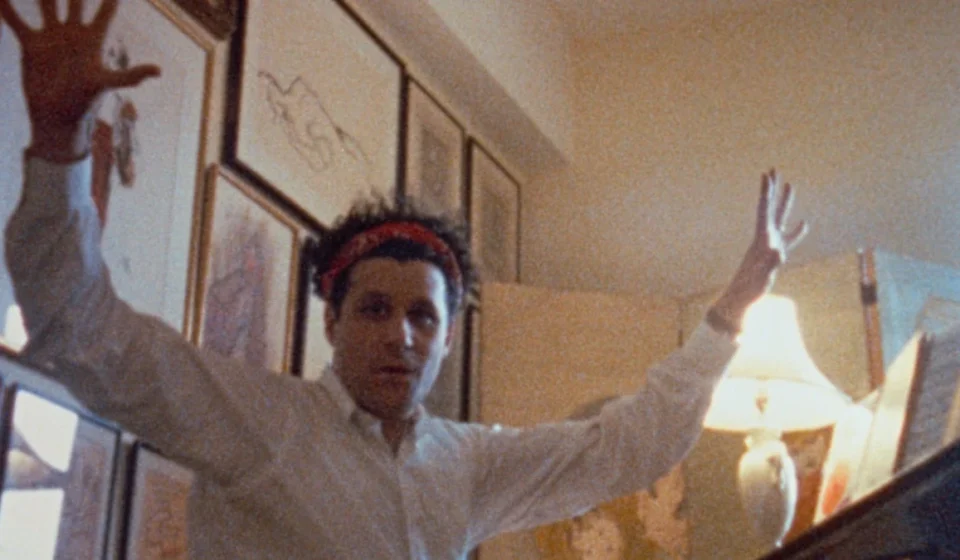

In the realm of documentary filmmaking, the line between observer and participant is rarely as thin as it is when the subject is also a lover. It is a precarious ethical tightrope, one that risks collapsing the objective distance required for a "true" portrait in exchange for a perspective of profound, often uncomfortable, intimacy. Few films navigate this territory with as much grace, frustration, and historical significance as Douglas Keeve’s 1995 documentary Unzipped.
Thirty years after it first captured the frantic, glamorous, and high-stakes world of 1990s New York fashion, Unzipped returns to theaters this weekend in a stunning 4K restoration. Supervised by Keeve himself—and championed by his former partner and the film’s subject, Isaac Mizrahi—the re-release offers a chance to re-examine not just a seminal work of vérité filmmaking, but the evolution of a relationship that defined a cultural moment.
A Chronology of a Creative Collision
To understand the weight of Unzipped, one must understand the New York of 1994. It was a city caught between the grit of the late eighties and the gloss of the coming digital age. Isaac Mizrahi was the industry’s golden boy—a designer whose "Nanook of the North"-inspired collection for the 1994 Paris Fashion Week served as the film’s central narrative anchor.
At the time, the Mizrahi fashion house was operating under the heavy financial backing of Chanel. It was a decade before the designer would pivot to his now-iconic, mass-market diffusion line at Target, and long before his signature "Eraserhead" shock of hair and flamboyant personality became household staples of daytime television.
Keeve, a photographer and filmmaker, found himself in the unique position of being both behind the lens and at the center of the designer’s personal life. The filming process was not a structured production in the traditional sense; it was an exercise in total immersion. As the documentary chronicles the chaotic preparation for the runway show, it captures the raw, unfiltered essence of a creative mind under pressure.
Following its debut at the 1995 Sundance Film Festival, where it secured an audience award, the film became an instant classic of the genre. However, the professional triumph was shadowed by the dissolution of the directors’ romantic life. The film, which had been a labor of love, suddenly became a historical artifact of a relationship that had, by the time of the premiere, effectively ended.

The Anatomy of the Intimacy
Critics have long debated whether the act of filming one’s partner is an act of love or an act of exploitation. Keeve, speaking to IndieWire, is refreshingly pragmatic about the blurred lines.
"Did the movie break us up? I’m not sure I know how to answer that because relationships are so complicated," Keeve said. "Isaac is complicated, I’m complicated. So you have two complicateds, plus a complicated world. Our lives were so different, and in some ways, I couldn’t quite keep up with his."
Keeve describes the inherent friction of their lifestyles: "Isaac goes to two cocktails at dinner and an after-hours party in one night, every night. And I just couldn’t do that. I had my own working life, and it was busy. He wanted a partner who could share those things, which I think is correct. There was so much external pressure from different things."
Despite the personal toll, Keeve maintains that the documentary was never the catalyst for their split. "The movie came in, and the movie had nothing to do with our breakup at all," he insists. "There was pressure around finishing the movie because we had a deadline, but I was so in love with Isaac and in love with just who he is. The movie is—I hate to say it because when you make a movie like that, it just becomes utter rubbish—but it is a love letter to him, I think, because he’s just so extraordinary."
Supporting Data: The Cultural Zeitgeist of 1995
The restored version of Unzipped acts as a time capsule for an era that has recently seen a surge in nostalgia. For audiences currently enamored with the aesthetic of 1990s New York—evidenced by the recent cultural preoccupation with the lives of figures like Carolyn Bessette-Kennedy—the film is an essential text.
The documentary features an ensemble of fashion icons who were, at the time, at the absolute zenith of their power: Naomi Campbell, Christy Turlington, Linda Evangelista, Cindy Crawford, and Kate Moss. Watching them move through the frames of Unzipped is a masterclass in professional performance.

Keeve notes that the "diva" moments captured on screen were, in many ways, collaborative. "There are a lot of people who say that Linda is the greatest fashion model who ever lived, and it’s arguable, but Linda in the show, where she’s having a hissy fit, and then another hissy fit, and then another hissy fit, to me, I can see that she knows exactly what to do," he explained. "She’s turning it on for the camera. She’s not so much that person, but she knows we’re making a movie… She just turns to the camera, and she gives this look like she’s just staring at the camera like, ‘I dare you to judge me or whatever,’ and then she turns away. For me, that’s an incredible moment."
Official Perspectives: The "Frenemy" Dynamic
Perhaps the most surprising aspect of the film’s legacy is the enduring, albeit unconventional, bond between Keeve and Mizrahi. Despite the breakup, the two have remained in each other’s orbits, collaborating on the recent restoration.
"We’ve always been frenemies, and I still love Isaac. He’s amazing," Keeve says. This dynamic extended to the editing room in 1995. Keeve famously kept the footage shielded from Mizrahi until the final cut was ready.
"I wouldn’t show Isaac the movie when we were editing it at all, and only when I was happy with it, I brought it to him," Keeve recalled. "There may be those moments in the movie that may seem like I’m shooting him in the bathtub and exploiting him, but I just always had a camera, and Isaac is somewhat oblivious to the camera in a way."
This "obliviousness" allowed for scenes that feel startlingly intimate—Mizrahi on the phone with his mother, Sarah, in the bathroom, entirely unbothered by the lens. These moments provide a window into the "fraught but close" dynamic of the Mizrahi family, a theme that provides the film with its most human, and often humorous, emotional beats.
Implications for Modern Filmmaking
The restoration, led by the Sundance Institute and the UCLA Film & Television Archive, invites a modern audience to consider what has changed in the thirty years since Unzipped hit screens. In an age of social media, where "behind-the-scenes" access is curated and commodified, the unpolished, raw vulnerability of Unzipped feels radical.

For Keeve, watching the restored footage is less about the technical polish of the 4K scan and more about the emotional resonance of the past. "When I’m watching the movie, I’m not really looking at the technical part of the film about how the diamond has been polished even more. I’m really seeing those moments and feeling those feelings."
The implications for the documentary craft are clear: the best work often requires the creator to risk everything. By refusing to sanitize his partner or the industry, Keeve created a film that survives its own period, transcending the fashion world to become a universal study of ambition, love, and the price of artistic obsession.
Unzipped is currently playing at the Film Forum in New York, with an expansion to Los Angeles and other major markets scheduled for October 9. As the industry celebrates this return, the film serves as a reminder that the most compelling stories are often those we are too close to see clearly until time provides the necessary distance.