Box Office Report: ‘Chiikawa’ Maintains Stranglehold on South Korean Cinema Amidst Contested Political Dramas

Main Facts: A Market Defined by Animation and Tension
The South Korean box office experienced a noticeable cooling period over the weekend of October 23–25, with total nationwide revenue dipping to $5.6 million, down from the previous week’s $6.7 million. Despite the contraction in total market volume, the Japanese animated phenomenon Chiikawa the Movie: The Secret of the Mermaid Island continued to defy gravity. In its fourth week of release, the film exerted a dominant force over the domestic landscape, securing nearly 45% of all ticket revenue.
According to the latest data provided by the Korean Film Council’s (KOBIS) tracking service, Chiikawa grossed an impressive $2.5 million from 320,293 admissions across 1,115 screens. This performance underscores the enduring appeal of the property, which has transformed from a beloved manga by Nagano into a cinematic juggernaut under the direction of Kei Oikawa.
While the top of the chart belongs to family-oriented animation, the remainder of the box office reflects a complex intersection of historical revisionism, psychological tension, and high-stakes thriller narratives. The disparity between the runaway success of Chiikawa and the more modest, albeit controversial, performance of domestic political dramas highlights a shifting appetite among Korean moviegoers.
Chronology of the Weekend
The weekend performance was characterized by a mix of established holdovers and a flurry of mid-week debuts that struggled to break the momentum of the market leader.
- October 21: Mid-week releases including Paradise Lost, Clayface, Still Shining, Verity, and Killing Time hit theaters, attempting to leverage early buzz before the weekend rush.
- October 23–25: Chiikawa the Movie solidified its lead, maintaining a massive 44.7% market share. Meanwhile, Hur Jin-ho’s The Assassin(s) successfully defended its second-place position, fending off the newcomer Paradise Lost.
- October 25: By the close of the weekend, total cumulative hauls for the season’s heavy hitters—namely The Odyssey and Tazza: The Song of Beelzebub—continued to climb, though at a decelerated pace.
Supporting Data: A Deep Dive into the Numbers
The following table summarizes the market performance for the period of October 23–25:
| Title | Weekend Gross | Admissions | Market Share |
|---|---|---|---|
| Chiikawa the Movie | $2.5M | 320,293 | 44.7% |
| The Assassin(s) | $0.52M | 68,241 | 9.2% |
| Paradise Lost | $0.50M | 66,699 | 8.9% |
| Clayface | $0.38M | 48,245 | 6.9% |
| Tazza: The Song of Beelzebub | $0.37M | 46,919 | 6.6% |
The data reveals a stark gap between the leader and the chasing pack. Chiikawa, having launched on September 30, has reached a cumulative haul of $17.5 million with over 2.2 million admissions. In contrast, the second-place The Assassin(s) has seen a longer, more arduous run, accumulating $25 million since its September 23 premiere. The newcomer Paradise Lost, directed by Yeon Sang-ho, had a respectable opening, though its $769,865 total gross since the 21st suggests it may have difficulty displacing the top two contenders in the coming weeks.
Official Responses and Industry Contention
The most significant narrative thread this weekend is the ongoing controversy surrounding The Assassin(s). The political thriller, which chronicles the 1974 assassination attempt on President Park Chung-hee, has become a lightning rod for national debate.
Conservative civic groups and bereaved family members have lodged formal defamation complaints, alleging that the film distorts historical facts regarding the death of First Lady Yuk Young-soo. These groups argue that the film’s narrative framing serves a political agenda rather than historical accuracy.
In response to the legal and public pressure, 19 prominent film guilds issued a joint statement earlier this month. The guilds defended the production, emphasizing the sanctity of cinematic freedom and the right of filmmakers to interpret historical events. This clash between artistic license and historical sensitivity has arguably fueled interest in the film, helping it maintain a stable audience despite the persistent political blowback.
Thematic Analysis of New Debuts
The weekend saw a surge in thrillers, indicating a seasonal shift in viewer preferences as the year-end approaches.
Paradise Lost (Yeon Sang-ho)
Opening in third place, Paradise Lost marks another ambitious project for director Yeon Sang-ho. Starring Kim Hyun-joo and Bae Hyun-sung, the film is a taut psychological thriller centered on a mother’s desperate search for her son within a closed, oppressive religious community. Having premiered at the Toronto International Film Festival, the film carries a prestige pedigree that helped it capture 8.9% of the market in its opening frame.
Clayface (Warner Bros. / DC)
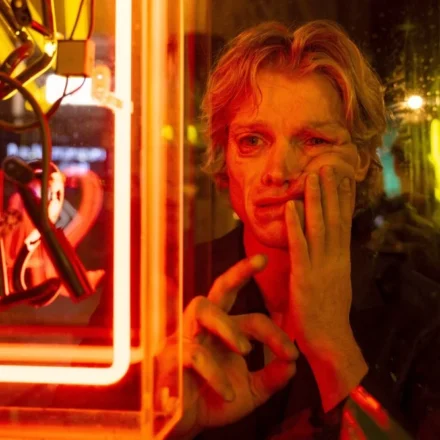
The DC entry Clayface opened in fourth place, managing to secure a 6.9% share. While it failed to disrupt the top three, its debut earnings of $388,947 indicate a solid, if not spectacular, interest in the DC brand within the Korean market.
Still Shining (Song Il-gon)
Song Il-gon’s period drama, Still Shining, took the sixth spot. Starring the legendary Kim Hye-ja, the film’s focus on the emotional, lifelong bond between two women during the Japanese colonial era offers a poignant contrast to the high-octane thrillers dominating the rest of the list.
Killing Time (Jang Jun-yeob)
Rounding out the top ten, Killing Time serves as a grim reflection of contemporary anxieties regarding social media culture. The plot, involving a YouTube crew forced into a real-life deadly game after an accident during a broadcast, taps into the "survival game" subgenre that has seen consistent success in Korean cinema. With $135,388 in total gross, the film is currently a niche performer, but its premise suggests it may find a secondary life on streaming platforms.
Implications for the Korean Film Industry
The current box office landscape offers several key insights into the state of the Korean film industry:
- The Dominance of "Soft" IP: The success of Chiikawa suggests that, despite the popularity of gritty political dramas and thrillers, there is an insatiable appetite for lighter, character-driven animation that resonates with both youth and family demographics.
- Historical Sensitivity remains High: The controversy surrounding The Assassin(s) confirms that period pieces dealing with the Park Chung-hee era remain "third-rail" topics. For distributors, this means that while historical dramas can command significant attention, they come with a high risk of public and legal scrutiny.
- Market Volatility: The decline in total market gross from $6.7 million to $5.6 million is a sobering reminder of the industry’s post-pandemic volatility. The absence of a massive, multi-quadrant global blockbuster has left the market reliant on a mix of local titles and specific international hits, making the box office more susceptible to week-to-week fluctuations.
- The Rise of the "Genre Hybrid": With Paradise Lost and Killing Time gaining traction, it is clear that Korean audiences continue to gravitate toward high-concept thrillers that combine social commentary with intense, suspense-driven narratives.
As the industry moves toward the final quarter of the year, the performance of these films will likely dictate the strategy for major distributors. If Chiikawa continues its streak, it may force theaters to reconsider the allocation of screens for live-action dramas, potentially squeezing the window for mid-budget domestic releases. For now, the Korean box office remains a fascinating battleground where anime mascots and political history share the marquee, each vying for the attention of a discerning, and occasionally polarized, audience.