The Great Reclaiming: How Asian Cinema is Redefining the American Repertory Landscape

Over the past few years, the landscape of American film distribution has undergone a seismic shift. While the industry frequently obsesses over the latest blockbusters and streaming metrics, a quiet revolution has been unfolding in the darkened corners of art-house cinemas and independent theaters. Repertory exhibition—the practice of screening classic, restored, or previously neglected films—has become one of the fastest-growing sectors in the North American film economy. Yet, beyond the rising frequency of archival restorations returning to the big screen, a more profound transformation has taken root: Asian cinema has moved from the periphery to the very heart of this movement.
For decades, the “canon” of Asian cinema accessible to American audiences was limited to a predictable, albeit brilliant, constellation of auteurs: Akira Kurosawa, Yasujirō Ozu, Kenji Mizoguchi, Wong Kar-wai, Edward Yang, and Hou Hsiao-hsien. Today, a new generation of distributors, archivists, and programmers is dismantling these barriers, expanding the American cinephile imagination to include filmmakers who once existed only in the margins of international film studies.
A New Era of Accessibility and Discovery
The sheer breadth of titles that have graced American screens in the last year alone serves as a testament to this shift. Audiences from New York to Los Angeles have been granted the rare opportunity to experience diverse works such as Stanley Kwan’s Center Stage, Katsuhito Ishii’s The Taste of Tea, Shunji Iwai’s All About Lily Chou-Chou, and the kinetic, high-octane action of Ringo Lam’s Full Contact.

For many of these films, this is more than a revival; it is a debut. A significant portion of these titles never received a proper theatrical release in North America, while others had languished in obscurity, absent from both physical cinema schedules and digital streaming platforms for decades. By bringing these works back to the light, a growing network of cultural gatekeepers is fundamentally rewriting the narrative of what "Asian cinema" represents in the Western consciousness.
Chronology of a Shift: From Niche to Necessity
The evolution of this trend can be traced through the changing strategies of specialized distributors. In the early 2010s, repertory screenings were largely confined to high-brow institutions and specific film festivals. However, the maturation of digital restoration technology, combined with a post-pandemic hunger for communal theatrical experiences, provided the perfect catalyst for change.
Jonathan Howell, founder of Big World Pictures, recalls the skepticism he faced when first championing the works of Tsai Ming-liang. "When I was preparing to release Rebels of the Neon God, a colleague said it was ‘brave’ to release it theatrically," Howell told IndieWire. "In hindsight, that was a sign of having lived in the bubble of NYC cinephile culture. It wasn’t as readily accepted by audiences as I had thought it would be."

Yet, through years of persistence, the tide turned. By 2020, even as the pandemic threatened the viability of theatrical exhibition, distributors like Big World were already deep into the "long slog" of securing high-quality film elements—often tracking down obscure producers and rights holders to ensure that directors like Tsai could see their visions restored in 35mm. The subsequent success of The Hole and the continued, steady demand for Jia Zhangke’s Still Life demonstrate that audiences are no longer content with the "greatest hits" of world cinema; they are hungry for depth, complexity, and historical context.
Supporting Data: The Economics of the Repertory Boom
The success of these endeavors is not merely anecdotal. It is backed by tangible engagement metrics that prove repertory cinema is a viable, if modest, commercial engine.
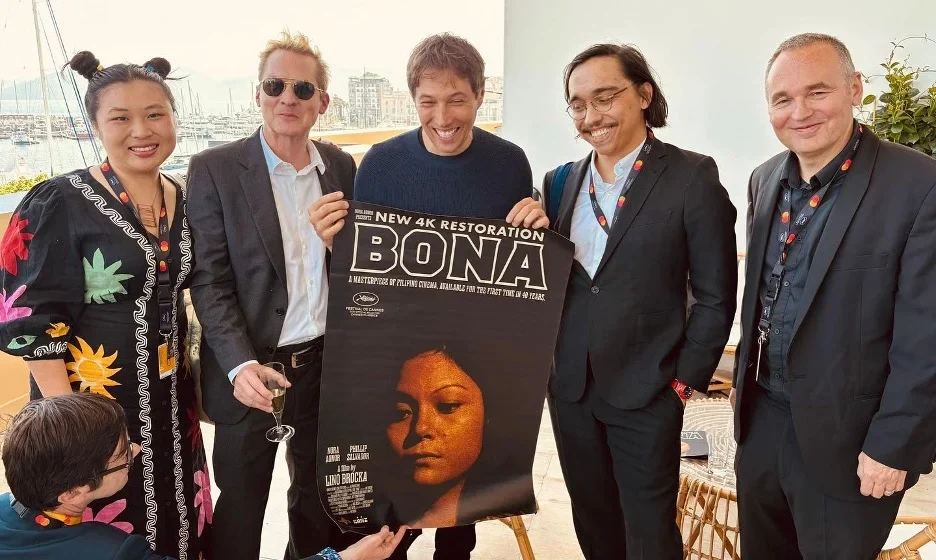
Consider the case of Tsai Ming-liang’s Rebels of the Neon God. Following a Lincoln Center debut, the film saw limited runs across the country. While it might have been viewed as a niche release, its 25 engagements proved that there was a nationwide audience for demanding, non-traditional Asian cinema. Similarly, Kani Releasing, a label founded in 2021 by Pearl Chan and Ariel Esteban Cayer, has successfully utilized a dual-pronged strategy of home video and theatrical distribution to bring under-represented national cinemas—such as those of the Philippines and Malaysia—into the American spotlight.

Kani’s approach reflects a departure from the traditional festival-to-disappearance model. "We wanted to create a distribution environment where our love for repertory and contemporary Asian cinema could co-exist," Cayer noted. By hitting between 15 and 30 screens per film, Kani has proven that even "difficult" films like Lino Brocka’s Macho Dancer or Jeong Jae-aeun’s Take Care of My Cat can build a sustainable, albeit measured, theatrical footprint.
Official Perspectives: The Role of the Curator
The industry experts driving this movement emphasize that the primary goal is education and discovery. For Bret Berg, theatrical sales director at the American Genre Film Archive (AGFA), the current moment is defined by a lack of baggage.
"Most people are seeing it for the first time," Berg says, referencing the recent 11-title Golden Princess restoration project that introduced North American audiences to the work of John Woo and Tsui Hark. Unlike the "classic" status afforded to films like Jaws, these titles offer the excitement of a blank slate.

This educational component is vital. Many of the independent cinemas currently driving this trend are managed by programmers who grew up in an era without access to Hong Kong action cinema or Taiwanese New Cinema. Consequently, the act of programming these films is a process of self-discovery for the exhibitor as much as the audience.
Arbelos, co-founded by Ei Toshinari and David Marriott, takes this a step further by focusing on the transformative power of restoration. For Toshinari, the restoration of Toshio Matsumoto’s Funeral Parade of Roses was not just a technical upgrade; it was a reclamation of a transgressive masterpiece. By moving beyond simple release windows and thinking in terms of "decades," Arbelos has turned forgotten or deteriorated files—often sourced from illegal download sites like Karagara—into pristine, 4K-restored experiences that occupy a permanent, legitimate place in film history.
Implications: A Broader History of International Cinema
The implications of this movement extend far beyond the box office. We are witnessing a fundamental recalibration of global film history. As AGFA’s Bret Berg suggests, there is a structural bias in Western programming that has historically placed action cinema below horror or science fiction in terms of "artistic value."

"Ringo Lam is like Paul Verhoeven; he is at that level," Berg argues. "I hope that five years from now, enough people have seen the John Woo movies to put them at the same level as James Cameron or Sylvester Stallone."
By challenging these hierarchies, distributors are doing more than selling tickets; they are legitimizing entire genres and national traditions that were previously dismissed as "genre" or "foreign." The current surge in interest regarding J-horror (such as the upcoming Pulse re-release) and Italian giallo alongside Asian dramas signals a more holistic approach to world cinema.
Conclusion: The Theater as a Living Archive
Ultimately, the resurgence of Asian cinema within the American repertory circuit is a symptom of a larger, more hopeful trend: the return of the audience to the movie theater. Whether it is a sold-out screening of a 35mm print of Hard Boiled in Mexico or an intimate Q&A with director Angie Chen at a festival in Bologna, the physical act of gathering to watch these films is creating a new, globalized cinephile culture.

As the lines between "canon" and "obscurity" continue to blur, the American imagination is being expanded. These distributors and programmers are not just preserving the past; they are ensuring that the future of cinema is one that recognizes the full, complex, and vibrant history of Asian filmmaking. In doing so, they have secured a place for these masters in the pantheon of international art, ensuring that for years to come, audiences will continue to discover exactly how "fucking awesome" these films truly are.