The Haunting That Never Quite Takes Flight: A Critical Analysis of Tim Riedel’s Ancestral Beasts

The landscape of modern horror has seen a welcome shift toward "elevated" narratives, particularly those that seek to excavate the darkest corners of human history through the lens of the supernatural. When Red River Métis director Tim Riedel announced his debut feature, Ancestral Beasts, the genre community took notice. Following its successful stint as a Frontieres Platform Project at the 2025 Cannes Film Festival and a subsequent World Premiere at the 2026 Fantasia Film Festival, the film arrived with a heavy burden of expectation.
Riedel’s project aims to bridge the gap between visceral, haunted-house terror and the profound, systemic intergenerational trauma faced by Indigenous communities in rural Canada. However, while the ambition behind the project is undeniable, the final product suggests a filmmaker struggling to reconcile high-concept social commentary with the rigid, often dusty tropes of traditional genre cinema.
Main Facts: The Premise and the Players
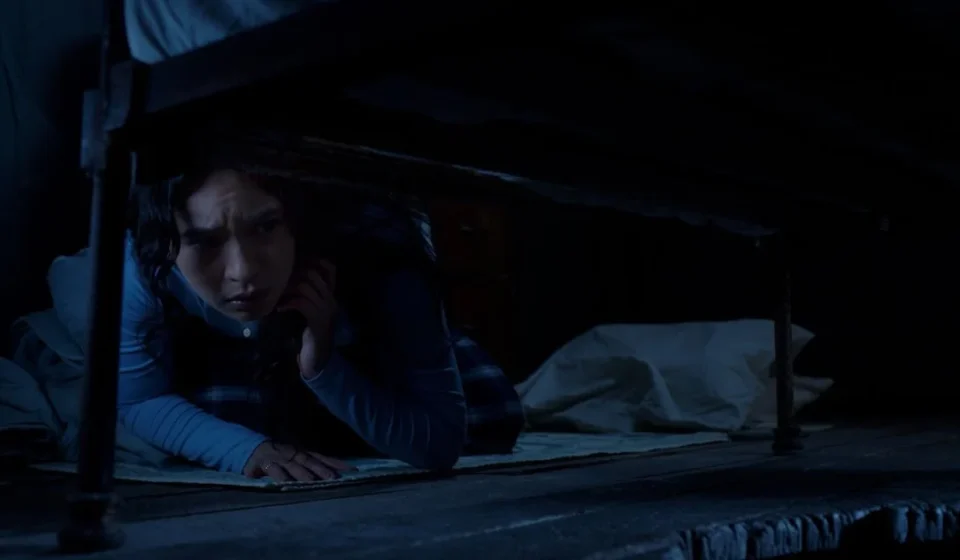
Ancestral Beasts centers on Elyse (played by Morgon Homstrom), a woman grappling with the aftermath of a traumatic familial loss. Following the death of her mother—an event shrouded in supernatural ambiguity—Elyse retreats to a secluded rural cabin, a classic horror setting intended to facilitate a mental health reset. Instead, she finds herself besieged by a malevolent presence that seems inextricably linked to her own bloodline and the historical injustices that have plagued her family for generations.
The production is backed by a team that clearly understands the thematic gravity of the subject matter. Yet, the film suffers from a lack of cohesion. While Homstrom delivers a performance that highlights her commitment to the role, the screenplay often restricts her to a singular emotional register. Rather than feeling like a living, breathing protagonist, Elyse often functions as a narrative device—a vessel for the film’s message rather than a character with internal agency.
The supporting cast, including Darla Contois as Elyse’s overbearing sister, Nikki, provides a necessary foil, yet their interactions are frequently marred by dialogue that feels more like a lecture than a natural conversation.
Chronology: From Cannes to Fantasia
The trajectory of Ancestral Beasts is a testament to the high hopes the industry held for Riedel’s vision.
- 2025 – The Cannes Connection: The project first garnered industry attention as part of the prestigious Frontieres Platform Project at Cannes. This designation usually signals a project of high artistic merit and commercial potential, positioning Ancestral Beasts as a "must-watch" for genre distributors and festival programmers alike.
- Early 2026 – Production and Post: Throughout the early months of 2026, details regarding the film’s aesthetic choices began to surface. Cinematographer Joey Forte and composer Justine Delorme were tasked with creating a sonic and visual landscape that could balance the stark reality of the Canadian wilderness with the supernatural dread of the cabin.
- Summer 2026 – The Fantasia Premiere: The film finally saw its World Premiere at the 2026 Fantasia Film Festival. The response from critics was largely polarized, praising the film’s thematic bravery while lamenting its execution and reliance on familiar, tired horror genre "greatest hits."
Supporting Data: Technical Flaws and Thematic Hurdles
A critical examination of Ancestral Beasts reveals a film caught between two worlds. On one hand, Riedel is clearly attempting to deconstruct the "trauma-horror" subgenre. The inclusion of a podcast featuring a land acknowledgment serves as a clear indicator of the film’s desire to ground its supernatural elements in contemporary Indigenous reality.
However, these intellectual foundations are often undermined by technical choices that fail to land:
The Cinematography and Score
Joey Forte’s cinematography is described by many as "washed-out," an aesthetic choice that fails to elevate the tension. Instead of creating a sense of dread or isolation, the visual palette often renders the film’s most intense moments feeling flat and uninspired. Similarly, Justine Delorme’s score, while functional, lacks the distinctiveness required to transform the film’s "haunted house" segments into something truly memorable.
![‘Ancestral Beasts’ Review: Promising Debut That Never Takes Off [Fantasia]](https://www.dreadcentral.com/wp-content/uploads/2026/05/ANCESTRAL-BEASTS.jpg)
Narrative Contrivance
The film’s pacing is perhaps its most significant detractor. Riedel attempts to pack too much into the runtime: a rotating cast of neighbors, a subplot involving a local gym owner, and a series of "creepy neighbor" tropes culled directly from the Tobe Hooper playbook. By the time the film reaches its climax, it feels less like a cohesive narrative and more like a blender of disparate ideas. The transition into a Babadook-esque exploration of mental illness feels rushed, trading the tactility of practical effects for digital representations of trauma that feel surprisingly weightless.
Official Responses and Creative Intent
In various interviews throughout the festival circuit, Tim Riedel has emphasized that Ancestral Beasts was a deeply personal project, born from his own connection to his heritage and a desire to see Indigenous stories told through the horror medium.
"I wanted to confront the ghosts of the past," Riedel noted during a Fantasia press junket. "For me, the cabin isn’t just a location; it’s a repository for the things we refuse to talk about—the systemic, the personal, and the inherited."
While the sincerity of this statement is beyond reproach, critics argue that the film’s "optics" often overshadow its narrative. The therapy scene, which has become a point of contention among reviewers, is frequently cited as an example of the film’s tendency to prioritize "telling" over "showing." By literalizing the trauma in such a blunt manner, the film loses the nuance that makes the best of the "elevated horror" subgenre so effective.
Implications for the Future of Indigenous Horror
The failure—or, more accurately, the uneven success—of Ancestral Beasts carries significant implications for the future of Indigenous-led horror. The genre is currently in a state of rapid expansion, with more filmmakers from marginalized backgrounds receiving the funding and platform to tell their stories.
- The Burden of Representation: When a film is marketed as an exploration of Indigenous trauma, it is often held to a higher standard than its peers. The critique here is not that Riedel shouldn’t have tackled these subjects, but rather that the genre’s tropes are often insufficient vessels for such heavy, specific histories.
- The "Trauma-Horror" Fatigue: Critics are increasingly weary of films that use "trauma" as a catch-all for supernatural manifestations. For the next wave of Indigenous horror to succeed, filmmakers must move beyond the "haunted house" framework and find new, indigenous-centric ways to externalize internal pain.
- The Path Forward: The industry is still clearly interested in Riedel’s voice. Despite the lukewarm reception of this debut, the fact that he secured a platform at both Cannes and Fantasia suggests that the infrastructure for his career is already in place. The lesson for Riedel, and for other emerging directors in this space, is that passion must be matched by structural discipline. A film about the weight of history cannot afford to be light on its own narrative feet.
Final Verdict
Ancestral Beasts is a film of "what-ifs." It is a noble, well-intentioned project that deserves credit for its attempt to elevate the conversation surrounding Indigenous representation in horror. However, it is ultimately a film that gets lost in its own house. By relying on tired genre conventions and a script that often sacrifices character depth for thematic posturing, it fails to achieve the chilling, transformative impact it so clearly desires.
As we look toward the future of the genre, it is hoped that Tim Riedel will take these criticisms to heart. The talent is there; the passion is evident. The next time he returns to the screen, one hopes to see a filmmaker who has stopped looking backward at the "greatest hits" of horror history and started carving a path that is, in every sense of the word, uniquely his own.
Until then, Ancestral Beasts serves as a cautionary tale: even the most profound, deeply-felt stories can be shackled by the weight of the very tropes they seek to transcend.