
[Editor’s note: The following review contains spoilers for “Lanterns” Episode 4, “The Weenie,” including the ending. For a recap of the series’ trajectory, catch up on our previous coverage or read our full spoiler-free season analysis.]
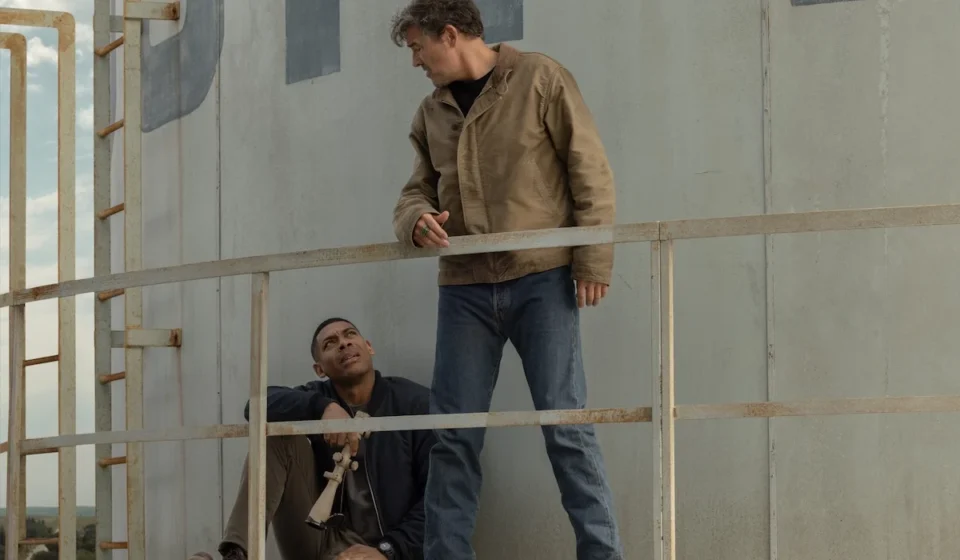
In the high-stakes, neon-drenched world of HBO’s Lanterns, trust is the most dangerous currency. Episode 4, titled “The Weenie,” serves as a structural pivot point for the series, masterfully blending character-driven drama with the slow-burn mystery that has defined the first half of the season. At the center of this narrative storm are Hal Jordan (Kyle Chandler) and John Stewart (Aaron Pierre), two men bound by the glowing, green oath of the Corps but separated by a cavernous divide of experience, trauma, and fundamental philosophy.
The Mirage of Alignment: Main Facts and Narrative Arc
The episode opens in the long shadow of Episode 2, with Hal Jordan seeking counsel from the disgraced mentor Sinestro (Ulrich Thomsen). The encounter is cold and transactional. Sinestro, ever the master of psychological warfare, offers a chilling piece of advice: to succeed, Hal must manipulate John’s burgeoning confidence. “Make him believe you’re embracing his worthiness as your replacement,” Sinestro suggests.

This directive haunts the subsequent scenes in Rushville. As Hal and John infiltrate the compound of the enigmatic William Macon (Garret Dillahunt), the audience is forced to question every beat of their interaction. When Hal hands over the ring, offers words of encouragement, or probes into John’s emotional history, is he building a partnership or executing a cold, calculated operation?
The episode refuses to offer a simple answer. Directed by Geeta Vasant Patel and penned by Breannah Gibson, “The Weenie” maintains a persistent tension, leaving the viewer to wonder if Hal is truly seeking a genuine connection to escape his “lonely, f***ing job” or if he is simply a jaded veteran playing a long game. The episode culminates in a shocking betrayal: Hal, having seemingly reconciled with his partner, orchestrates a brutal car wreck, leaving John at the mercy of the road while he departs to confront an alien hit squad alone.
Chronology of a Crisis
The episode’s timeline is defined by the hunt for "the weenie"—an architectural term popularized by Walt Disney to describe a park’s focal point. In the context of Rushville, the "weenie" refers to the mysterious source of power that the town’s residents gravitate toward. John Stewart, ever the analytical strategist, deduces that this focal point is a trap.

- The Infiltration: The Lanterns enter Macon’s compound, discovering it to be a repository for advanced, otherworldly weaponry.
- The Confrontation: The duo is captured and brought before Macon, who threatens to execute John.
- The Rescue: Sheriff Kane (Kelly Macdonald) intervenes, inadvertently bailing the pair out, though the true threat remains hidden.
- The Revelation: Through a series of misdirections—including a fake confession from a captive posing as Hector Hammond—the pair realizes that the true threat is not the blustering, wealthy rancher Macon, but someone far more intimate: Zoe (Poorna Jagannathan).
- The Final Betrayal: The episode closes with a tense, high-speed conversation in their rental car, ending in a violent collision as Hal abandons his partner.
The "Weenie" as a Symbol of Distraction
The episode’s titular focus, "The Weenie," functions as a brilliant metaphor for the series’ narrative strategy. By dangling a central mystery—the identity of the Manhunter—in front of the audience, the writers have effectively led us, like Lady the dog following a hot dog, into a series of red herrings.
William Macon is the perfect decoy. He is a caricature of wealth and privilege, a man whose "good ol’ boy" charm hides a deep, systemic rot. His presence in the narrative is a constant distraction; he commands attention, sucks the oxygen out of the room, and poses enough of a threat to be credible, all while serving as a shield for the real antagonist. By the time John and Hal realize Macon is merely a figurehead, they have already been forced to confront their own insecurities.
Character Implications: The Weight of the Ring
The tension between Hal and John is the heartbeat of Lanterns. John, a man who has lived his life by the book, feels the weight of the Guardians’ expectations. When he is told by Lianna (Laura Linney) that he is inheriting his "father’s weakness," his disciplined exterior begins to fracture.

Conversely, Hal represents the cynical reality of the Corps. Having lost his parents and spent years in the isolation of space, he views his position not as a noble calling, but as a burden. His attempt to "mentor" John feels like an attempt to either break him or forge him into something capable of surviving the loneliness that defines Hal’s own existence.
The episode suggests that their failure to connect is not merely a result of their personalities, but a systemic failure. The Guardians, the alien hit squads, and the legacy of the Corps have all conspired to keep these two men apart. When John asks, regarding the Manhunters, "So what you’re saying is they have no other choice?", he reveals an empathy that Hal, in his hardened state, is unable to process.
Official Responses and Internal Tensions
While there is no formal "press release" from the Guardians of the Universe, the subtext of the episode is clear: the hierarchy is failing. Lianna’s interference and the conflicting orders regarding the Manhunter’s fate highlight a schism within the organization.

John’s relationship with Zoe—a woman who appears to be a Manhunter—is the ultimate test of his loyalty. Is he protecting her because he is compromised, or because he recognizes the humanity within her that the Corps refuses to acknowledge? Hal’s reaction to this potential betrayal confirms that for him, the mission always supersedes the individual. The "collateral damage" of their friendship is, in his eyes, an acceptable cost of doing business.
The Path Forward: Dark Days and Black Nights
As we reach the halfway point of the eight-episode season, the implications are dire. The Manhunter threat is not just external; it is embedded in the very social fabric of the town. With the aliens closing in and the trust between our two protagonists shattered, the stage is set for a dramatic second half.
John Stewart now faces the defining choice of his life. He is at a crossroads where he must decide whether to continue serving a system that treats him as a disposable asset or to chart his own course. His "largely choice-less life," as the episode puts it, has finally offered him a moment of agency. Will he reclaim the ring for himself, or will he remain tethered to the man who just tried to leave him for dead on a dark road?

“The Weenie” is more than just a clever play on architectural history; it is a profound exploration of how we are drawn to our own destruction. Whether it is the lure of a hidden weapon or the warmth of a dangerous partner, the characters of Lanterns are constantly being redirected by forces they only half-understand. As the credits roll, one thing is certain: the green light is flickering, and the darkness is closing in.
Points of Clarity: A Brief Recap
- The "Weenie" Defined: A focal point designed to draw attention, serving here as both a literal architectural term and a narrative red herring.
- The Zoe Factor: The shift in suspicion toward Zoe suggests that the Manhunter threat is more intimate and manipulative than previously thought.
- The Emotional Toll: The episode emphasizes that for John, the struggle is not just against an enemy, but against the internalized pressure to be "fearless" in the way his predecessors were.
- Looking Ahead: The upcoming episodes will likely focus on the extraction of the truth from Zoe, and the potential for a physical transformation as the Manhunter identity is fully unmasked.
With four episodes remaining, the tension between the procedural mystery and the character study has never been tighter. Lanterns continues to prove that, in the DC Universe, the most dangerous weapon isn’t the ring—it’s the secrets we keep from the people standing right next to us.