The Evolution of Fear: Analyzing ‘Insidious: Out of the Further’ and the Return of the Dental Nightmare

The Insidious franchise has long been a pillar of modern supernatural horror, defining the "jump-scare" era of the 2010s with its distinct blend of domestic anxiety and Victorian-tinged macabre. With the release of Insidious: Out of the Further, the sixth entry in the sprawling saga, writer-director Jacob Chase attempts to bridge the gap between the franchise’s established lore and a new, visceral brand of body horror. By leaning into the universal phobia of dental work, Chase injects a fresh sense of physical vulnerability into a series that has traditionally focused on the ethereal and the intangible.
Main Facts: A New Chapter in the Further
Insidious: Out of the Further marks a significant tonal shift for the series. While previous installments, spearheaded by creators James Wan and Leigh Whannell, focused heavily on the "astral projection" of the Lambert family and the psychic exploits of Elise Rainier, this latest chapter grounds itself in the life of Gemma (Amelia Eve). Gemma is a young, single mother and dental hygienist whose professional life provides the backdrop for some of the film’s most unsettling sequences.
The film introduces a dual-layered conflict: the external threat of demonic entities emerging from "The Further"—a purgatorial dream space—and the internal trauma of Gemma’s past. Directed by Jacob Chase, known for the techno-horror Come Play, the film utilizes a setpiece-driven narrative structure. While the overarching plot has been described by critics as occasionally "wobbly," the film excels in its individual vignettes, which target specific, deep-seated human anxieties.
Central to the film’s marketing and impact is its exploration of "odontophobia" (fear of dental surgery). By transforming the sterile, safe environment of a dental clinic into a theater of the macabre, Chase aligns the film with body-horror classics like The Dentist (1996) and Marathon Man (1976), though he cleverly flips the perspective, making the patient the source of terror rather than the practitioner.
Chronology: From 1999 to the Present Haunting
The narrative of Out of the Further is structured around two distinct time periods that establish a cycle of trauma and supernatural inheritance.
The 1999 Prologue
The film opens with a haunting prologue set in 1999. A young Gemma (played by Charli Penton) witnesses the inexplicable and brutal death of her mother. This sequence serves as more than just a "cold open"; it establishes that Gemma’s connection to the Further is not a recent development but a lifelong burden. Penton’s performance is brief but impactful, setting a high bar for the atmospheric dread that permeates the rest of the film.
The Present Day: The Mother-Daughter Dynamic
Twenty years later, Gemma is living in the same house where her mother died—a choice that remains one of the film’s more curious narrative decisions. She is now a mother herself, raising a nine-year-old daughter, Maya (Island Austin). Gemma’s parenting style is portrayed as deeply empathetic and present, a conscious effort to be the mother she lost.
The peace is shattered when Gemma’s professional life bleeds into her domestic one. A series of encounters with "The Patients"—deceased spirits trapped in the Further—begin to escalate. These entities do not just haunt the house; they haunt Gemma herself. As she sleeps, she unwittingly acts as a conduit, allowing malevolent spirits to cross over into the physical world.
The Escalation
The tension reaches a breaking point when Gemma’s boyfriend, Nick (Brandon Perea), a supportive police officer, realizes that the haunting is tied to Gemma’s psyche rather than the architecture of their home. The film then moves into a high-stakes third act where Gemma must navigate the deepest levels of the Further to save Maya, who has become the primary target of a demon named Lester (Joseph Lopez).
Supporting Data: Themes, Craft, and the Mechanics of Horror
To understand why Out of the Further resonates despite its narrative inconsistencies, one must look at the technical craft and the specific psychological levers it pulls.
The Psychology of Dental Horror
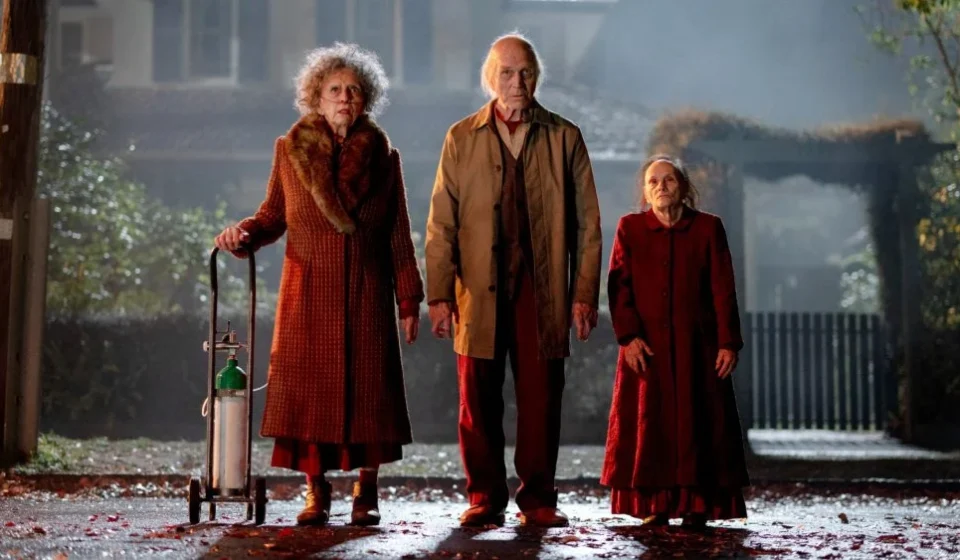
The standout sequence of the film involves a patient named David Morgan, an elderly man with rotting teeth. As Gemma attempts to clean his mouth, the scene descends into a "gross-out" spectacle. Chase focuses on the tactile nature of the work—the scraping of slimy residue, the extraction of foreign objects (including hair) from the gums, and the silent, menacing stare of the patient. This "hagsploitation" aesthetic, combined with body horror, serves to make the audience feel physically uncomfortable, a departure from the purely psychological scares of earlier Insidious films.
Technical Craft: Makeup and Sound Design
The visual language of the film owes much to costume designer Liz Keogh Palmer and a dedicated team of makeup artists. The spirits in Out of the Further are not mere CGI blurs; they are textured, practical-looking nightmares. The design of Lester, the primary antagonist, avoids the "Darth Maul" comparisons of the original 2010 demon, opting instead for something more grounded in the uncanny valley.
The sound design also plays a critical role, particularly in the "crawlspace" scene. Maya’s hobby of building forts out of couch cushions is transformed into a claustrophobic, airless maze within the Further. This sequence draws heavy inspiration from the "Backrooms" internet creepypasta aesthetic, utilizing muffled audio and disorienting spatial geometry to induce a sense of panic.
The Return of Elise Rainier
A key data point for franchise fans is the return of Lin Shaye as Elise Rainier. Despite her character’s death in the first film, Shaye has remained the face of the franchise. In Out of the Further, she appears as a guiding spirit. Her involvement is mediated through a new character, Clare (Maisie Richardson-Sellers), a tattoo artist and medium. This adds a layer of "spiritual detective work" that has become a staple of the series, though the film struggles to explain the mechanics of her plan, famously involving a confusing metaphor with cut-up oranges.
Official Context and Critical Reception
The production of Insidious: Out of the Further reflects the current state of the "Blumhouse" model of horror—high-concept, character-driven, and cost-effective. Jacob Chase has been vocal in interviews about his desire to explore personal fears. He has stated that the dental office is a "liminal space" where people relinquish control, making it the perfect setting for a horror film about the loss of bodily autonomy.
Critical Consensus
Early reviews have been mixed but generally lean toward the positive regarding the film’s atmosphere. Critics have praised:
- Amelia Eve’s Performance: Her portrayal of Gemma is seen as a grounded anchor for the supernatural chaos.
- Atmospheric "Vibes": The film is noted for its "vibes-based" horror, prioritizing mood over a tight plot.
However, the film has faced criticism for:
- Narrative Complexity: The "orange" scene has been singled out as a point of unintentional humor or confusion, where the film’s internal logic becomes too convoluted for its own good.
- Script Leaness: Some critics argue that the film would have benefited from a more streamlined resolution, focusing more on the mother-daughter bond and less on the expanded mythology of the Further.
Implications: The Future of the Further
The release of Out of the Further suggests that the Insidious franchise is not yet ready to enter the "Further" of retirement. Instead, it is evolving into an anthology-style series where the central concept of the dream-world can be applied to various human phobias.
Franchise Sustainability
By moving away from the Lambert family (the focus of films 1, 2, and 5), the franchise demonstrates that "The Further" is a versatile enough concept to support new protagonists. This opens the door for future entries to explore different professions or cultural backgrounds, much like The Conjuring universe has done with its spin-offs.
The "Elevated Horror" Influence
While Insidious is often categorized as "popcorn horror," Out of the Further shows signs of being influenced by the "elevated horror" movement. The focus on intergenerational trauma and the psychological weight of motherhood suggests a desire to compete with the thematic depth of films from studios like A24, even while maintaining the jump-scares that the mainstream audience expects.
Conclusion
Insidious: Out of the Further is a testament to the enduring power of the jump-scare when paired with universal human fears. Jacob Chase has successfully tapped into a specific, visceral phobia, ensuring that audiences will not only look under their beds before sleep but perhaps also dread their next dental check-up. While the film’s mythology may be reaching a point of saturation, its ability to craft "impeccable vignettes" of terror ensures that the Further remains a potent source of cinematic nightmares. As the credits roll, the implication is clear: whether it is a house, a person, or a memory, something is always waiting in the dark, ready to latch on.