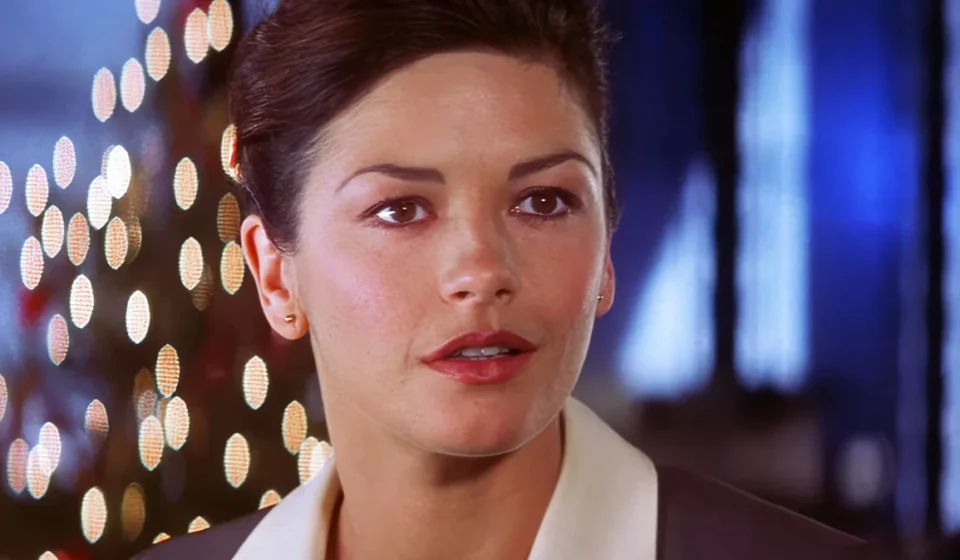
The Ghost of a Career Beginning: Catherine Zeta-Jones and the Mystery of "Les 1001 Nuits"

Before she was an Oscar-winning icon, a Broadway star, and the definitive Morticia Addams for a new generation, Catherine Zeta-Jones was a burgeoning Welsh actress looking for her big break. In 1990, she found that break in a film that would eventually vanish from the cultural consciousness, becoming a piece of cinematic "lost media" that even the most dedicated completists struggle to find. The film was Les 1001 Nuits (1001 Nights), a surreal, low-budget French fantasy that serves as a bizarre footnote in one of Hollywood’s most glittering careers.
Main Facts: A Debut That Time Forgot
In the landscape of modern film history, star debuts are usually analyzed with forensic detail. We know exactly where Leonardo DiCaprio started; we know the humble beginnings of Meryl Streep. Yet, Les 1001 Nuits remains a glaring anomaly. Directed by the esteemed French filmmaker Philippe de Broca—a man celebrated for the classic That Man from Rio—the film was intended as a satirical, high-concept take on the legendary One Thousand and One Nights.
Instead of a sweeping, romantic epic, audiences were met with a baffling, disjointed narrative featuring a British genie, shoddy 1990s-era CGI, and a tone that shifted wildly between Arabian folklore and slapstick comedy. At the center of this storm was a young Zeta-Jones, cast as the legendary Scheherazade. Far from the polished, sophisticated roles that would later define her, this debut required her to navigate a script that seemed, at times, to exist solely to justify its own absurdity.
The film did not merely underperform; it effectively evaporated. It failed to make an impact in its native France, failing to break into the top tier of the 1990 box office, and it certainly never saw a wide release in the English-speaking world. Today, the movie is virtually impossible to stream on any major platform, leaving it trapped in the purgatory of out-of-print physical media and obscure internet forums.
Chronology: From the Stage to the Screen
To understand the context of this forgotten project, one must look at the timeline of Zeta-Jones’s early career. By the late 1980s, the Welsh actress had already begun to make a name for herself in the UK’s competitive theater scene. However, the allure of the big screen was inevitable.
- 1989-1990: Zeta-Jones is approached for Les 1001 Nuits. At the time, she was an unknown quantity in international cinema. Philippe de Broca, a veteran director, was looking for a fresh face to anchor his ambitious, if ultimately misguided, project.
- 1990: Les 1001 Nuits is released in France. The critical reception is lukewarm at best, with many critics baffled by the film’s tonal inconsistencies and lack of narrative cohesion.
- 1991: Zeta-Jones returns to the United Kingdom, pivotally shifting her focus to television. Her role in the ITV period comedy The Darling Buds of May becomes a massive success, effectively saving her career from the trajectory of her film debut.
- 1998-1999: Zeta-Jones achieves true Hollywood superstardom. With the release of The Mask of Zorro and Entrapment, she is cemented as a leading lady of the highest order. By this time, Les 1001 Nuits is, for all intents and purposes, dead to the public.
Supporting Data: The Anatomy of a Flop
The failure of Les 1001 Nuits is not just a matter of poor box office numbers; it is a case study in "what happens when a great director loses the plot." Philippe de Broca had earned his reputation as an action-comedy virtuoso, but his 1990 project lacked the sharp wit and visual elegance of his earlier work.
The film’s reliance on "rubbish" visual effects—most notably the Genie of the Lamp, who is inexplicably a dapper English gentleman emerging from a television set—highlights the technological limitations of the era. The decision to make the Genie a resident of 20th-century London, who uses modern technology to aid Scheherazade in 19th-century Arabia, is a narrative choice that left audiences confused rather than entertained.
Moreover, the film’s handling of its lead actress remains a point of contention. As noted in later retrospectives, including an obituary for de Broca in The Daily Telegraph, the film is frequently remembered only for its "enjoyable" nude scenes. This reductive framing of a young actress’s debut serves as a stark reminder of the industry’s darker tendencies during that period—using a female lead as a marketing tool rather than an artist, while the film around her falls apart.
Official Responses and Public Reception
There has been very little "official" commentary on the film from Catherine Zeta-Jones herself. Given the trajectory of her career, it is easy to understand why. When one has been nominated for Academy Awards and has starred in global blockbusters, a critically panned, near-impossible-to-find French fantasy film is not exactly a highlight on the resume.
However, the internet’s niche subcultures have kept the film alive in a state of "campy" appreciation. On platforms like Letterboxd, a small but dedicated contingent of cinephiles describes the film as an "unexpectedly deranged treat." These viewers appreciate the movie not for its quality, but for its sheer, unadulterated madness. To the modern viewer, the film is a time capsule of a specific type of failed European co-production that simply wouldn’t be made today.
Implications: The Ethics of Lost Media
The fact that Les 1001 Nuits is nearly impossible to stream raises important questions about digital preservation. In an era where streaming services dominate, we often assume that everything worth seeing is available at the click of a button. However, Les 1001 Nuits proves that there is a vast "grey market" of cinema—films that were not successful enough to warrant a digital remastering, but are historically significant enough to represent the early steps of legends like Zeta-Jones.
Is it a "terrible" movie? By most technical and narrative standards, yes. But its disappearance from the public eye also denies us a full picture of the evolution of the actors we admire. Seeing Zeta-Jones navigate the bizarre, low-budget surrealism of 1990s France provides a fascinating contrast to the poise and precision she brings to roles like Morticia Addams in Wednesday.
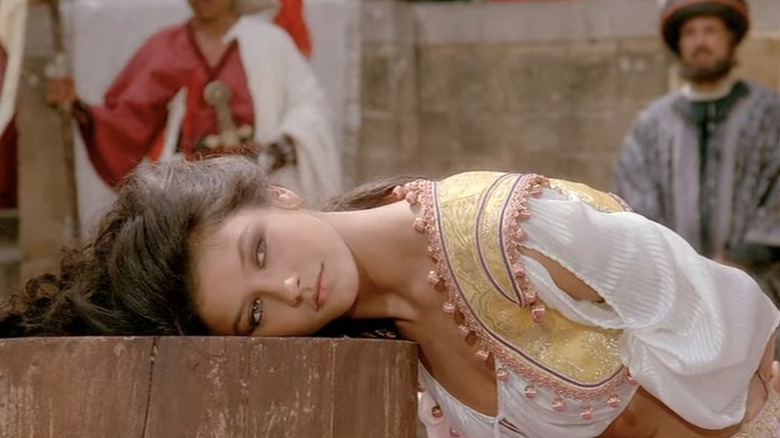
Looking Back at the "Loopy Bastardization"
The legacy of Les 1001 Nuits is ultimately one of irony. It was meant to be the vehicle that launched a star, yet it became a weight that the star had to outrun. Through hard work and undeniable talent, Zeta-Jones did just that, leaving this "loopy bastardization" of Arabian folklore in the dust.
For the intrepid film fan, the quest to find this movie remains a rite of passage. Whether through hunting down dusty VHS tapes or scouring the deepest corners of video-sharing sites, those who seek it out are often looking for a glimpse into a version of cinema history that doesn’t exist anywhere else. It is a reminder that even the most glamorous Hollywood icons started in the trenches, sometimes with nothing more than a poorly rendered genie, a toy motorbike, and a dream of something better.
While we may never see Les 1001 Nuits on a major streaming platform, its existence is a testament to the unpredictable, often messy, and thoroughly fascinating nature of the film industry. Catherine Zeta-Jones may have moved on, but the "ghost" of her debut continues to haunt the edges of the internet, waiting for the next curious viewer to rediscover its strange, flawed, and utterly unique charms.