Bureaucratic Violence: Muayad Alayan’s ‘Conversation With the Sea’ Unveils the Kafkaesque Reality of Palestinian Life

The cinematic landscape of the Middle East is poised for a profound moment of reflection as director Muayad Alayan’s latest drama, Conversation With the Sea, prepares for its highly anticipated regional premiere at the Doha Film Festival. Following successful screenings at the Venice and Toronto International Film Festivals, the film is set to captivate Arab audiences from November 19–27.
At its core, the film is a searing indictment of the administrative hurdles faced by Palestinians in Jerusalem, told through the lens of a deeply personal family trauma. By blending elements of a political thriller with the intimate portrait of an elderly widower, Alayan has crafted a narrative that is both specific to the Palestinian experience and universal in its depiction of human resilience against systemic indifference.
The Narrative: A Kafkaesque Nightmare
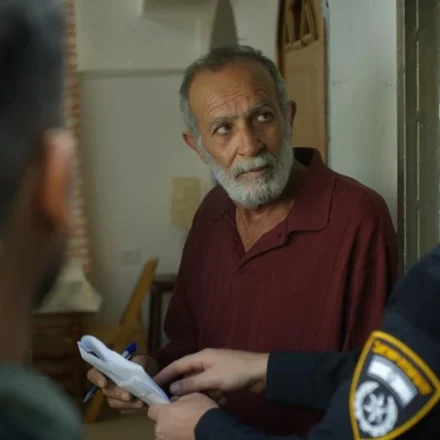
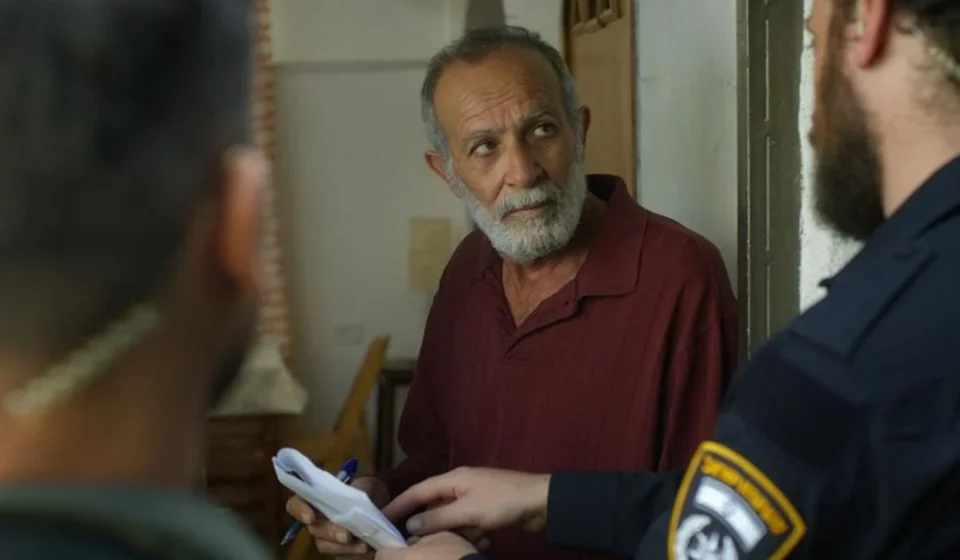
The story centers on Kamal, an elderly Palestinian baker residing in the historic Old City of Jerusalem. Played by the acclaimed veteran actor Kamel El Basha—who earned international recognition as the winner of the 2017 Venice Best Actor award for The Insult—Kamal’s life is upended by a bureaucratic absurdity.
He receives a formal, cold-blooded notice from an Israeli court demanding the payment of a staggering social security debt. The debt is attributed to his son, Wael, who tragically drowned in the Red Sea over two decades prior. The cruel irony, and the source of the film’s tension, is that the state’s records fail to acknowledge the death. To the Israeli bureaucracy, Wael is alive and therefore taxable; to his father, the son is a ghost whose memory is being exploited to facilitate the economic displacement of his family.
Chronology of a Personal Origin
The film is not merely a work of fiction; it is a dramatization of an ordeal experienced by Alayan’s own family. Several years ago, the director’s father-in-law and wife received an identical injunction.
“It was a shock for the family. It was really very emotional for everybody,” Alayan explains. “Apparently, on their system, he appeared to be alive, so he was taxable. And the family had to prove his death.”
The real-life aftermath involved a grueling road trip to secure hospital documentation that would satisfy the authorities—a process that serves as the backbone of the film’s narrative arc. For Alayan, the decision to transform this personal trauma into cinema was a gradual one. He spent a year in silence, contemplating the ethics of dramatizing his family’s grief. Eventually, he sought their permission, promising to fictionalize the events enough to protect their privacy while preserving the essential truth of the experience.
The Production: Guerilla Filmmaking in the Old City
Shooting a film in Jerusalem under the current geopolitical climate is an act of defiance in itself. Alayan faced immense logistical and political challenges, which forced the production team to adapt unconventional strategies.
To maintain a low profile in the Old City, the crew had to operate as a minimal, agile unit. "We had to design the production in such a way that we looked like a documentary crew," Alayan revealed. "As a Palestinian production, getting formal permits was not a realistic prospect." By operating under the guise of a documentary team, they bypassed the bureaucratic gatekeeping that would have otherwise prevented the film from being made. This aesthetic of "guerrilla filmmaking" imbues the final product with a raw, unvarnished urgency that a more traditional, high-budget set might have lacked.

Casting the Icon: Kamel El Basha
The collaboration between Alayan and lead actor Kamel El Basha is the emotional anchor of Conversation With the Sea. Their relationship spans over two decades, beginning when Alayan was a teenager watching El Basha perform at the Palestinian Theater in Jerusalem.
"He was an icon. He was a star. He still is, of course," Alayan says. The director wrote the script with El Basha specifically in mind. When the pair met to discuss the project, the connection was immediate. El Basha, who himself endured life as a political prisoner in his youth and has witnessed the systemic displacement of his community, understood the subtext of the script intuitively. He did not need to be told how to inhabit the role of an elderly man battling a faceless state; he had lived it.
The Sociopolitical Context
While the film tells a micro-story, it speaks to the macro-reality of Palestinian life in Jerusalem. Alayan notes that the daily reality for residents includes constant, unprompted encounters with soldiers and armed settlers. This "tormenting pressure cooker," as he describes it, is designed with a specific intent: to push the Palestinian population out of the city through a combination of taxation, housing laws, and psychological exhaustion.
These stories, however, are often obscured by the broader, more violent headlines dominating the region. "These types of incidents… are not really being represented because you have a genocide happening in the background," Alayan observes. "So they get kind of sidelined." By choosing to focus on the bureaucratic, rather than just the physical, violence of the occupation, Alayan highlights how the state utilizes legal frameworks to erode the lives of its subjects.
Implications for the Future
The timing of the film’s release coincides with a period of intense political flux in Israel. Alayan argues that the recent electoral outcomes have brought the state face-to-face with an unavoidable reality: the nearly two million Palestinians who hold Israeli citizenship.
"You cannot avoid dealing with this," Alayan asserts. "If this population votes, they are going to have some weight in your political system. And not wanting to recognize their identity, their culture, their background, and their connection to their fellow Palestinians is like putting your head in the sand."
The director reflects on the potential for the Arab political parties to join forces with figures like Gadi Eisenkot to prevent the return of Benjamin Netanyahu. While acknowledging the potential for a "dead end"—as Arab parties are reluctant to join a government that continues to occupy Palestinian territories—Alayan emphasizes that the current climate has shifted. The necessity of collaboration, even if temporary, has become a central point of discussion among the anti-Netanyahu coalition.
Conclusion: A Testament to Resilience
Conversation With the Sea stands as a vital piece of contemporary cinema that refuses to let the "subtle" forms of ethnic cleansing go unnoticed. By anchoring the film in the personal, Muayad Alayan has ensured that the audience feels the weight of the injustice alongside the protagonist.
As the Doha Film Institute continues its role as a primary benefactor for Palestinian creators, this film will serve as a centerpiece for conversations about the power of storytelling in the face of systemic erasure. It is a film that demands to be seen, not just as a narrative of a family’s struggle, but as a testament to the persistent, unbreakable spirit of those who refuse to be removed from their own history. Through the eyes of Kamal, the audience is forced to confront a system that attempts to tax the dead while dehumanizing the living, ultimately affirming that the struggle for justice is as much about record-keeping and truth-telling as it is about physical survival.