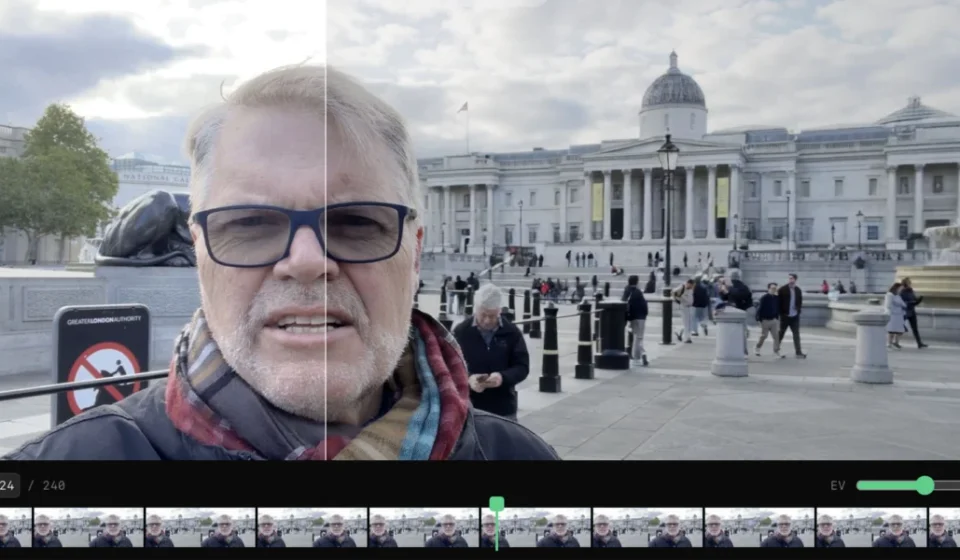
Bridging the Dynamic Range Gap: Beeble’s SwitchHDR Redefines AI-Powered Restoration

In the modern landscape of high-end digital cinematography, the transition from Standard Dynamic Range (SDR) to High Dynamic Range (HDR) has become the industry’s most persistent technical hurdle. For years, colorists, VFX supervisors, and restoration artists have struggled to integrate legacy footage, archival material, or stock imagery into contemporary HDR finishing pipelines. Today, the Seoul-based AI research firm Beeble has introduced a potentially transformative solution: SwitchHDR.
Unlike conventional remapping algorithms that merely stretch existing signal values, SwitchHDR is an AI-driven reconstruction model designed to infer and recreate scene-linear, 16-bit EXR sequences. By moving away from the "black-box" approach that has plagued automated SDR-to-HDR tools, Beeble is positioning its technology as a precision instrument for professional post-production workflows.
The Core Challenge: Why Traditional Conversion Fails
To understand the significance of SwitchHDR, one must first recognize the fundamental limitation of SDR video. Standard Dynamic Range is, by definition, a compressed interpretation of a scene. When a camera captures an image in SDR, the bright highlights are often clipped, and deep shadows are frequently crushed into noise to fit the constraints of the Rec.709 color space.
Mathematically, once data is clipped or compressed beyond a certain threshold, it is permanently lost. Traditional conversion tools—which operate on the premise of "stretching" the luminance signal—often exacerbate these deficiencies. They frequently introduce artifacts such as aggressive banding, amplified sensor noise, unnatural highlight roll-offs, and "plasticky," inorganic shadow recovery.
Beeble’s innovation lies in its training methodology. Rather than being trained primarily on the vast, degraded sea of internet-standard SDR content, SwitchHDR was developed using real-world HDR datasets. This allows the model to act as a sophisticated "inference engine." It does not merely redistribute the existing signal; it reconstructs a plausible, high-fidelity HDR representation based on learned patterns of light, texture, and radiance. While not a "physically perfect" measurement of the original scene, it provides a visually coherent, flexible base that allows for legitimate grading and compositing.
A Chronology of Beeble’s Rise
Beeble’s journey from a niche research startup to a significant player in the VFX ecosystem has been remarkably rapid. Founded in 2022 by CEO Hoon Kim, the company initially focused on the core problem of relighting. By June 2023, the industry—led by outlets like fxguide—began to take notice of the firm’s progress in machine learning, specifically their "SwitchLight" tool, which offered AI-powered relighting capabilities for video.
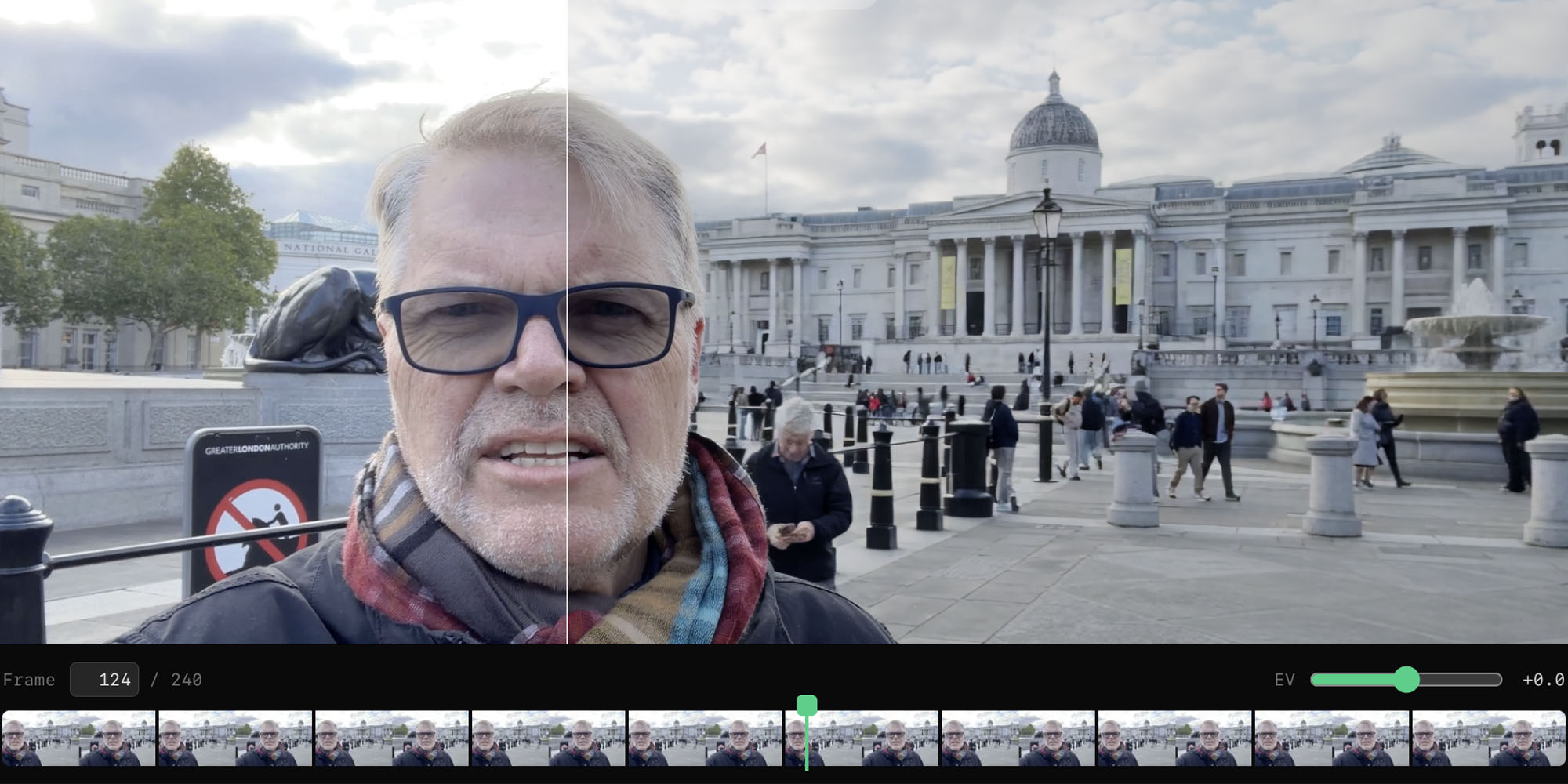
The intervening three years have seen a massive expansion of the company’s R&D efforts:
- 2022: The inception of Beeble in Seoul, with an initial focus on relighting and compositing research.
- 2023: Introduction of SwitchLight, which gained traction for its ability to perform automated relighting. The firm began refining its core machine learning architecture.
- 2024–2025: A period of internal testing and refinement, expanding the AI suite to include video-to-PBR conversion and advanced masking.
- 2026 (Present): The launch of SwitchHDR and the announcement of Canvas, a node-based environment showcased at ACM SIGGRAPH.
This trajectory reflects a shift from "single-task" AI models to a cohesive, integrated ecosystem of tools designed to solve specific pain points within professional VFX and color pipelines.
Technical Specifications: Built for the Pipeline
What distinguishes SwitchHDR from consumer-grade software is its commitment to the professional "ACES" (Academy Color Encoding System) workflow. The tool outputs 16-bit EXR sequences in ACES2065-1, utilizing AP0 color primaries. This technical specification is critical; it ensures that the reconstructed material is not just a "pretty picture" for a YouTube upload, but a robust asset that can be treated with the same scientific rigor as raw camera footage.
Artist-Driven Control
A frequent criticism of AI in film is the loss of creative agency. Beeble has countered this by rejecting the "one-button-fix" paradigm. SwitchHDR includes:
- Luminance Masking: Users can define specific areas of an image—such as bright windows or deep, dark corners—where the reconstruction should be prioritized.
- Text-Guided Reconstruction: Artists can influence the behavior of the AI through prompts, ensuring the reconstruction aligns with the director’s intent.
- Selective Application: The AI can be constrained to specific regions, allowing for a hybrid approach where only the necessary portions of an image are "up-converted," while the rest of the frame remains untouched.
Official Perspectives: Hoon Kim on Production-Grade AI
In an exclusive discussion with fxguide, CEO Hoon Kim emphasized that the company’s development philosophy is rooted in the harsh realities of the edit suite.
"From day one, we built SwitchHDR around what post-production actually requires, not what makes a good demo," Kim stated. "That meant 16-bit EXR support, temporal consistency across full sequences, and giving artists explicit control… Where real detail survives in the footage, we recover it. Where it’s fully clipped, the artist decides how it gets rebuilt, guided by masks and prompts. That distinction is what makes it production-grade to us."
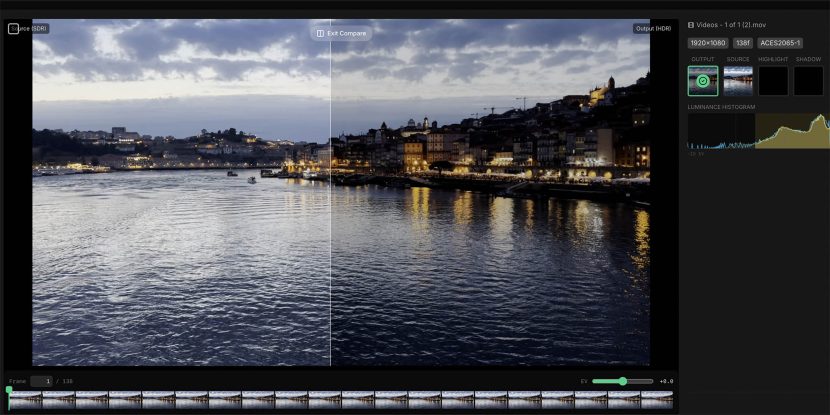
Kim highlighted that the industry is in a state of transition. While the vast majority of legacy video content exists in SDR, the demand for HDR-mastered deliverables has never been higher. "SwitchHDR bridges that gap by estimating a scene-linear HDR representation from existing footage," he added, "giving filmmakers a practical way to integrate SDR footage into modern HDR production pipelines while maintaining creative control."
Implications for VFX and Restoration
The implications of this technology for the archival and VFX industries are profound.
Archival Restoration
For documentary filmmakers and archive houses, the ability to bring legacy footage into the HDR era without the telltale signs of digital "up-scaling" is a game-changer. It allows for the seamless intercutting of 16mm film scans, older digital video, and modern 4K/HDR footage within a single timeline.
VFX Integration
For visual effects supervisors, the biggest headache is often matching a clean, HDR-rendered 3D element with an SDR plate that lacks the highlight detail to support the light intensity of the render. By converting the plate to a scene-linear HDR representation, artists can perform more accurate compositing, light wrapping, and color matching, significantly reducing the amount of time spent "faking" the integration.
The "Canvas" Ecosystem
Beeble’s recent pivot toward Canvas, their node-based AI editor, suggests that they are not just selling a set of standalone tools, but a workspace. By integrating SwitchHDR, SwitchLight 3.0 (video-to-PBR), and SwitchX (mask-guided video-to-video) into a single environment, Beeble is attempting to standardize AI as a standard part of the compositor’s toolkit, much like Mocha or Keylight.
Current Limitations and Future Outlook
Despite its promise, the technology is not without its caveats. As noted during testing, temporal consistency remains a minor challenge. When dealing with complex, high-frequency textures—such as rippling water or dense foliage—the AI can occasionally struggle to maintain perfect stability across a long sequence.
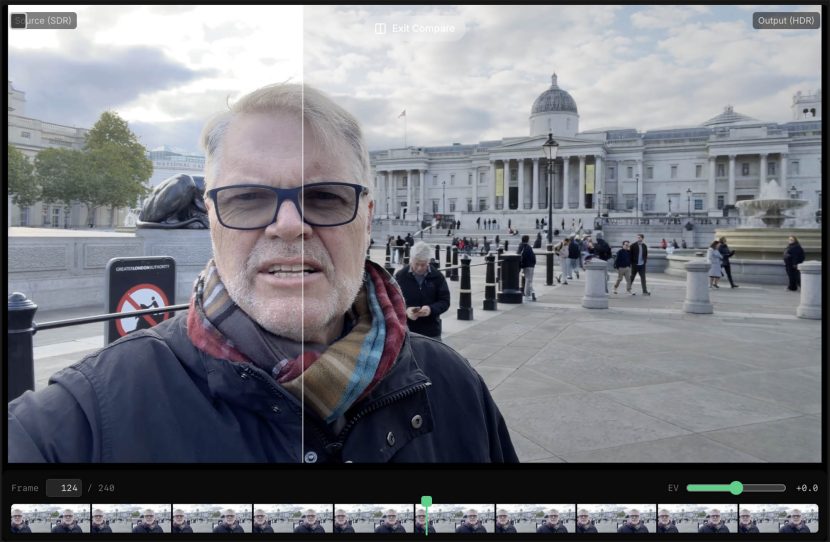
However, compared to existing alternatives, SwitchHDR represents a significant leap forward. It effectively changes the conversation from "can we recover this?" to "how do we guide the reconstruction to serve the narrative?"
As the industry continues to integrate AI into the post-production workflow, the emphasis on "human-in-the-loop" systems will be the deciding factor for professional adoption. Beeble’s insistence on giving artists explicit control over the AI’s behavior suggests they have correctly identified the industry’s primary concern: the fear that AI will replace artistic decision-making. Instead, SwitchHDR offers a tool that functions as a high-end digital assistant—capable of doing the heavy lifting while leaving the final, creative judgment in the hands of the artist.
With the continued development of the Canvas ecosystem, Beeble appears poised to remain a central figure in the evolution of the modern digital pipeline.