The Architect of Echoes: Chloé Zhao Reflects on Manga, Marvel, and the Existential Crisis of Storytelling

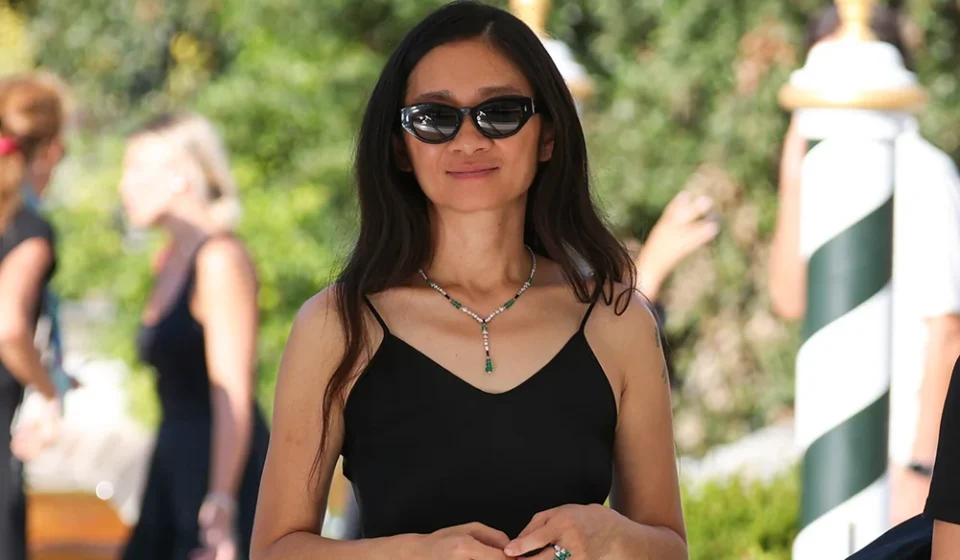
At the Venice Film Festival, amidst the timeless architecture and the lapping waters of the Lido, Academy Award-winning director Chloé Zhao offered a candid, sprawling masterclass that transcended the standard industry panel. Zhao, a filmmaker whose trajectory has swung from the intimate, earth-toned landscapes of American poverty to the cosmic, CGI-laden battlegrounds of the Marvel Cinematic Universe, used the session to bridge the perceived gaps in her eclectic filmography. For a director often scrutinized for the sheer breadth of her stylistic choices, the message was clear: whether it is a widow living in a van or an immortal alien deity, the core objective remains the same—finding the human heartbeat within the spectacle.
The Formative Years: From Manga Aspirations to the Barroom Blues
Long before she was a household name in Hollywood, Zhao’s creative aspirations were anchored in a different medium entirely. Growing up, her primary ambition was not to helm a film set, but to become a manga artist.
"I wasn’t very good at drawing. I wasn’t up to standard," Zhao confessed during the masterclass, punctuating the admission with a self-deprecating laugh. "I wanted to tell stories. I didn’t think cinema was an option for me."
This admission provides crucial context for her career. The visual language of manga—its reliance on stark imagery, emotional archetypes, and sweeping narratives—is the subterranean bedrock of her work. For Zhao, the transition to film was not a rejection of her childhood dream but a redirection of it.
Her path to the director’s chair was anything but linear. In her late 20s, Zhao found herself working as a bartender, a period she describes as a time of profound disorientation. "I was still longing to tell stories," she recalled. During these years of feeling "lost," the camera became her primary conduit for expression. She eventually realized that directing was less about technical mastery of a single craft and more about stewardship. "I always say film directors don’t actually need to know how to do anything really well. I see it as someone who is going to manage an ecosystem, bringing everyone together."
A Chronology of Artistic Evolution
Zhao’s career serves as a case study in genre-defying evolution. After cutting her teeth on indie features that focused on the American West, her rise to global prominence was meteoric.
- 2020: The Nomadland Era: Zhao’s lyrical drama, Nomadland, premiered at the Venice Film Festival, capturing the Golden Lion. The film, which explored the lives of itinerant Americans in the wake of the Great Recession, cemented her status as a singular voice in contemporary cinema.
- 2021: The Marvel Pivot: In an unexpected move, Zhao entered the Marvel Cinematic Universe with Eternals. Featuring an ensemble cast including Gemma Chan, Richard Madden, Kumail Nanjiani, and Angelina Jolie, the film explored an immortal alien race living among humans.
- 2025: The Shakespearean Turn: Zhao continued her thematic exploration of humanity with Hamnet, a drama fictionalizing the family life of William Shakespeare. The film earned eight Academy Award nominations, with Jessie Buckley winning an Oscar for her portrayal of Agnes, Shakespeare’s wife.
Reconciling the "Theme Park" Critique
The inclusion of Eternals in her body of work has historically sparked debate. As the superhero genre has seen a decline in cultural cachet post-pandemic, the film’s $400 million global box office performance—against a budget exceeding $200 million—has been scrutinized by critics and analysts alike.
Zhao, however, remains unapologetic about the project. She views the disparagement of superhero films—famously characterized by Martin Scorsese as akin to "theme parks"—as a failure to appreciate the utility of myth.
"I do feel it’s important to not write off stories because we don’t consider them high art," Zhao stated. "The purpose of storytelling for me, humbly, is to create containers for people to try to process what they need to process. Archetypes are such a great way to do it—and we see them in myths—because it’s something we all share."
When asked about the sharp contrast between the intimate, grounded reality of Nomadland and the expansive, fantastical nature of Eternals, Zhao offered a rebuttal that reframed the debate entirely. "What contrast? It’s people in nature, with animals, who have complicated relationships with them." By stripping away the scale and budget of the projects, she identifies the common denominator: the human condition navigating its environment.
The "Girl’s Dream" of Superhero Mythology
Zhao’s connection to Marvel is rooted in her aforementioned childhood passion. She views the American comic book not as a distinct entity from manga, but as a cultural equivalent. "For any of you who love anime, I know you know this was a girl’s dream come true. Comic books are the western equivalent of manga. They are very different, but I live in the West, and that’s what I had access to."
This perspective is essential to understanding the "Zhao touch." She treats these larger-than-life figures as mythological archetypes, bringing the same level of existential gravity to an Eternal as she does to a widow roaming the American landscape. It is a democratization of storytelling that refuses to distinguish between the "high art" of a period drama and the "pop culture" of a comic book adaptation.
Implications: The Filmmaker’s Existential Crisis
Despite her accolades, including her historic Academy Award win—making her only the second woman in history to win Best Picture—Zhao is currently wrestling with the implications of a life spent behind the lens. The masterclass took a somber, philosophical turn as she addressed the toll of being a chronicler of life.
"My life is occupied by screens," she admitted, posing an existential question that seems to haunt her recent creative output. "Am I missing life because I was always there trying to capture it? I am going through that crisis right now."
This internal conflict suggests that Zhao’s future work may pivot toward a deeper, perhaps more personal inquiry. If her previous films were attempts to "capture" the world, her current state of reflection suggests a desire to inhabit it more fully.
Conclusion: The Ecosystem of Storytelling
Chloé Zhao stands at a unique intersection of film history. She is a director who has successfully navigated the transition from the margins of independent film to the center of the Hollywood blockbuster, all while maintaining a consistent thematic thread.
As she continues her journey, the industry will undoubtedly watch to see how she navigates her self-described "existential crisis." Whether she returns to the grit of the American heartland or ventures into further high-concept myth-making, her approach remains anchored in the belief that the role of the director is to manage an ecosystem of human experience. In a cinematic landscape increasingly fragmented by content, Zhao’s commitment to the "container of stories" serves as a reminder that regardless of the format, the goal is to help an audience process the complexities of being alive.