The Long-Awaited Verdict: How ‘Coyote vs. Acme’ Escaped the Vault to Find Its Audience

In the high-stakes, often ruthless arena of modern Hollywood, few films have embodied the spirit of their own protagonist quite like Coyote vs. Acme. Just as Wile E. Coyote’s elaborate traps were destined to collapse under the weight of shoddy engineering and corporate negligence, the film itself nearly met an ignominious end as a tax write-off in the basement of Warner Bros. Yet, in a twist that mirrors the resilient, if perpetually frustrated, nature of its iconic lead, the film has survived.
After a grueling two-year limbo, during which its cast and crew lived in a state of professional purgatory, Coyote vs. Acme—a hybrid courtroom comedy that blends live-action with classic animation—has been rescued. Following its acquisition by Ketchup Entertainment in March 2025, the film is finally set to hit theaters on August 28, marking the end of one of the most publicized corporate controversies in recent cinema history.
A Chronology of Chaos: From Albuquerque to the Cutting Room Floor
The journey of Coyote vs. Acme began with high aspirations. Filmed in Albuquerque, New Mexico, between March and May 2022, the project was envisioned as a fresh, subversive take on the Looney Tunes legacy. Director Dave Green, known for Earth to Echo and Teenage Mutant Ninja Turtles: Out of the Shadows, was brought on in 2019 to helm the project, which was adapted from a satirical 1990 New Yorker piece. The premise was simple yet brilliant: Wile E. Coyote, tired of his constant failures, decides to sue the Acme Corporation for its defective, hazardous products.
However, the production was caught in the crosshairs of a massive corporate restructuring at Warner Bros. Discovery. Under CEO David Zaslav, the studio adopted a strategy of shelving completed or near-completed projects to secure tax write-offs, a move that infamously claimed the Batgirl movie. Coyote vs. Acme was seemingly headed for the same oblivion.

For two years, the film existed only as a ghost in the machine—a completed movie that nobody was allowed to see. The silence from the studio was deafening, leaving the cast and crew to grapple with the possibility that their work would never leave the hard drive. It wasn’t until the acquisition by Ketchup Entertainment that the project was granted a second life, a turn of events that even the director admits felt like a genuine miracle.
Behind the Lens: The Technical Craft of a Cartoon Lawsuit
While the behind-the-scenes narrative is defined by corporate conflict, the film itself is a love letter to the irreverent, slapstick roots of the Looney Tunes franchise. Green, a child of the 90s who grew up on the sophisticated, subversive humor of Tiny Toon Adventures and Animaniacs, sought to channel the spirit of animators Chuck Jones and Tex Avery.
"They weren’t saccharine; they were sarcastic and subversive and weird," Green said in an interview with IndieWire. "That was always the fabric of what Looney Tunes was to me as a kid."
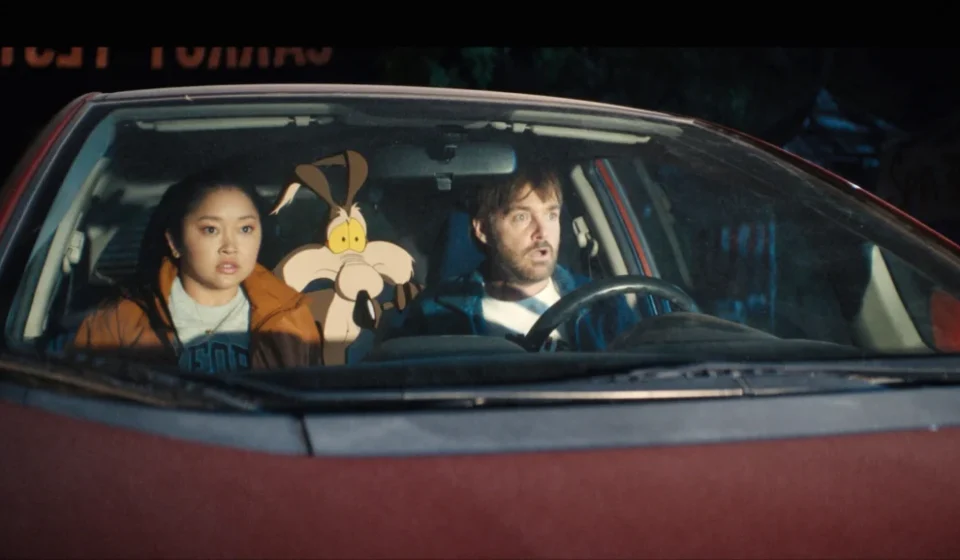
To capture that "weird" energy, the production employed complex technical strategies reminiscent of the landmark Who Framed Roger Rabbit?. Green and his team utilized storyboard artists to map out every beat of the film before filming began, ensuring the live-action actors could interact with characters that didn’t yet exist.

The production also brought on David Barclay, a master puppeteer who worked on The Dark Crystal and Star Wars: Episode VI – Return of the Jedi. Barclay constructed a life-size, physical puppet of Wile E. Coyote to serve as a reference point for the actors. In a testament to the dedication required for this level of production, Green insisted that the cast perform every scene twice: once in a strictly choreographed take, and again in a more spontaneous, organic take with the puppet. This allowed for a natural chemistry between the live-action leads—Will Forte as the embattled personal injury attorney Kevin Avery and Lana Condor as his ambitious niece, Paige—and the animated icon.
The film further pushes boundaries by blending 2D and 3D animation. The British firm DNEG handled the visual effects, allowing Green to manipulate lighting, shadows, and grain in ways that traditional 2D cannot, effectively grounding the animated Wile E. Coyote in a tangible, live-action environment.
The Meta-Whirlpool: Art Reflecting Corporate Reality
Perhaps the most compelling aspect of Coyote vs. Acme is how its narrative—a story about an underdog fighting a soulless mega-conglomerate—became a reflection of its own struggle to exist. The film portrays the Acme Corporation as a bureaucratic monster that prioritizes profit and legal loopholes over the safety and dignity of the individuals who use their products.
When the film was in production, these themes were intended as a playful parody of corporate culture. Today, in the wake of widespread industry layoffs and major studio mergers, the film feels hauntingly prescient. Green noted the eerie irony of watching the finished film after the news of the studio’s initial decision to shelve it.

"I watched the movie after all of the news broke, and I could not believe the kind of surreal meta whirlpool that the movie had become," Green said. "It felt like a hall of mirrors, where it almost felt like we had shot the movie after the news had broken."
The director sees this resonance as a testament to the universal experience of trying to maintain autonomy in a world increasingly dominated by gargantuan corporate entities. By grounding the absurdity of the Looney Tunes in the very real, very human frustration of a courtroom drama, the film taps into a zeitgeist that is perhaps more relevant now than when the cameras first rolled in New Mexico four years ago.
The Power of the Public: A Victory for Filmmakers
The salvation of Coyote vs. Acme was not a result of corporate benevolence, but rather the result of a massive, grassroots push from fans, filmmakers, and critics. When word spread that the film was being permanently vaulted, the outcry was immediate and sustained.
"What I saw through this process—the incredible support of everyone online, and friends, and other filmmakers, and people who had seen the film, and people who just wanted to see the film speaking out and wanting to support the movie, it was such an incredible miracle," Green reflected.

This public support forced a conversation about the value of creative labor. In an industry that often treats films as mere assets on a balance sheet, the survival of Coyote vs. Acme serves as a rare, tangible victory for artistic integrity. It proves that there is still a voice for those who believe that a finished film is not just a tax deduction, but a piece of art that belongs to the audience.
Looking Forward: A Legacy of Resilience
As the release date of August 28 approaches, the anticipation for Coyote vs. Acme has shifted from mere curiosity to something approaching a cultural movement. It stands as a testament to the persistence of the creative spirit. Despite being treated as a disposable commodity, the film has managed to claw its way out of the vault to reach the screen, proving that, like Wile E. Coyote himself, you can try to crush a good idea, but it will almost always find a way to pop back up—usually with a chaotic, slapstick grin on its face.
For audiences, the film offers more than just the nostalgia of Looney Tunes. It offers a glimpse into the bizarre, high-pressure world of modern moviemaking, wrapped in a package that is smart, dark, and deeply funny. As the credits roll, viewers will likely recognize that the true story of Coyote vs. Acme isn’t just about a coyote suing a company; it’s about a group of artists who, against all odds, managed to win their own case against the machine.
In the final analysis, Coyote vs. Acme has transcended its original scope. It is no longer just a movie; it is a symbol of the friction between art and commerce in the 21st century. Whether or not it lives up to the immense hype generated by its two-year odyssey, one thing is certain: its journey has already secured its place in the history books as the cartoon that refused to be erased.