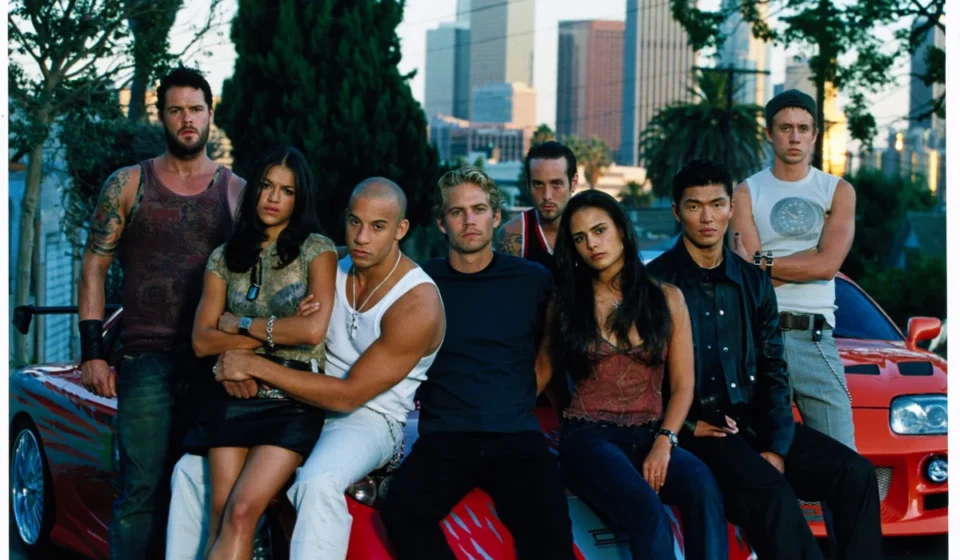
Quarter-Mile Legacy: Reflecting on 25 Years of ‘The Fast and the Furious’

It has been a quarter of a century since the cinematic landscape was forever altered by the roar of internal combustion engines and the neon-soaked streets of Los Angeles. In 2001, The Fast and the Furious arrived as a mid-budget street-racing gamble from Universal Pictures—a film the studio hoped would yield a modest profit. Today, it stands as the cornerstone of one of the most commercially successful and culturally significant franchises in Hollywood history. For Jordana Brewster, who portrayed Mia Toretto, the journey from an uncertain sophomore at Yale to an icon of global action cinema is a narrative arc as compelling as the one she helped anchor on screen.
From Yale to the Streets: The Audition Process
For a young Jordana Brewster, the road to becoming a household name was paved with skepticism. In the late 90s, the casting process for the film—then titled Redline—was rigorous. Brewster, then a Yale undergraduate, auditioned for director Rob Cohen, but her academic, refined background initially worked against her.
“My agent at the time, Peter Levine, said, ‘They want to rough you up a little bit,’” Brewster recalled in an interview with IndieWire. “Rob was concerned that I had a patrician air.”
Cohen, however, recognized a latent intensity beneath her polished exterior. He took a leap of faith, casting her as Mia Toretto, the sister of the enigmatic street racer Dom (Vin Diesel). The role required more than just acting; it demanded a visceral transformation. To ground her in the gritty, high-octane world of illegal street racing, Cohen immersed his cast in a rigorous training regimen. He provided Brewster with the films of Italian neorealist icon Anna Magnani to study, hoping to imbue her character with a sense of raw, grounded emotion. Alongside her co-stars, she was sent to a racing boot camp in Las Vegas—a daunting challenge for an actor who had only recently obtained her driver’s license.

The Birth of a Franchise: A Chronology of Growth
The evolution of the Fast & Furious brand is a study in cinematic endurance. What began as a localized crime drama centered on undercover FBI agent Brian O’Conner (the late Paul Walker) infiltrating a hijacking ring has morphed into a global operatic spectacle.
The Origin (2001)
The original film succeeded largely due to Cohen’s ability to balance kinetic, practical action sequences with deep, character-driven storytelling. By casting a diverse ensemble—including Vin Diesel, Paul Walker, Jordana Brewster, and Michelle Rodriguez—the film created a sense of community that resonated with audiences.
The Middle Years (2003–2006)
The franchise’s trajectory was not linear. 2 Fast 2 Furious (2003) pivoted toward a more stylized aesthetic under director John Singleton, though it notably lacked the presence of Diesel and Brewster. The series reached a creative crossroads with The Fast and the Furious: Tokyo Drift (2006), which eschewed the original cast entirely for a new setting. However, it was this pivot that introduced director Justin Lin, whose stewardship would eventually steer the series toward its most lucrative era.
The Renaissance (2009–Present)
The 2009 film Fast & Furious marked a critical turning point, reuniting the four original leads. It signaled a shift in tone, moving from underground racing toward high-stakes international heists. As Brewster noted, the fifth installment—Fast Five (2011)—served as the catalyst for the franchise’s current status. By relocating the action to Brazil and leaning into a global, ensemble-driven narrative, the films tapped into a worldwide audience, transforming the series into a bona fide phenomenon.

Chemistry and Comradeship: The Human Element
Central to the franchise’s longevity is the on-screen chemistry between Brewster and Paul Walker. Their relationship, which evolved from an uneasy attraction to a profound, lifelong bond, provided the series with its emotional heartbeat.
“I was dating someone, and he was dating someone, and I found him physically beautiful, but it was almost an unattainable beauty,” Brewster said. “I didn’t feel there was off-screen chemistry, initially. But he was such a warm, wonderful, chill guy that he made me extremely comfortable. And let’s be honest: when you’re 20 years old and it’s 2001, and you get to make out with someone who’s really hot, you don’t have to try to create chemistry. It just happens.”
This dynamic only deepened as the years passed. The cast grew together, sharing milestones, conversations about parenthood, and the pressures of sudden, meteoric fame. The tragic passing of Paul Walker in 2013 cast a long shadow over the franchise, yet his influence remains the gravitational pull around which the newer films orbit. “There was such an ease with Paul, there was no fabricating anything,” Brewster added.
Supporting Data: The Anatomy of a Hit
Why did The Fast and the Furious endure while so many of its contemporaries faded into obscurity? According to Brewster, the answer lies in the script’s commitment to character history.

“I think the movie worked because everyone had a backstory,” she explained. “You understand where each person’s coming from and what’s motivating them. There’s a 360-degree view.”
During the recent 25th-anniversary screening at the Cannes Film Festival, Brewster had the opportunity to re-evaluate the film through a modern lens. She noted that Cohen’s collaborative spirit and "annoyingly thorough" attention to detail regarding the authenticity of the car culture were vital. Because the budget was limited, the filmmakers were forced to rely on practical effects and tangible, physical stunts—a technique that remains a hallmark of the franchise’s aesthetic today.
Implications: The Enduring Legacy
As production looms for the 11th installment of the series, the reality of the franchise’s impact is still setting in for those involved. For a long time, the cast operated in a state of professional survival, never assuming that a single film would lead to a decades-long saga.
Brewster recounts a moment that highlighted the generational reach of the films: a 20-year-old fan recently approached her, citing her as his childhood crush. “And I was like, ‘Oh God, we’re at that level now?’” she laughed. “Because I still see myself as a 25-year-old. So that gives you some perspective.”

The implication of the Fast franchise is that it successfully bridged the gap between the gritty street-racing subculture of the early 2000s and the blockbuster sensibilities of the 21st century. It has become a cornerstone of cinema history, validated by its recognition at major global festivals like Cannes. For Brewster, it is more than just a job; it is a legacy.
“It’s a wonderful thing to have as my legacy,” she concluded. “You just never know in this business.”
As the original film returns to theaters on August 21 for a week-long 25th-anniversary celebration, audiences will have the chance to witness the beginning of a phenomenon—a film that, despite its humble origins, changed the velocity of Hollywood forever. Whether it is the practical stunts, the, at times, soap-opera-level emotional stakes, or the central theme of "family," The Fast and the Furious continues to occupy a unique space in the cultural zeitgeist, proving that some stories, like the cars that fuel them, are built to last.