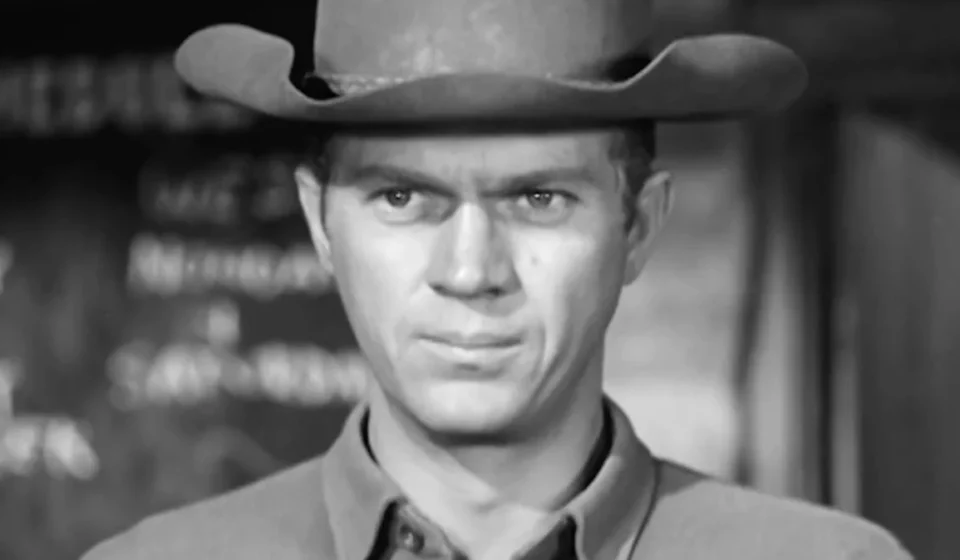
The Birth of the King of Cool: Why Steve McQueen’s ‘Wanted Dead or Alive’ Remains Mandatory Viewing

In the annals of Hollywood history, few figures loom as large as Steve McQueen. Known globally as the "King of Cool," McQueen’s transition from a rebellious youth to an international box-office titan is the stuff of cinema legend. However, before the high-octane car chases of Bullitt or the iconic motorcycle jumps of The Great Escape, there was the dusty, high-stakes frontier of the late 1950s. Wanted Dead or Alive, the CBS Western series that ran for three seasons from 1958 to 1961, serves as the essential blueprint for the McQueen persona.
Though often overshadowed by his massive filmography, Wanted Dead or Alive was not merely a stepping stone; it was a grueling, transformative crucible that forged the steely-eyed, minimalist acting style that would eventually define a generation of action stars.
The Genesis of a Star: Main Facts and Origins
The year 1958 was a pivotal juncture for Steve McQueen. After years of grinding through the New York stage circuit and landing bit parts, he finally broke through. That year, he secured his first credited film roles in Never Love a Stranger and the cult classic The Blob. Yet, it was the small screen that truly propelled him into the public consciousness.
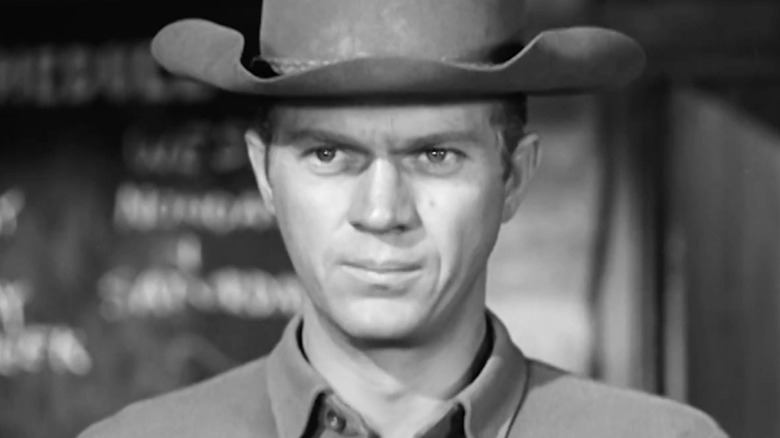
Debuting just days before the release of The Blob, Wanted Dead or Alive introduced audiences to Josh Randall, a bounty hunter with a conscience. While the television landscape of the late 50s was saturated with Westerns, Wanted Dead or Alive stood apart. Unlike the traditional, two-dimensional heroes of the era, Randall possessed a distinct moral ambiguity. He was a man of few words, a trait that would become a trademark of McQueen’s career. The show was an immediate ratings success, capturing the American imagination and proving that the stoic, rugged charisma McQueen exuded was perfectly calibrated for the silver screen.
The "Mare’s Leg": An Icon of Western Innovation
Central to the show’s unique identity was Randall’s signature weapon: the "Mare’s Leg." This sawed-off Winchester Model 1892, carried in a custom-built holster on his hip, was a revolutionary design for a television gunslinger. It wasn’t just a prop; it was an extension of the character’s lethal efficiency. Because it was handled by McQueen—who possessed an uncanny, natural aptitude for quick-draw sequences—the weapon felt dangerous, grounded, and undeniably cool. It signaled to the audience that this was not your grandfather’s Western.
Chronology: A Three-Year Grind to Stardom
The production cycle of Wanted Dead or Alive was relentless. Spanning 94 episodes across three seasons, the show operated on a production schedule that demanded constant focus and physical endurance.
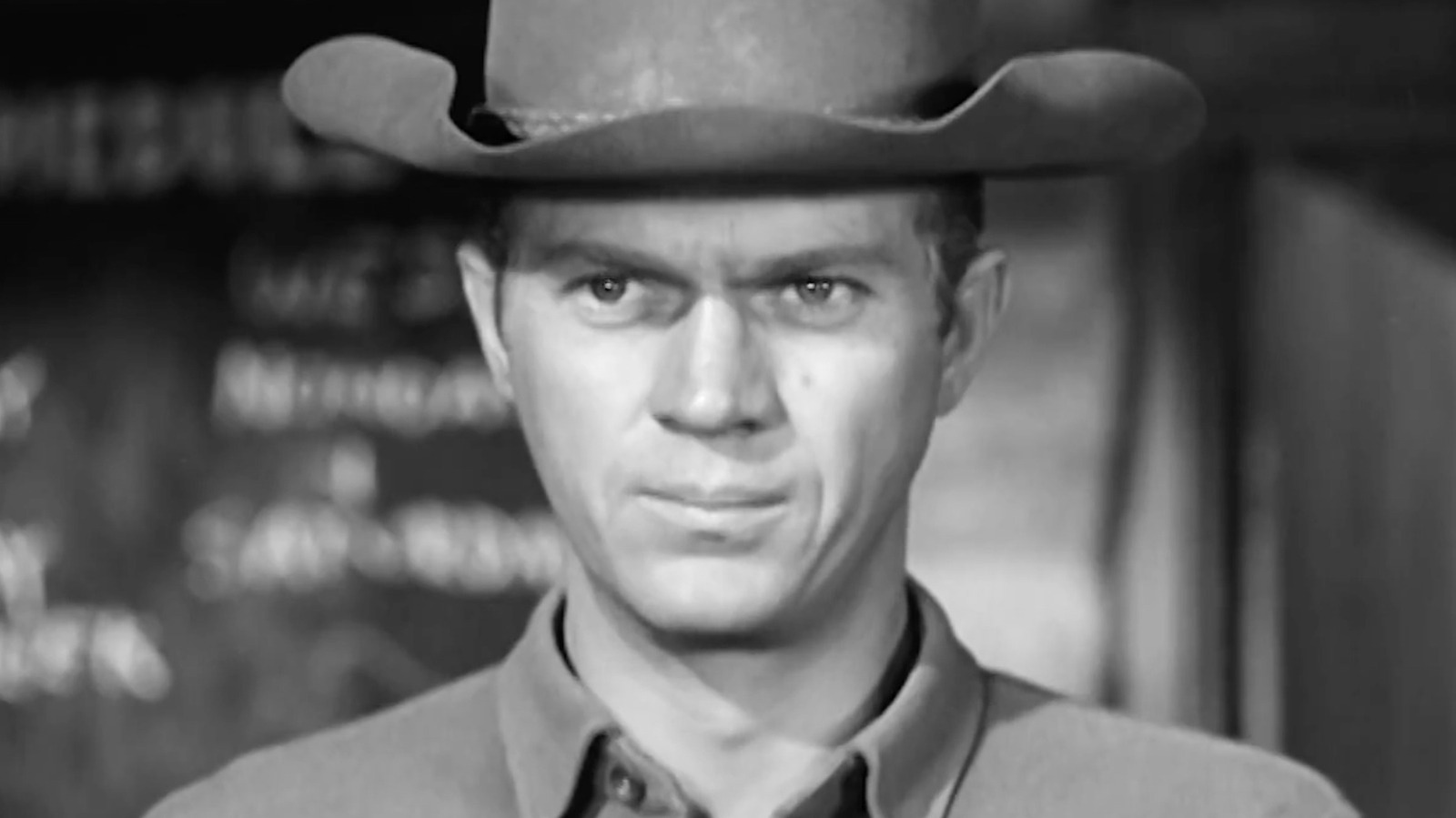
- 1958: The series premieres on CBS. McQueen, previously an unknown quantity to the general public, rapidly becomes a household name.
- 1959-1960: The show reaches peak popularity. McQueen’s influence grows as he begins to exert more creative control over his character’s development and the show’s narrative tone.
- 1961: The series concludes. Despite its high ratings and continued popularity, the grind of television production became unsustainable for a man whose ambitions were already fixed on feature films. The industry, particularly the major studios, finally realized that McQueen was too big for a weekly series.
This period was characterized by McQueen’s own internal evolution. He was not just performing; he was refining a philosophy of acting that prioritized "being" over "showing."
Supporting Data: The Craft of Acting
When reflecting on the show, McQueen was famously blunt, describing the experience as "three hard mother-grabbin’ years." Yet, he acknowledged the necessity of the experience. The rigorous schedule acted as an intensive workshop. In an interview with The Virginian-Pilot during the show’s run, McQueen articulated a maturing perspective on his craft:
"I think I’m really finding myself as a person and as an actor. I think the role of Josh Randall has taught me a lot. You can’t help learning when you’ve done more than 30 different shows as the same character, and you’re supposed to keep that character fresh and interesting."
This level of dedication is evident in the episodes themselves. As the seasons progressed, McQueen’s performance became more economical. He learned that silence could be as impactful as dialogue, a technique he would later employ to devastating effect in masterpieces like The Magnificent Seven (1960) and The Thomas Crown Affair (1968). The series was also a hub for talent, featuring guest appearances by legends like Alan Hale Jr., which forced McQueen to sharpen his scene-partner skills against seasoned veterans.
Official Responses and Cultural Impact
The legacy of Wanted Dead or Alive extends far beyond its initial run. It is widely recognized by critics as the series that defined the "anti-hero" archetype in Western television. By casting a bounty hunter who often donated his reward money to the needy or intervened in domestic disputes, the writers created a hero who was human, fallible, and complex.
Contemporary audiences can still access this history, as the series remains available on streaming platforms like Tubi. Its influence can be felt in modern prestige Westerns, including the Yellowstone universe and The Mandalorian, which clearly draws stylistic inspiration from the "lone bounty hunter with a unique weapon" trope established by Josh Randall.
Regarding the 1987 cinematic sequel—which starred Rutger Hauer as the grandson of Josh Randall—the reception was mixed. While it failed to capture the lightning-in-a-bottle magic of the original series, it served as a testament to the enduring recognition of the character. It proved that the myth of Josh Randall had entered the lexicon of pop culture history, separate from the actor who created him.
Implications: Why We Still Watch
Why does Wanted Dead or Alive remain mandatory viewing in the 21st century?
The answer lies in the sheer magnetic pull of Steve McQueen. In the history of cinema, there are few actors who could hold a frame by doing absolutely nothing. McQueen’s performance in this series is an masterclass in "less is more." Every tilt of the hat, every squint of the eyes, and every calculated movement with the Mare’s Leg tells a story of a man haunted by his past but committed to a personal code of ethics.
The show teaches us that greatness is rarely accidental. It is built in the trenches of daily production, in the repetition of a craft, and in the willingness to push against the limitations of the medium. For the film student, the show is a laboratory of character development. For the casual viewer, it is a thrilling ride through the rugged American West, delivered by a man who was, in every sense, the genuine article.
Ultimately, Wanted Dead or Alive is the record of a legend in the making. It captures the moment Steve McQueen stopped being an actor playing a cowboy and started becoming the icon we know today. As his career would eventually prove, there was only one Steve McQueen, and the three years he spent in the saddle of Josh Randall were the forge that created the steel of his cinematic legacy.