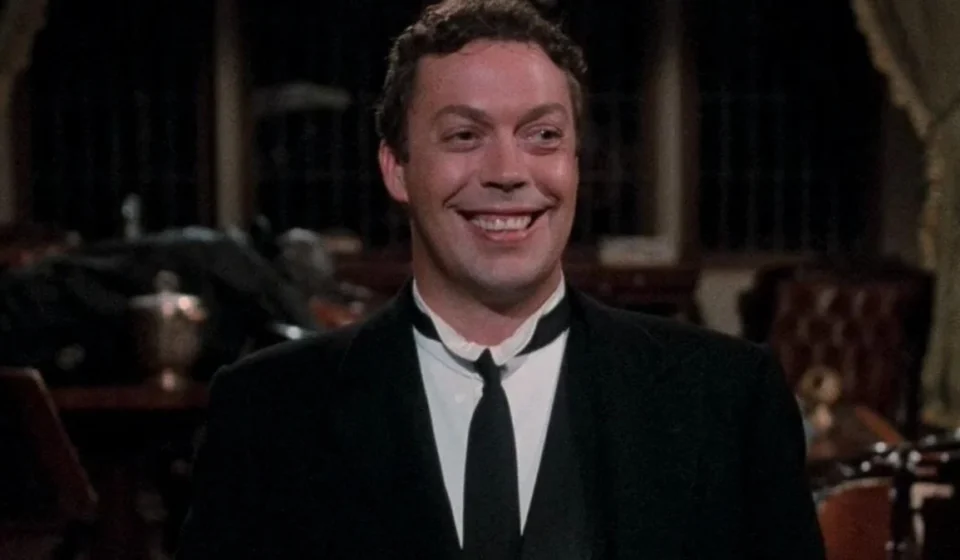

The world of cinema lost a titan this week with the passing of Tim Curry, an actor whose range spanned from the transgressive charisma of Dr. Frank-N-Furter in The Rocky Horror Picture Show to the chilling, primordial menace of Pennywise in It. As audiences and critics alike revisit his sprawling filmography to determine his "greatest" contribution, the discourse inevitably settles on a peculiar, high-wire act of comedic brilliance: his portrayal of Wadsworth the butler in the 1985 cult classic Clue. While initially dismissed by the box office, Clue has ascended to a permanent place in the pantheon of cinema—a transformation driven almost entirely by the kinetic, theatrical genius of Tim Curry.
A Legacy of Versatility: Beyond the Horror Icon
To speak of Tim Curry is to speak of an actor who refused to be confined by genre. His career was a masterclass in transformation. He could pivot from the Shakespearean gravity of his stage work to the gleeful, scenery-chewing villainy of The Hunt for Red October. He was a fixture of our childhoods—the voice behind iconic animated villains and the star of Muppet Treasure Island, where he performed with such committed absurdity that he seemed more like a felt-and-foam puppet than a human actor.
However, the debate regarding his "best" performance often suffers from the sheer volume of his output. Is it the raw, rock-and-roll decadence of Rocky Horror? The terrifying, predatory psychological warfare of It? While these roles showcase his ability to anchor a film in darkness, his work in Clue demonstrates something rarer: an ability to anchor a chaotic, structurally complex farce while performing the heavy lifting of a conductor leading an orchestra of eccentric character actors.
The Chronology of a Cult Classic
The journey of Clue is a cautionary tale about the disconnect between initial critical reception and long-term cultural resonance. Released in December 1985, the film was an ambitious project based on the 1943 board game Cluedo. Created by British designer Anthony E. Pratt, the game was a distillation of the "Golden Age" of detective fiction—a genre defined by Agatha Christie’s And Then There Were None.
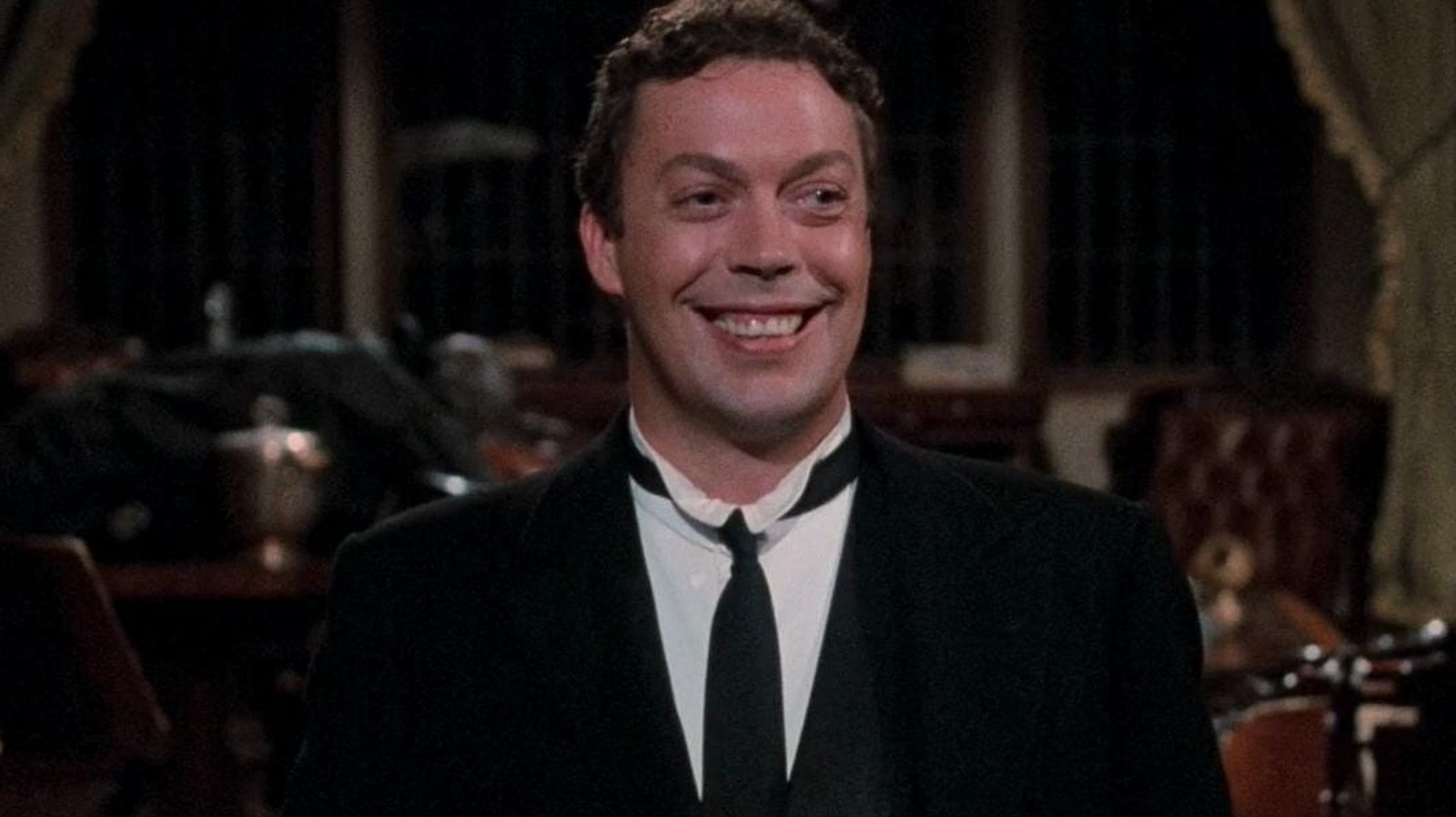
When director Jonathan Lynn brought this concept to the screen, he was attempting to translate the static, logic-based nature of a board game into a cinematic experience. The film, which cost $15 million to produce, limped to a $14.6 million domestic gross. It was, by all conventional 1985 metrics, a failure. Critics of the era were baffled by the film’s manic energy and its unconventional structure, which featured three distinct endings.
Yet, as the years progressed, Clue found its audience through the secondary life cycle of home video and cable television. It was in these living rooms that viewers realized what the theatrical audiences had missed: Clue was a masterwork of pacing, and at its center was a performance by Tim Curry that held the entire crumbling edifice together.
The Mechanics of the Performance: The Definitive Butler
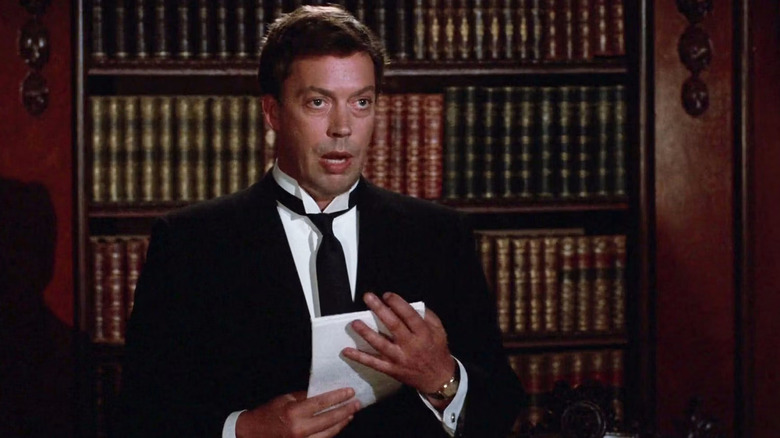
What makes Wadsworth the definitive murder mystery butler? It lies in the inherent tension of the character. Wadsworth is not merely a servant; he is the host, the guide, and the narrative engine. Curry plays him with a delicate balance of obsequiousness and barely contained panic.
In a film packed with powerhouse performances—Madeline Kahn’s iconic turn as Mrs. White and Martin Mull’s blustering Colonel Mustard among them—Curry had the most difficult task. While his co-stars were permitted to lean into the caricature of their archetypes, Curry had to be the tether. He is the only character who knows the true stakes, and his performance is a physical manifestation of that pressure. Whether he is literally running through the halls of the mansion to deliver exposition or frantically orchestrating the final, rapid-fire reveal, Curry’s energy is the film’s heartbeat.
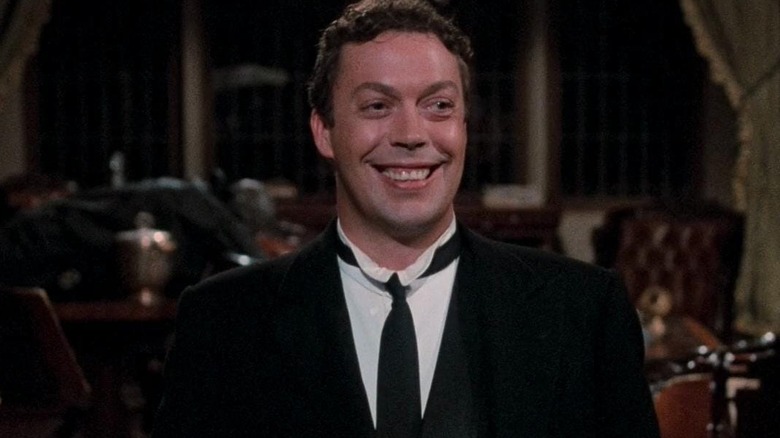
He brings a "manic emcee" quality to the role that is uniquely his. He isn’t just reciting lines; he is managing the geography of the room and the emotional temperature of the ensemble. His physical comedy, specifically his ability to shift from a rigid, stoic servant to a man on the verge of a nervous breakdown, is a masterclass in theatrical timing.
The "Triple-Ending" Challenge: A High-Wire Act
Perhaps the most impressive aspect of Curry’s work in Clue is the sheer technical difficulty of the project. The film was famously released with three different endings. In theaters, a viewer would see only one, but home media eventually presented all three, turning the film into a meta-commentary on the replayability of a board game.
This structure placed an immense burden on the cast. Each scene had to be played with a level of ambiguity that allowed for any of the three (or the "fourth" proposed) endings to feel earned. If the actors had tipped their hands too early, the mystery would have collapsed. Curry, with his background in the rigorous world of British theater, navigated these variables with surgical precision.
Watching the film today, it is nearly impossible to tell which ending was "intended" or which pieces of dialogue were meant to be red herrings. Curry’s performance remains consistent across all scenarios, creating a seamless experience that feels like a singular narrative, even when the plot splinters. This was not merely acting; it was an exercise in narrative structural integrity.
Implications for Future Performance
The enduring legacy of Clue suggests that the "box office flop" label is a transient mark. In the age of streaming and social media, films are no longer judged solely by their opening weekend. Clue has become a staple of pop culture, referenced in memes, quoted in casual conversation, and studied by film students for its pacing and dialogue.
The implication for the industry is clear: the strength of a film lies in the commitment of its cast, regardless of the premise’s initial commercial viability. Had Tim Curry played Wadsworth with anything less than total, unhinged commitment, Clue would have likely been forgotten as a cheap, gimmicky adaptation. Instead, he treated the material with the same seriousness one might afford a Pinter play or a Shakespearean tragedy. He found the humanity in the archetype, proving that even in a film based on a board game, there is room for legitimate, high-level craft.
A Final Appraisal
As we reflect on the passing of a true icon, we are reminded that our favorite performances are often the ones that reflect the joy of the actor. In Clue, we see a man who clearly relished the opportunity to play with the tropes of the mystery genre, to sprint through hallways, and to deliver monologues that required the precision of a surgeon and the energy of a marathon runner.
Tim Curry’s career was defined by his ability to make the impossible look effortless. Whether he was a mad scientist from Transylvania or a butler in a stormy mansion, he brought a sense of playfulness and professional rigor to every frame. Clue may have been a box office disappointment in 1985, but history has corrected the record. Today, it stands as a testament to his talent—a film that remains as sharp, funny, and compelling as the day it was released, anchored forever by the incomparable Tim Curry.