
Echoes of a Shattered Mirror: Lana Daher’s Do You Love Me and the Architecture of Lebanese Memory

In the landscape of contemporary documentary filmmaking, few projects capture the visceral, fragmented reality of national identity as poignantly as Lana Daher’s debut feature, Do You Love Me (2026). A kaleidoscopic 76-minute journey through seven decades of Lebanese history, the film serves as a living archive—a cinematic mosaic constructed from the discarded, the forgotten, and the deeply personal. Currently screening at Metrograph in New York following its acclaimed premiere at Venice Days, the film is more than a documentary; it is a desperate, beautiful attempt to map the soul of a country defined by cycles of trauma and resilience.
By weaving together found footage, home movies, independent cinema, and newsreels, Daher creates a dialogue between the past and the present, challenging the viewer to find meaning in a nation that lacks an official, unified historical narrative.
The Genesis of an Impossible Archive
The origins of Do You Love Me are rooted in 2018, when Beirut-based multidisciplinary artist Lana Daher began a research project exploring the intersection of war and music. Initially, her focus was on the Bendaly Family—a popular Lebanese band whose hit song provided the film’s evocative title. However, the project soon transcended its musical roots.
"It began with a specific focus on the Bendaly Family," Daher explains. "It was always intended to be an archive-based doc, but little by little, I realized that what mattered to me was much more personal: my own relationship with Beirut, my own childhood, my own traumas; our relationship to memory and history as a society."

For Daher, the film became an act of necessity. Growing up in a Lebanon where family archives were routinely lost to the ravages of war and displacement, she found herself with limited access to her own history. The absence of a national archive or a centralized history book meant that for generations of Lebanese, identity was often a matter of conjecture. Do You Love Me was born from the desire to reclaim these voices, to build something from the inside that allowed Lebanese people to speak of their own lives, through their own eyes.
A Chronology of Chaos: The Editing Process
The structure of Do You Love Me is intentionally non-linear. Daher operates under the thesis that "disorientation is part of the journey" to understanding Lebanon. By refusing to adhere to a traditional, chronological timeline, the film mirrors the experience of living through cyclical conflict, where past and present collide with jarring frequency.
To achieve this, Daher collaborated with Paris-based Syrian editor Qutaiba Barhamji, known for his work on the Oscar-nominated The Voice of Hind Rajab (2025) and Four Daughters (2023). Their collaboration was defined by a radical "blank slate" approach. Despite five years of solitary research and a four-hour rough cut, Daher and Barhamji opted to dismantle the work and start from scratch.
"I deliberately chose to work with an editor who wasn’t Lebanese, and who didn’t carry the same attachment to the images, events, and traumas that I had," says Daher. "If a scene didn’t open into something more universal, we let it go."

The result is an "emotional logic" rather than a factual one. The film cuts between scenes from action cinema and harrowing newsreel footage of Beirut’s streets, effectively blurring the lines between reality and artifice. It juxtaposes the mundane—birthdays, weddings, everyday street life—with the horrific, ensuring that the humanity of the Lebanese people is never eclipsed by the political violence that surrounds them.
Supporting Data: The Magnitude of the Hunt
The scale of the production is staggering. To assemble the narrative, Daher and her team undertook what she describes as a "hunt" rather than a search. The film incorporates:
- 106 Fiction and Documentary Features: Spanning from 1958 to the present day.
- 20,000+ Audiovisual Fragments: Stored across multiple hard drives.
- Legal Complexity: The team cleared nearly 400 rights contracts to secure the footage.
- Diverse Sources: The archival material includes radio broadcasts, podcasts, home videos, music videos, and photographs, with the oldest artifact dating back to 1928.
Only seven percent of the researched material made it into the final 76-minute cut, a testament to the rigorous, almost surgical, nature of the editing process. By strictly forbidding the use of full scenes from existing films and banning the presence of Lebanese politicians—both on-screen and on the soundtrack—Daher ensured that the film remained a purely personal and emotional document, unburdened by the institutional rhetoric that has historically failed the country.
Female Perspectives and the Preservation of Truth
A defining characteristic of Do You Love Me is its commitment to centering the female gaze. In a country where the "official" record is often dictated by patriarchal structures and political factions, Daher highlights the role of women as the keepers of memory.
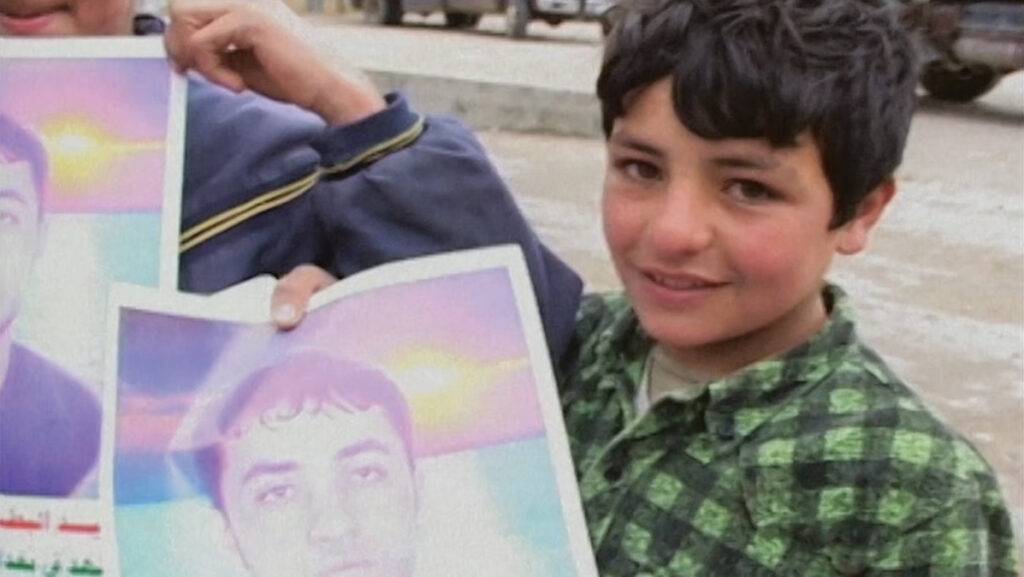
"So much of what survives as ‘the record’—home videos, family photographs, personal collections—was shot, kept, and passed down by women, even when they weren’t the ones holding the camera," Daher notes. By elevating these perspectives, the film acts as an homage to pioneers like the late filmmaker and journalist Jocelyne Saab, whose work captured the wreckage of Beirut and the loss of family histories with profound courage.
Daher’s film creates a space for these voices to resonate, ensuring that the history of Lebanon is not merely a record of battles and treaties, but a living, breathing testimony of those who bore witness to the passage of time.
Implications: The Reality of Modern Conflict
The significance of Do You Love Me has only grown in the wake of the current geopolitical climate. When asked about the film’s relevance during the ongoing conflict involving Israel and Hezbollah, Daher is quick to reject simplified narratives that frame Lebanon merely as a site of "crossfire."
"Reducing what is happening today to a confrontation between Israel and Hezbollah actually overlooks a much longer history," she asserts. "The south of Lebanon has been devastated, with entire towns and villages erased. This history didn’t begin with Hezbollah. Israel first invaded Lebanon in 1978… and it has repeatedly invaded and occupied parts of the country over the past five decades."

The film, therefore, acts as a counter-narrative to the dehumanization often seen in international reporting. During a screening in Beirut, Daher observed a moment of chilling synchronicity: the sound of an Israeli drone circling outside the theater became part of the film’s sound design. The archive and the present reality collapsed, leaving the audience to grapple with the realization that for many in Lebanon, the war is not a historical event but a permanent state of existence.
Conclusion: A National Archive for the Living
Do You Love Me does not offer easy answers or a resolution to the "Lebanese question." Instead, it offers an invitation to feel the weight of history and the stubborn, irrepressible urge to live despite it. By capturing the humor, tenderness, and everyday life that persists in the shadow of war, Daher has created a work that challenges the world to see Lebanon not as a statistic of death, but as a place of immense, complex humanity.
If the film serves as a national archive, it is one that is "not official, not complete, but alive and felt." In the silence between the explosions and the music, in the gaps between the decades of found footage, Lana Daher has managed to hold space for a nation that has been forced to redefine itself again and again. Do You Love Me is a profound, necessary meditation on what it means to belong to a place that is constantly being broken, yet refuses to stop loving itself.