The Cult of Chaos: Lloyd Kaufman and the Enduring Legacy of Tromeo & Juliet

For over half a century, Lloyd Kaufman has served as the cinematic patron saint of the transgressive, the grotesque, and the unapologetically independent. As the co-founder of Troma Entertainment and the architect behind the iconic The Toxic Avenger, Kaufman has built an empire on a foundation of shoestring budgets, bodily fluids, and a radical, punk-rock ethos that defies the polished veneer of Hollywood. While his filmography is vast, occasionally a project transcends the B-movie gutter to become something more: a piece of genuine cultural history.
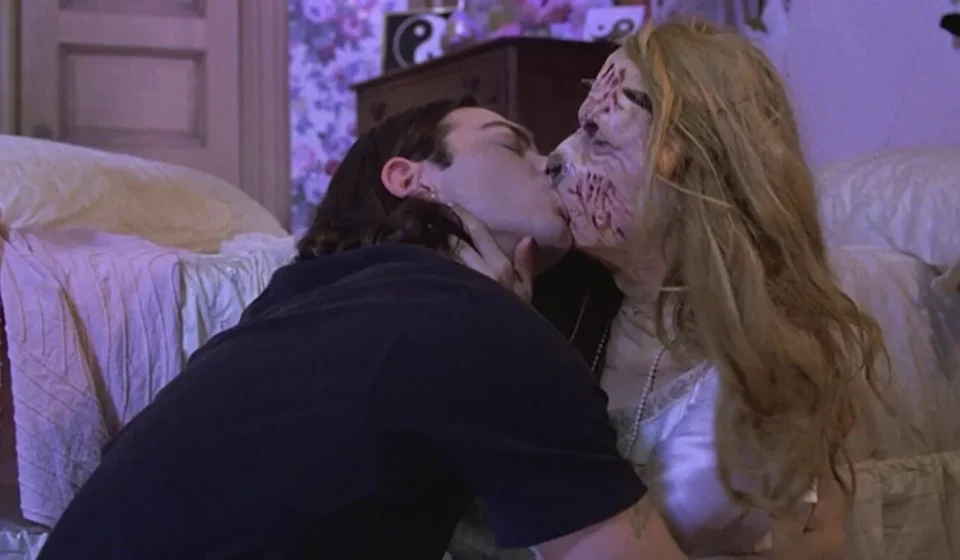
As Tromeo & Juliet—Kaufman’s 1996 reimagining of the Shakespearean tragedy—celebrates its 30th anniversary, it stands as a testament to the power of creative desperation. Far more than a mere exercise in shock value, the film remains an exhilarating artifact of independent filmmaking, a work defined by its raw, manic energy and the singular vision of a team of artists working without the safety net of studio oversight.
A Legacy Forged in the Troma Trenches
Kaufman has always marched to the beat of his own drum, a philosophy that has kept Troma alive long after many of his contemporaries folded under the weight of industry shifts. His films are often described as spiritual successors to the work of Roger Corman, blending exploitation-era tropes with surprisingly sharp, progressive social messaging.
However, Tromeo & Juliet occupies a unique space in this canon. To watch it in 2026 is to see past the gratuitous splatter and the deliberate vulgarity. What emerges is the palpable enthusiasm of a production team determined to craft something uniquely their own. The film possesses a "lived-in" grit and a frenetic pace that renders it far more compelling than many contemporary, multi-million-dollar productions. It is a film that refuses to be ignored, precisely because it was made by people who refused to be told "no."
The Long Road to Verona (1991–1996)
The genesis of Tromeo & Juliet was not a quick affair; it was a five-year slog through the trenches of creative uncertainty. Kaufman, reflecting on the project’s development, notes that the initial impulse was born from a cynical observation of his own generation.

"It’s not a parody, it’s more of a reimagining," Kaufman explained in a recent interview. "That came from the fact that my generation, the post-war Baby Boomers, have destroyed love. I’ve been married for 52 years, but most marriages dissolve. Baby Boomers made a mess of it because they have to be so cool."
This disillusionment with modern romance spurred the initial attempt to adapt Shakespeare. The production team spent years attempting to balance the Bard’s classic verse with the Troma aesthetic. Initially, the goal was to keep the dialogue in strict iambic pentameter, a conceit that quickly met resistance from industry mentors.
"John Avildsen, one of my mentors who directed Rocky, said, ‘Don’t do that, nobody wants to hear Shakespeare,’" Kaufman recalls. The team pivoted to a version set among high schoolers, utilizing contemporary vernacular. Even then, the narrative cohesion remained elusive. It was only when a young James Gunn—fresh out of Columbia University—entered the fray that the pieces finally locked into place.
"Luckily for me, James Gunn was graduating from Columbia where he got his MA, and he had written a novel," Kaufman said. "I gave him $150, and two weeks later he figured it out. He took the mess we had made and turned it into a wonderful, wonderful script."
The Gunn Effect: From $150 Script to Studio Stardom
The hiring of James Gunn is perhaps the most significant "what if" in modern indie history. While Gunn has since ascended to the highest echelons of studio filmmaking, helming massive franchises for both Marvel and DC, Kaufman remains entirely unsurprised by his protégé’s trajectory.

"I don’t necessarily have any talent, but I know talent," Kaufman quips.
Gunn’s influence on Tromeo & Juliet cannot be overstated. He injected a narrative sharpness and a specific brand of dark, kinetic humor that allowed the film to transcend its low-budget constraints. The collaboration proved that the Troma ecosystem—often viewed as a chaotic playground—was, in fact, a crucible for genuine cinematic craft. By the time the film premiered in 1996, it had become the second most significant title in the Troma library, trailing only the omnipresent Toxic Avenger.
Supporting Data: Why Tromeo Matters
While the film is famous for its extreme imagery, its longevity is supported by more than just cult appeal. It represents a "lightning in a bottle" moment for the 1990s indie explosion.
- The DIY Ethos: The film serves as a case study for micro-budget production management. Every cent of the limited budget is visible on screen, utilized for practical effects and elaborate set design rather than digital artifice.
- Cultural Resonancy: The film has fostered a fan base that has, in some cases, literally etched its appreciation into their skin. "You wouldn’t believe how many Tromeo & Juliet tattoos I run into," Kaufman said. "You can buy an Oscar, but that’s love."
- The Troma Pipeline: Troma Entertainment has served as a training ground for dozens of filmmakers who went on to define the industry, proving that the "Troma style"—characterized by speed, ingenuity, and fearlessness—is a legitimate training regimen for high-level directors.
Official Responses and Anniversary Celebrations
In August 2026, the 80-year-old Kaufman is celebrating the 30th anniversary of the film with a special screening at the Southampton Playhouse. The event, scheduled for August 11, includes a Q&A session where Kaufman will discuss the film’s evolution and its place in the broader independent film landscape.
For the Troma faithful, this is a moment of reflection. The industry has changed drastically since 1996; the rise of streaming and the total digital transformation of production have made the "Troma method" both easier to replicate and harder to sustain. Yet, Kaufman remains optimistic about the spirit of independent film. He sees his work—and Tromeo & Juliet in particular—as a reminder that the heart of cinema is not in the budget, but in the audacity of the storyteller.

Implications for the Future of Independent Film
The legacy of Tromeo & Juliet carries significant implications for the next generation of filmmakers. In an era where "content" is often generated by committee and sanitized for global markets, Kaufman’s 30-year-old experiment serves as a blueprint for artistic defiance.
- The Persistence of Vision: The film proves that if a filmmaker is willing to stay with a project through years of frustration, the resulting work carries a singular voice that resonates far longer than mass-produced entertainment.
- The Mentorship Model: Kaufman’s willingness to bet on young, unproven talent like James Gunn highlights the necessity of the "low-stakes, high-freedom" environment that studios are often unwilling to provide.
- The Validity of the "Gross-Out": By utilizing shock and gore as a vehicle for complex social critique, Tromeo & Juliet reminds us that genre tropes are merely tools. When wielded with passion, they can be used to tell stories that are as profound as they are provocative.
As the film reaches its third decade, it remains an outlier. It is a work of art that was never intended to be "classic," yet it has achieved a status that many big-budget epics will never reach: it is loved. And as Lloyd Kaufman has often demonstrated, in the world of independent film, there is no higher honor than that.
For those attending the anniversary screening, the experience will be a reminder of a time when the rules of cinema were being rewritten in the back alleys of New York, one frame of 16mm film at a time. It is a celebration of the chaos, the passion, and the enduring, messy, beautiful truth of what it means to make a movie.