The New Golden Age: How Asian Cinema is Transforming the American Repertory Landscape

Over the past few years, a quiet but profound seismic shift has occurred within the ecosystem of American film exhibition. While the resurgence of 35mm prints and high-definition restorations has become a widely discussed phenomenon, a specific, vibrant sub-sector of this trend has taken center stage: the reclamation and elevation of Asian cinema. No longer confined to the dusty corners of academic archives or the niche interests of hardcore cinephiles, works from across the Asian continent are now serving as the primary protagonists of the American repertory movement.
This year alone, domestic audiences have been treated to a kaleidoscopic array of cinematic treasures, many appearing on the big screen for the first time in North America. From the haunting urban malaise of Tsai Ming-liang’s The Hole and the visceral, kinetic energy of John Woo’s Hard Boiled to the queer landmark status of Lino Brocka’s Macho Dancer and the melancholic beauty of Shunji Iwai’s All About Lily Chou-Chou, the breadth of this revival is unprecedented. This movement is not merely a nostalgia trip; it is an active, ongoing effort to rewrite the American understanding of global film history.
A Shifting Canon: From the Few to the Many
For decades, the American "canon" of Asian cinema was a static, familiar constellation of names: Akira Kurosawa, Yasujirō Ozu, Kenji Mizoguchi, Wong Kar-wai, Edward Yang, and Hou Hsiao-hsien. While these masters remain vital, the current repertory boom is aggressively expanding the aperture. Today, programmers and distributors are carving out essential space for filmmakers who previously existed on the margins of the Western imagination.

Names like Toshio Matsumoto, Marva Nabili, Sohrab Shahid-Saless, Nobuhiro Suwa, and Jia Zhangke are finally receiving the theatrical visibility their work has long demanded. This evolution is being driven by a specialized network of distributors, independent exhibitors, and archivists who are redefining what "Asian cinema" signifies in the American landscape.
The Architect of Engagement: Big World Pictures
Jonathan Howell, founder of Big World Pictures, stands at the vanguard of this movement. Since launching his distribution company in 2013, Howell has been instrumental in bringing contemporary masters—such as Radu Jude and Nuri Bilge Ceylan—to North American screens, while simultaneously spearheading the painstaking process of re-releasing the works of Tsai Ming-liang and Jia Zhangke.
Howell’s approach is deeply personal, rooted in a lifelong cinephilic devotion. "The first Tsai Ming-liang film I ever saw was Vive L’amour in the 90s," Howell told IndieWire. "The combination of physical humor in the vein of Tati or Keaton, and urban anomie among young adults, made a massive impression on me."

However, translating that personal passion into theatrical success has not always been a linear path. Howell admits that his early attempts to bring these works to a wider audience were met with skepticism from peers. "When I was preparing to release Rebels of the Neon God, a colleague called it ‘brave,’" he recalled. "I was puzzled, as it hadn’t occurred to me that it would be anything but a success. In hindsight, I realized I had been living in a New York cinephile bubble for 20 years. It wasn’t as readily accepted by general audiences as I had anticipated."
Despite these hurdles, the numbers tell a story of slow, steady growth. Rebels of the Neon God managed a modest but meaningful run, and subsequent efforts like the 35mm release of The Hole—a project that required a grueling search for high-quality elements amidst the logistical nightmare of the COVID-19 pandemic—have proven that there is a dedicated, growing appetite for these films.
The Kani Releasing Philosophy: Beyond the Festival Circuit
If Big World Pictures represents the establishment of a new, essential canon, Kani Releasing—founded in 2021 by Pearl Chan and Ariel Esteban Cayer—represents a more aggressive, experimental impulse. Drawing on their backgrounds in festival programming and international sales, Chan and Cayer noticed a recurring, tragic pattern: acclaimed Asian films would ignite the festival circuit, garner critical acclaim, and then effectively vanish into a distribution void.

"We wanted to create an environment where our love for repertory and contemporary Asian cinema could coexist," Cayer explained. "We saw that national cinemas like those of the Philippines or Malaysia were consistently under-represented in the West. We wanted to take matters into our own hands."
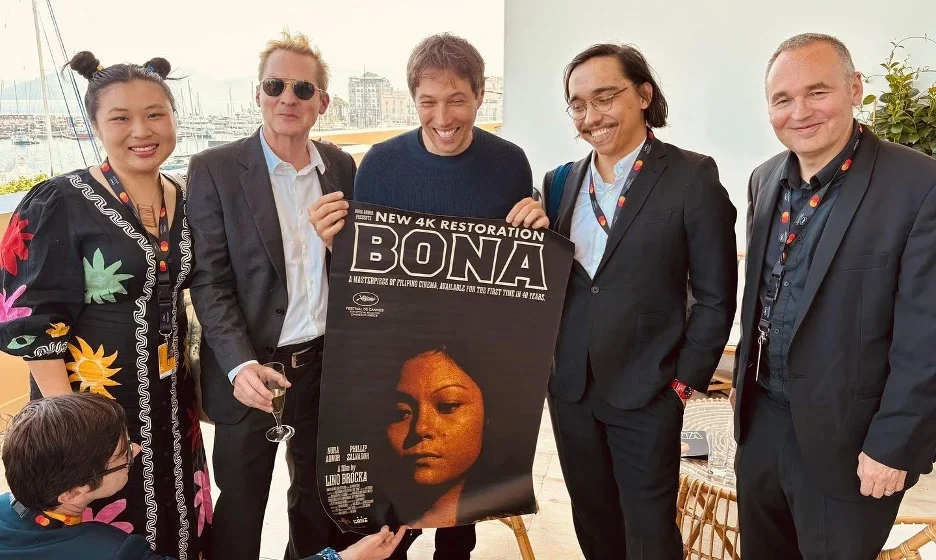
Kani’s strategy is two-fold: a robust home video line in partnership with OCN/Vinegar Syndrome, and a tactical, highly curated approach to theatrical distribution. By focusing on titles like Banmei Takahashi’s A New Love in Tokyo or the 2001 classic Take Care of My Cat, Kani is forcing a re-evaluation of what constitutes "essential" Asian film. Their work on Lino Brocka’s Bona, which premiered at Cannes Classics, underscores their commitment to high-profile advocacy for films that once lacked a proper platform.
Arbelos and the Power of Restoration
Arbelos, meanwhile, approaches the problem through the lens of longevity. Rather than chasing release windows, the company thinks in decades. By unearthing and restoring forgotten gems—such as Toshio Matsumoto’s Funeral Parade of Roses or Marva Nabili’s The Sealed Soil—Arbelos is fundamentally altering the historical status of these films.

"Toshio Matsumoto’s Funeral Parade of Roses already had a devoted cult following," said David Marriott of Arbelos. "But I think the 4K restoration and theatrical re-release helped it reach an entirely new audience. Without the theaters’ willingness to take chances on such transgressive films, and without audiences showing up, we simply wouldn’t exist."
This process is not just technical; it is emotional. Marriott recalls the profound experience of watching The Sealed Soil alongside director Marva Nabili at the New York Film Festival—a moment that highlights how restoration bridges the gap between the past and the present, giving filmmakers the recognition they were often denied during their active careers.
AGFA and the Education of the Programmer
For the American Genre Film Archive (AGFA), the current moment is defined by the thrill of discovery rather than the weight of nostalgia. Through strategic partnerships with labels like Shout! Studios, Vinegar Syndrome, and Arrow Video, AGFA has become a major player in the distribution of repertory genre cinema.

Bret Berg, theatrical sales director at AGFA, emphasizes that the excitement stems from the fact that these movies are new to many of the people now booking them. "Most of the programmers choosing these movies have never seen them before," Berg noted. "It’s not like booking Jaws or Back to the Future. It’s a bet on discovery."
This pedagogical aspect is crucial. A generation of programmers, who grew up without easy access to the golden eras of Hong Kong action or J-horror, is now curating cinemas. As Berg points out, this "education" is transforming the repertory landscape. He believes that by consistently circulating films like Ringo Lam’s Full Contact, these works will eventually be elevated to the same cultural status as the Hollywood blockbusters of the same era.
Implications: A Lasting Cultural Shift
The implications of this movement extend far beyond the box office. We are witnessing a fundamental broadening of the American cinematic imagination. By reclaiming these films from the obscurity of poor-quality downloads and inaccessible archives, the current crop of distributors and exhibitors is doing more than just filling theater seats—they are restoring a fractured history.

As Berg aptly summarized, the biggest trend is, quite simply, the return of audiences to the cinema. When that return is fueled by a desire to see challenging, transgressive, and historically significant works from across Asia, the entire medium is strengthened.
The "Asian cinema boom" is not merely a passing phase of the repertory market. It is the result of a concerted, multi-year effort by a network of passionate professionals to ensure that the global history of film is not defined solely by the Western canon. As these restorations continue to roll out across North America, they serve as a reminder that the history of cinema is vast, interconnected, and, for the first time in many cases, finally available to all. The future of the American movie theater, it seems, is being written by the films of the past.