
For those who find the most profound terrors not in the shadows of an urban alleyway, but in the crushing, abyssal depths of the ocean, a new nightmare is rising to the surface. Jesse McKeown’s latest project, the Netflix limited series Below, arrives with the weight of a rising tide, blending the visceral punch of creature-feature gore with the psychological dread of classic folk horror. Set against the rugged, unforgiving backdrop of a Canadian fishing village, the series is already being hailed as a must-watch for fans of maritime mysteries and atmospheric suspense.
Main Facts: The Premise of ‘Below’
Below is a six-episode limited series that anchors its narrative in the fictional, close-knit community of Snook’s Arm, Newfoundland. The town is currently gripped by the tensions of "Come Home Week," a celebratory homecoming event that serves as a thin veil over a much deeper, more political crisis. The local government has issued an ultimatum: the villagers must vote to vacate their ancestral homes—a traumatic request coming only forty years after they were forced to do the same. If 75% of the population votes "yes," a substantial payout awaits; if not, they risk losing everything without compensation.
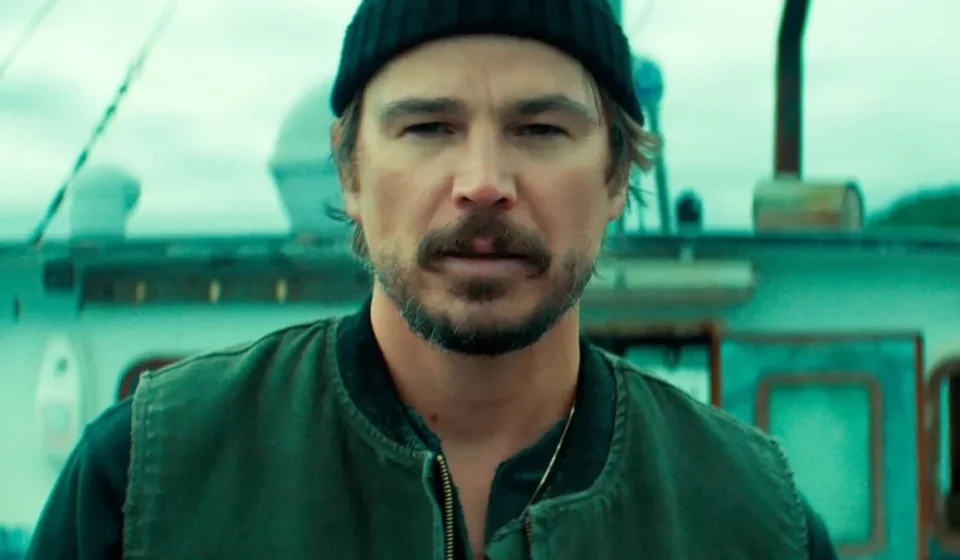
At the center of this turmoil is Calvin, played with gravel-voiced intensity by Josh Hartnett. Calvin is a widowed fisherman who stands firmly against the relocation, alongside his sister, Ruth (Willow Kean). However, their struggle to save their heritage is quickly eclipsed by a far more primal threat. Something gargantuan and ravenous is stalking the waters off the coast of Snook’s Arm, and as the town prepares for the arrival of returning family members, it becomes clear that this creature—or perhaps, these creatures—are not merely hunting, but encroaching.
Chronology: From Folklore to Fright
The narrative structure of Below is deceptive. It begins with the familiar hallmarks of a traditional sea monster story. The prologue establishes the trauma of the setting through a young Calvin, who watches his father perish while attempting to transport their family home across the treacherous, icy water.
As the series progresses, McKeown utilizes established genre tropes to lull the audience into a false sense of security. We see the grizzled fisherman with a dark history, the mysterious disappearance of local livestock and residents, and the inevitable, high-tension rivalry between competing vessels. By the end of the first episode, the series pivots. What appears to be a Jaws-inspired creature feature begins to bleed into something far more esoteric.
By the second episode, the terror shifts from physical to psychological. Characters begin experiencing nightmarish, supernatural visions that defy biological explanation. This transition marks the point where Below moves from a standard "giant squid" narrative into a haunting, ethereal experience reminiscent of John Carpenter’s The Fog. The horror becomes localized in the mist, the decrepit architecture, and the chilling silence of the Newfoundland coast.
Supporting Data: Production and Performance
The production design of Below is integral to its success. The cinematography captures a landscape that feels inherently cursed; thick, oppressive mist serves as a recurring character, masking the town and isolating its inhabitants. The boats are rendered as creaking, rusted vessels of potential tombs, and the aesthetic decay of the village creates a sense of inevitable doom.
The casting is, perhaps, the production’s greatest asset. Josh Hartnett delivers a career-defining performance as Calvin, grounding the supernatural elements in the visceral reality of a man trying to protect his children from both political displacement and a literal monster. Hartnett’s return to the screen, bolstered by his recent role in M. Night Shyamalan’s Trap, highlights his evolution into a formidable, charismatic leading man capable of carrying the emotional weight of a grief-stricken protagonist.
![‘Below’ Review: An Atmospheric Sea Monster Tale Kept Afloat by a Bounty of Charismatic Performances [TIFF]](https://www.dreadcentral.com/wp-content/uploads/2026/07/below-Josh-Hartnett-071326-b262ea31f4fc467a89d33279fa15354f-e1789239501235.jpg)
The supporting cast is equally robust. Charlie Heaton (Stranger Things) portrays Wade, Calvin’s son, whose attempts to prove his worth provide a compelling human arc. Mackenzie Davis (Station Eleven) brings scientific rigor and mystery to the role of Fonda, an oceanographer who begins to uncover the horrific truth behind the ammonia-drenched ice samples Calvin brings from the deep. The inclusion of Natasha Henstridge as Jan adds a layer of genre pedigree, while Rohan Campbell and Ruby Stokes round out an ensemble that makes the community of Snook’s Arm feel lived-in, authentic, and worth saving.
Official Responses and Early Reception
While the full series has yet to see a wide release, early screenings—particularly those during festival circuits like TIFF—have painted a picture of a production that defies initial expectations. Critics have praised the series for its ability to balance "slasher-level" gore with slow-burn dread.
Industry analysts note that Below serves as a critical test for Netflix’s strategy in the prestige horror space. By opting for a limited series format rather than a feature film, the creators have been given the breathing room to build the folklore of Snook’s Arm, allowing the audience to grow attached to the Penney family before the inevitable, earth-shattering tragedies begin to unfold. Early feedback suggests that while it may not replicate the specific tone of Widow’s Bay, it succeeds on its own terms as a superior piece of aquatic horror.
Implications: The Future of Aquatic Horror
The success of Below signifies a shift in the horror genre’s focus. For years, the "creature feature" was relegated to B-movie status, often relying on cheap thrills and digital effects. Below suggests that the genre is entering a new, more sophisticated era. By integrating regional Canadian folklore, political commentary on displacement, and the psychological weight of ancestral grief, the series elevates the "monster under the bed" trope to something far more profound.
Furthermore, the series underscores the "Hartnett Renaissance." If Below achieves the viewership numbers anticipated, it will solidify the actor’s position as a heavyweight in the horror and thriller genres. The implications for the streaming landscape are also clear: audiences are hungry for high-concept, atmospheric horror that prioritizes character-driven storytelling over jump scares.
Why You Should Watch
Ultimately, Below is a masterclass in atmospheric tension. It is a show that invites you in with the promise of a shark-style hunt but keeps you trapped with the promise of a haunting, existential dread. Whether you are a fan of the supernatural, a lover of nautical mysteries, or simply someone who appreciates a well-acted, beautifully shot drama, the waters off the coast of Snook’s Arm are calling.
As the mist descends and the town’s secrets are dragged from the deep, Below stands as a chilling reminder that some things are better left undisturbed. If you’re looking for your next horror obsession, it is time to stop looking at the horizon and start looking down. After all, as the series asks: what have you got to lose, eh?