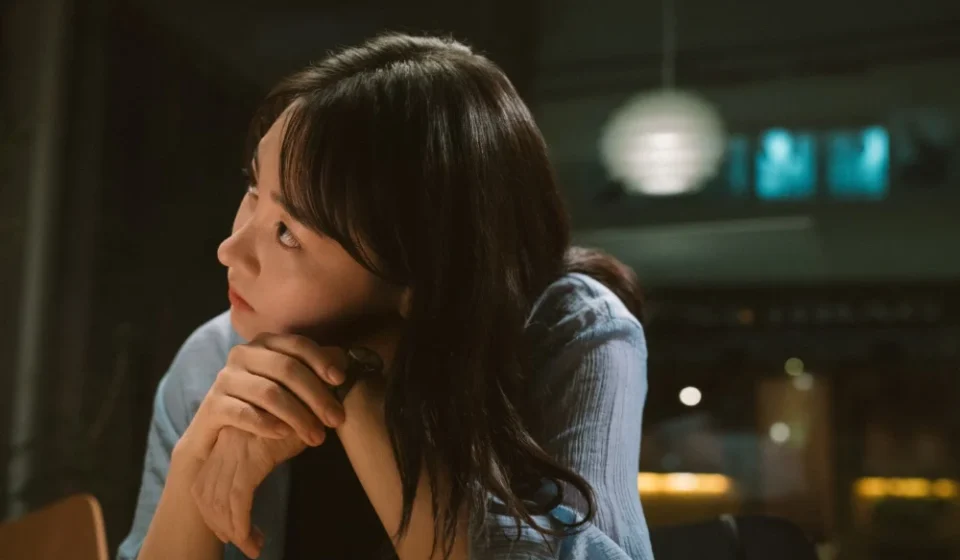
Busan International Film Festival Announces Kim Jong-kwan’s "The Table: Day and Night" as 2026 Opening Gala

The 31st Busan International Film Festival (BIFF) has officially set the stage for its 2026 edition, announcing that the world premiere of The Table: Day and Night, directed by the visionary auteur Kim Jong-kwan, will serve as the festival’s prestigious opening film. This selection marks a significant homecoming for the director, whose career has been inextricably linked with the festival’s growth and its dedication to elevating the nuances of Korean independent and art-house cinema.
Scheduled to run from October 6 to October 15, 2026, the 31st iteration of BIFF promises to be a milestone event, with The Table: Day and Night acting as a thematic centerpiece. The film, which revisits the intimate, observational structure of Kim’s 2016 work The Table, invites audiences into a singular, transient space: a cafe that serves as the silent witness to the complexities of human connection over the course of a single summer and autumn.
A Tapestry of Intimacy: The Narrative Scope
The Table: Day and Night is constructed through a series of four interconnected vignettes, each exploring the fragile, shifting landscapes of romance and human association. By utilizing a fixed location, Kim Jong-kwan strips away the artifice of traditional cinematic narrative, forcing the focus onto the rhythmic cadence of conversation and the subtle shifts in character temperament.
The film’s ensemble cast is a deliberate blend of seasoned performers and emerging talent, designed to capture the volatility of relationships at different stages:
- The Intersections of Time: Yoo-jin (Kim Minha) and Hyeon-oh (Joo Jong-hyuk) navigate the complications of timing, crossing paths at the cafe during different hours of the day, their interaction defined by the ephemeral nature of missed opportunities.
- Echoes of the Past: Sang-mi (Han Sun-hwa) and Young-min (Chang Ryul) provide a study in nostalgia as middle school friends who find themselves reconnecting in a space that feels both familiar and entirely foreign to their adult selves.
- The Creative Spark: Web novelist Hye-jin (Shim Eun-kyung) and independent filmmaker Dong-nam (Lee Hee-jun) engage in a high-stakes dialogue, where the boundaries between professional ambition and personal attraction blur in the quiet corners of the cafe.
- Bittersweet Realities: Idol trainee Na-kyeong (Jeon So-young) and her boyfriend Jong-su (Kim Dong-hwi) anchor the film in the anxieties of youth, capturing a poignant moment of decision that resonates with the gravity of a life-altering choice.
By observing these characters as they drift in and out of the cafe’s orbit, Kim creates a microcosm of society, where the cafe acts as a temporary sanctuary for the truth of the human condition.
Chronology of a Career: From Shorts to International Acclaim
The selection of The Table: Day and Night for the Busan opening slot is the latest chapter in a career defined by consistency and a refusal to compromise on artistic vision. Kim Jong-kwan’s ascent in the global film circuit has been a steady climb, marked by a singular focus on the "quiet emotional material" that others often overlook.
Kim first gained critical attention in 2004 with his short film How to Operate a Polaroid Camera, which secured the Jury’s Special Prize at the Mise-en-scène Short Film Festival. This early work established the visual language that would define his later career: minimalist, atmospheric, and profoundly empathetic. Throughout the mid-2000s, he refined his craft with shorts like Slowly (2005) and Phantoms of the Archive (2014), laying the groundwork for his feature debut.
His transition to feature-length filmmaking with Come, Closer (2010) demonstrated an ability to sustain emotional resonance over a longer duration. However, it was Worst Woman (2016) that catapulted him into the international spotlight, winning the Fipresci Prize at the Moscow International Film Festival. That same year, the original The Table premiered at BIFF in the "Korean Cinema Today – Panorama" section, establishing the "four-stories-one-space" format that he has now returned to and expanded upon a decade later.
His recent filmography serves as a testament to his versatility and commitment to the omnibus format and intimate character studies:
- 2019: Contribution to the Netflix original series Persona.
- 2020: The feature film Josée.
- 2021: Shades of the Heart.
- 2022: The experimental work Vestige.
- 2024: Participation in the anthology film The Killers.
The Institutional Perspective: Why "The Table: Day and Night"?
In an official statement, the Busan International Film Festival selection committee emphasized that The Table: Day and Night represents a "provisional culmination" of the director’s lifelong inquiries.
"The film is an elegant and assured work," the committee noted. "It demonstrates a mastery of the cinematic language that Kim Jong-kwan has been developing for over twenty years. Without the need for excessive dramatic setups or artificial plot twists, the film succeeds because it respects the inner voices of its characters. It is a rare example of a film that captures the subtle, often invisible, shifts in relationships with such grace and precision."
The committee further lauded the ensemble cast, highlighting the chemistry between the veterans and the newcomers. By choosing a film that prioritizes grounded, human-centric storytelling over high-concept spectacle, BIFF is making a definitive statement about the type of cinema it intends to champion in the coming years: films that are vibrant in tone yet anchored in the lived reality of their subjects.
Implications for the 2026 Film Landscape
The announcement of the opening film provides a clear signal for the direction of the 31st BIFF. Following a period where global cinema has often leaned into massive franchises and hyper-kinetic editing, the selection of an intimate, dialogue-driven piece suggests a desire to return to the roots of independent, character-focused storytelling.
Furthermore, the simultaneous news that Kim is preparing the local release of Frosted Window alongside his Busan premiere indicates that 2026 will be a "Kim Jong-kwan year." This is expected to draw a significant spotlight to the director’s back catalog, likely leading to retrospective screenings and panels on his specific approach to mise-en-scène and scriptwriting.
The 21st Asian Contents & Film Market (ACFM), which runs concurrently with the festival from October 10 to 13, will also benefit from this selection. As the industry gathers in Busan, the spotlight on The Table: Day and Night will likely facilitate deeper discussions regarding the viability of mid-budget, character-driven dramas in an increasingly volatile distribution market.
A Legacy of Observation
As the 31st Busan International Film Festival approaches, the anticipation surrounding The Table: Day and Night speaks to the enduring appeal of the quiet, observational film. By returning to the structure that first brought him acclaim at the festival in 2016, Kim Jong-kwan is not merely repeating himself; he is demonstrating how the same space can yield entirely different truths depending on the passage of time and the maturity of the filmmaker.
For the audiences in Busan and the global film community at large, this opening film serves as a reminder that the most profound stories are often found in the spaces between people—the quiet pauses, the unspoken tensions, and the fleeting moments of connection that define the human experience. As October 6 draws near, the festival prepares to open its doors to a film that is as much about the viewer as it is about the characters on screen, inviting everyone to pull up a chair at the table and listen.