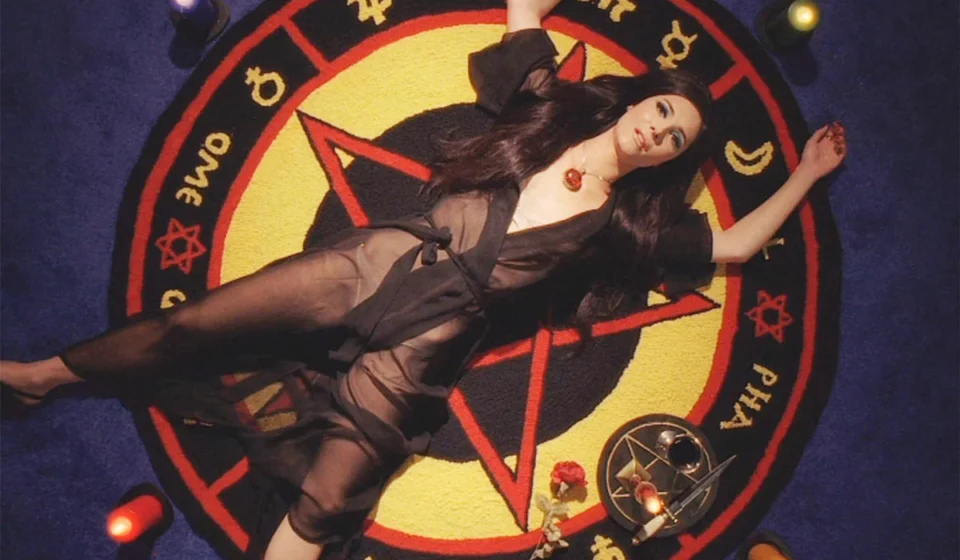
Beyond the Blood: Anna Biller and the Battle for Serious Cinema at TIFF

At the 2026 Toronto International Film Festival (TIFF), the Midnight Madness program—a sidebar traditionally reserved for the visceral, the kinetic, and the overtly transgressive—hosted the world premiere of Anna Biller’s The Face of Horror. While the screening was met with an engaged, packed house, the post-premiere discourse revealed a palpable disconnect between the filmmaker’s intentions and the expectations of a certain segment of the genre-film faithful.
Biller, the auteur behind the cult hits Viva (2007) and The Love Witch (2016), arrived in Toronto with a film that serves as both a formal masterclass and a personal manifesto. Yet, as the dust settled on the premiere, she found herself confronting a familiar, frustrating critique: that her work, defined by its lush aesthetic and heightened artifice, lacks the "grit" or "gory" intensity that defines the traditional horror canon.
The Collision of Expectations and Intent
"I’m not sure it was 100 percent the right crowd," Biller admitted to IndieWire the day after the premiere. "I think they wanted something more gory."
Biller’s observation highlights a long-standing tension in her career. Her work is frequently categorized by its visual splendor, leading some audiences to reflexively label it "camp." For Biller, that term—often used to describe work that is stylized or exaggerated—has become a weaponized dismissal. When critics or fans describe her films as camp, she argues, they are essentially labeling them as "failed seriousness."

"I do like the word ‘humor’ because there is intentional humor, of course," Biller noted, pointing to the cathartic tradition of the revenge thriller. "But ‘camp,’ I feel like it’s failed seriousness."
This friction is particularly acute when Biller’s films, which center on the deep-seated, often harrowing experiences of women, are viewed by audiences who prioritize spectacle over psychological interiority. She suspects a specific demographic of viewers—"dude bros," in her phrasing—who find themselves unsettled not by the monsters on screen, but by the weight of the monologues and the unflinching focus on female suffering.
A Chronology of Artistic Resistance
To understand the stakes of The Face of Horror, one must look at the trajectory of Biller’s career. Her path has been defined by an uncompromising, albeit difficult, adherence to her own vision.
Following the acclaim of The Love Witch, Biller found herself in a position of high praise but low capital. Despite industry figures publicly lauding her as a "genius," those sentiments rarely translated into greenlit projects. The most prominent casualty of this disconnect was Bluebeard’s Castle, an ambitious Gothic romance that stalled in development.

"It was a really good script, and a lot of people knew it was a really good script," Biller reflected. "But it’s because my work falls into this category that doesn’t fit."
The industry’s inability to categorize her work—whether it belongs in "main competition," "platform," or "genre" slots—forced her to pivot. She ultimately adapted the screenplay into a novel, a move that signaled her frustration with a gatekeeping apparatus that views her stylistic choices as a barrier to entry. For a time, Biller was ready to walk away from filmmaking entirely. The Face of Horror was, in many ways, her last stand—a professional line in the sand.
The Anatomy of The Face of Horror
The Face of Horror relocates the classic Japanese ghost story Yotsuya Kaidan to 14th-century England. The narrative follows Eleanor (Kristine Froseth), a woman whose clandestine marriage to a knight (Jonah Hauer-King) descends into a waking nightmare.
The film is an exploration of "medieval misogyny" that feels terrifyingly contemporary. Biller argues that the resonance between the 14th century and the 21st is "almost taboo," yet it is this very connection that she seeks to explore.

"In this film, there’s medieval misogyny, which doesn’t feel that different to modern misogyny at times," she said. "We can talk about it in a medieval folk tale ghost story, and we can still feel it."
The production itself represents a significant evolution in Biller’s career. On The Love Witch, Biller was a one-woman production house, sewing costumes and drafting patterns to maintain visual control on a shoestring budget. While critics often cited this as evidence of a "control freak" temperament, Biller maintains it was simply a necessity of protecting the integrity of the work.
For The Face of Horror, Biller was afforded a professional production infrastructure. With a dedicated team of cutters, drapers, and stitchers, she was able to translate her vision into reality without having to physically construct every element. "It was the first time I think I’ve been on a movie that’s being done like how movies are normally done, and it was quite fabulous," she said.
The Implication: Can Genre Tolerate Sincerity?
The recurring critique that Biller’s films are merely "aesthetic exercises" carries a deeper implication for the horror genre at large. Biller argues that the resistance to her work is a defensive posture.

"There’s a defensiveness," she explained. "Like, ‘Please don’t take this seriously because if we do, then it indicts us as men.’ And I think especially horror fans, their entertainment is very safe for them because they don’t ever have to see men called out for anything."
This critique is central to the film’s reception. By utilizing the language of horror—the blood, the ghosts, the high-contrast lighting—to tell stories about the systemic, quiet, and profound suffering of women, Biller is essentially "hacking" the genre. When she separates her characters from their surroundings through specific lighting techniques, she is forcing the viewer to look at the human soul before the production design.
The emotional stakes for her cast are equally high. During the filming of one of the movie’s most harrowing scenes, lead actress Kristine Froseth was so affected that she required a break from the set. Biller, too, was moved to tears. This shared vulnerability on set contradicts the "detached" label often applied to the director.
"We were both sobbing because it was such a moment," Biller said.

A Path Forward for Auteur Horror
The implications of The Face of Horror extend beyond its current festival run. As the film seeks U.S. distribution, it stands as a litmus test for the industry’s willingness to engage with high-concept, female-led horror that refuses to prioritize gore over emotional truth.
Biller’s work asks a fundamental question: Why must a film be "dirty" or "low-brow" to be considered authentic horror? By insisting on beauty, meticulous craft, and overt emotional sincerity, Biller is challenging the boundaries of the genre.
She is not merely a director or a designer; she is a "faithful messenger," as she describes herself, attempting to document the realities of women’s lives through the medium of the folk tale. If the "dude bros" of the Midnight Madness crowd felt alienated, it is perhaps because they were being asked to do something rarely required of them in a cinema seat: to witness the pain of others without the comfort of ironic distance.
The Face of Horror is a triumph of vision, a film that utilizes the "surface" of genre to expose the depths of human cruelty. Whether the industry is ready to accept that seriousness remains to be seen, but Biller has made her point: the blood on the screen is real, and the pain behind it is not up for debate.