Behind the Velvet Rope: Crystal Hefner Exposes the Dark Reality of the Playboy Mansion

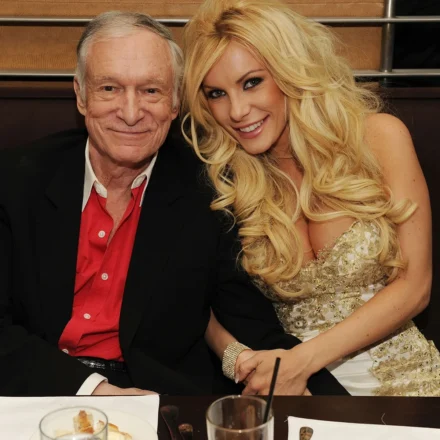
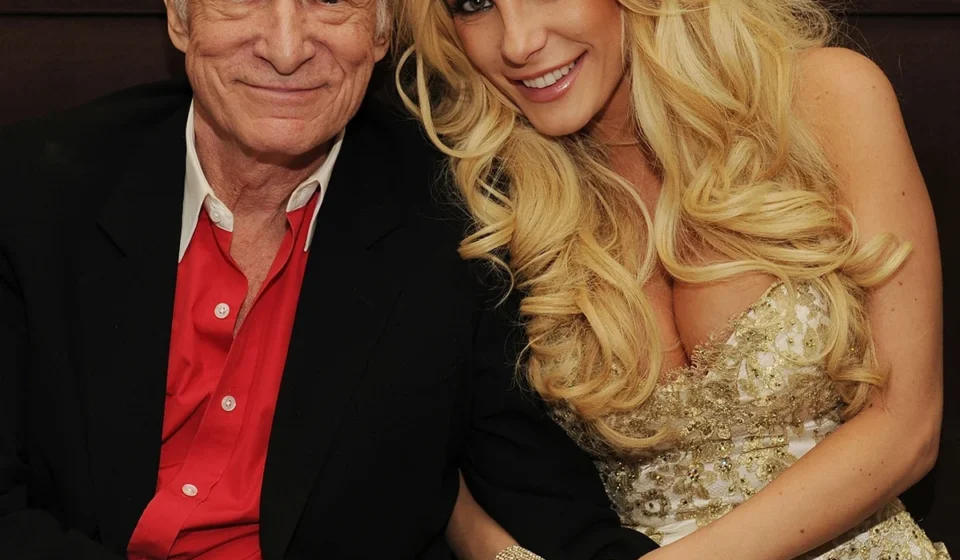
Decades after the Playboy Mansion became synonymous with the pinnacle of Hollywood decadence, the reality behind the gates is being rewritten by the woman who stood at the center of its final chapter. Crystal Hefner, formerly Crystal Harris, who was married to Hugh Hefner from 2012 until his death in 2017, has emerged as one of the most vocal critics of the environment she once called home.
In a recent, scathing interview with Page Six, and further detailed in her memoir Only Say Good Things: Surviving Playboy and Finding Myself, the 40-year-old widow has pulled back the curtain on a culture she describes as inherently misogynistic, restrictive, and emotionally abusive. Her revelations go beyond the typical "tell-all" fodder, specifically naming prominent A-list figures who she claims helped perpetuate a toxic environment within the estate.
The "Horrific" Regulars: Naming the Mansion’s A-List
Crystal Hefner’s testimony suggests that the mansion was not merely a playground for the wealthy, but a curated environment of "like-minded men" whose behaviors ranged from dismissive to predatory.
"It was tough," Hefner told Page Six. "Hef surrounded himself by like-minded men—Bill Cosby included, Donald Trump included—and it was very sad."
The mention of Bill Cosby is particularly poignant given the disgraced comedian’s long-standing relationship with the brand; he hosted the Playboy Jazz Festival for years. Hefner described the experience of being forced to interact with him as "awkward," highlighting the discomfort inherent in being a young woman expected to perform a specific role of compliance for the high-profile guests of her husband.
Perhaps most damaging is her characterization of actor Jack Nicholson. Hefner labeled the mansion "Jack Nicholson’s drive-thru," alleging that the Oscar winner was a frequent visitor who treated the residence as a transactional space. "He could drive up, there’d be women there, there’d be food there, and he would just collect what he needed and leave," she alleged.
A Chronology of Control: From 2008 to the Present
To understand the gravity of Hefner’s claims, one must look at the timeline of her decade-long tenure within the Playboy system.
- 2008: A 21-year-old Crystal Harris meets Hugh Hefner at a Halloween party. She soon moves into the mansion, entering a world governed by strict, unwritten rules.
- 2010: The planned wedding to Hefner falls through when Crystal leaves the mansion in a state of high-pressure anxiety, feeling "trapped" by the expectation of being a public spectacle.
- 2011–2012: After a brief stint trying to forge a life outside the mansion, Crystal returns. She negotiates terms, including the removal of other concurrent girlfriends, and marries Hugh Hefner on New Year’s Eve 2012.
- 2017: Hugh Hefner passes away at age 91. Crystal assumes the role of primary caretaker during his final, declining months.
- 2022–Present: Following the release of the docuseries Secrets of Playboy, Crystal begins to speak out more candidly about her experiences, eventually publishing her memoir to reclaim her identity.
Supporting Data: The Architecture of Restriction
Hefner’s account is not merely anecdotal; she provides a chilling look at the systemic psychological conditioning used at the mansion. Her memoir details a life where every aspect of personal autonomy was eroded.
The 6 p.m. Curfew and Lack of Privacy
Life in the mansion was governed by a rigid schedule. Crystal notes that she had a 6 p.m. curfew, monitored by pantry staff who would call her phone at 6:01 p.m. if she was not present to kiss Hefner on the cheek. Privacy was non-existent; Hefner held the master key to every room, ensuring no woman could ever lock him out.
The "Robotic" Intimacy
Hefner describes the sexual environment as "odd and robotic." She details a ritual that included bringing new women into the bedroom, playing porn on a loop, and passing around marijuana. She suggests that the man hailed as a sexual liberator was, in reality, uninterested in the pleasure of his partners, often preferring to look at himself in a mirror placed above the bed.
Financial Infantalization
The women residing at the mansion received a weekly $1,000 allowance. While it provided for "essentials," Crystal describes this as "demoralizing on purpose." It prevented the women from gaining financial independence, effectively trapping them within the mansion’s walls.
Physical Policing
Hefner recalls being critiqued for minor weight fluctuations. When she gained a few pounds, she was told she needed to "tone up." She writes that she hit the gym and restricted her food intake in a panic, noting that she was not permitted to discuss sensitive topics like condom use or the reality of death, unless the conversation centered exclusively on Hefner himself.
Official Responses and Public Stance
In the wake of these revelations, the media cycle has turned its attention to the men named in the report. E! News and other outlets have reached out to the representatives of Bill Cosby, Jack Nicholson, Jon Lovitz, George Lopez, and Mark Hamill for comment.
To date, the response has been largely silent. While some figures like George Lopez and Mark Hamill were described by Crystal as "lovely" or "very, very nice," the allegations against others remain unaddressed by their legal teams. Conversely, in 2022, following earlier accusations, Cooper Hefner took to social media to defend his father’s legacy, calling the stories "a case study of regret becoming revenge."
The Psychological Implications of "The Mansion"
The implications of Crystal Hefner’s testimony are profound. She argues that her marriage was an exercise in "emotional abuse," comparing her feelings toward her late husband to the Stockholm Syndrome one might feel toward a kidnapper.
"I didn’t realize how bad it was until I was away from it for a while," she explained in a 2024 interview. "When you don’t know who you are, that could be dictated to you by somebody else… It is very important for you to have your own power."
A Call for Change in Industry Standards
Hefner’s public campaign serves as a cautionary tale about power imbalances in the entertainment industry. She has explicitly asked figures like Jessica Biel—who has been linked to potential projects regarding the Playboy era—to reconsider their participation in dramatizing or romanticizing the mansion. Her plea is simple: these stories are not "glamorous history," but rather accounts of systemic trauma.
By pivoting from a "Playmate" to an author and advocate, Crystal Hefner is attempting to dismantle the very brand that once defined her. Her narrative highlights the importance of agency, the toxicity of unchecked male power in Hollywood, and the long road to recovery for those who survive environments designed to strip them of their humanity.
As the cultural conversation surrounding the Playboy legacy continues to evolve, Crystal’s voice stands as a testament to the fact that for many, the "dream" of the mansion was a waking nightmare. Her memoir, Only Say Good Things, stands not just as a record of her survival, but as a direct challenge to the historical sanitization of one of the 20th century’s most controversial figures.