The Manhunter Hunt: Analyzing the Density and Direction of HBO’s ‘Lanterns’ Episode 2

[Editor’s note: The following review contains spoilers for “Lanterns” Episode 2, “Trust Fall,” including the final sequence. For a spoiler-free analysis, please refer to our full season review.]
“Yeah, I got it.”
John Stewart’s terse, exasperated sign-off to his extraterrestrial abductors in the second episode of HBO’s Lanterns functions as both a narrative pivot and a meta-textual nod to the audience. In “Trust Fall,” the show’s sophomore outing, the pacing is dictated by a deluge of exposition that demands the viewer’s undivided attention. Between the emergence of John’s mysterious, ring-manifested pet bird, Hal Jordan’s bizarrely domestic arrangement with a carnivorous plant named Earl, and the introduction of a vengeful alien faction, the episode is a high-density affair.
While the show occasionally struggles under the weight of its own world-building—frequently stopping to clarify, re-explain, and double-check its own internal logic—it remains a compelling piece of genre television. It is a show that balances the gritty, small-town mystery of a prestige crime drama with the cosmic stakes of a superhero epic.
Main Facts: The New Mission Parameters
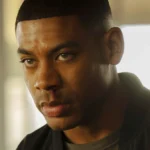
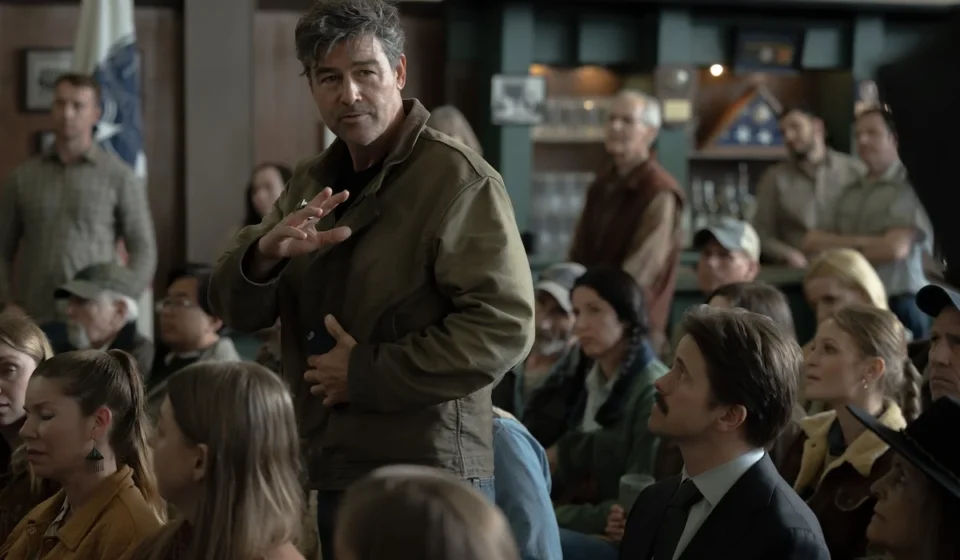
The overarching mission for our protagonists has shifted from a reactive investigation to a tactical manhunt. Following a violent skirmish at a local high school football game, Hal Jordan (Kyle Chandler) and John Stewart (Aaron Pierre) have identified the casualties: a scout team of aliens sent to track down a “Manhunter,” a synthetic, genocidal shapeshifter responsible for the annihilation of their home planet.

The “case,” in the traditional sense, is ostensibly solved. The shooters have been identified as the subordinates of local rancher William Macon (Garret Dillahunt). However, the resolution of this conflict is far from simple. The town of Rushville, including the suspicious Sheriff Kane (Kelly Macdonald) and the wealthy, enigmatic Macon, is eager to see the Lanterns depart. The complication? The alien delegation has issued an ultimatum: if the Manhunter is not surrendered within 48 hours, they intend to detonate themselves within the town limits—an act of martyrdom and destruction similar to the suicide of the alien Waylon in the previous episode.
The investigation has thus evolved into a high-stakes search for an entity that is currently hiding in plain sight, masquerading as a human, and protected by the very people who claim to want the Lanterns gone.
Chronology of the “Trust Fall”
The episode structures itself around the uneasy partnership between Jordan and Stewart.
The Opening Act: The episode begins and ends in a desolate motel parking lot, serving as the staging ground for the series’ central relationship. Hal attempts to coach John in the art of flight, a task that remains elusive for the trainee. During one of these sessions, John inadvertently manifests a small, green bird—a physical projection of his subconscious.
The Middle Ground: As the narrative progresses, John travels to Coast City, where he attempts to navigate the complexities of his new reality, including feeding the aforementioned plant, Earl, and engaging in a tense dialogue with the embittered alien visitors. The bird remains a focal point; while John eventually disintegrates the creature in a display of stoic emotional suppression, its existence remains a point of contention and interest for the aliens, who view it as a sign that John can “achieve the impossible.”

The Climax: The tension peaks as Hal pushes John on the significance of the bird. John’s refusal to acknowledge the emotional weight of his creation highlights the central friction between the two: Hal, the seasoned veteran who has long reconciled his humanity with his duty, and John, the newcomer who is still learning to govern his power and his trauma.
Supporting Data: The Search for the Manhunter
The mythology of the Manhunters is perhaps the most significant piece of information provided in this episode. Antaan, the leader of the vengeful alien group, explains that these synthetic beings predate the Green Lantern Corps itself. Their ability to “embed” within a population allows them to move undetected, only to strike when their internal programming dictates.
The identification of the specific Manhunter hiding in Rushville is now the series’ primary engine. The evidence points in several directions:
- William Macon: He is the most visible suspect. His fortification of his ranch, his possession of advanced “alien detectors,” and his aggressive posture toward “colonizers” make him a prime candidate. However, it is equally plausible that Macon is not the Manhunter, but rather a collaborator or a pawn—a man who believes he is protecting the planet from extraterrestrial influence.
- Billy Macon: Macon’s son remains a peripheral but suspicious figure, whose motives are currently obscured by his father’s shadow.
- Sheriff Kane: The most intriguing development occurs when Sheriff Kane reveals she moved to Rushville “on a whim” after leaving Gotham. In the context of a mystery where characters are hiding their true origins, her reticence to discuss her past is a glaring red flag.
Official Responses and Internal Dynamics
The character dynamics in Lanterns serve as a vital counterpoint to the sci-fi spectacle. A standout scene features John at a diner with Zoe, Macon’s wife. Their conversation offers a piercing critique of power and privilege. Zoe observes that “white men have the privilege of being eccentric,” allowing them to act with impunity—a comment that cuts both ways, applying equally to the wealthy, ranch-owning Macon and the mansion-dwelling, rule-breaking Hal Jordan.
This dialogue underscores the central theme of trust. John is inherently suspicious of Hal, yet he continues to share information with him, choosing to work within the hierarchy rather than bypass it. This choice is particularly poignant given that Hal has been secretly consulting with the disgraced former Green Lantern, Sinestro (Ulrich Thomsen), who has explicitly warned him against trusting John.

Implications for the Season
The implications of "Trust Fall" are twofold. First, the series is positioning itself as a slow-burn character study. The mystery of the Manhunter is a framework to explore the psychological toll of being a Lantern and the moral ambiguity of policing a universe that is not always grateful for protection.
Second, the structural choice to focus on "the case" in a small-town setting suggests that the show is more interested in the "Ground-Level" perspective of the DC Universe than the cosmic battles typical of the genre. By limiting the scope to a single town and a handful of suspects, the writers are forcing the audience to look closer at the interpersonal conflicts.
The question of whether Macon is a protector or a patsy, or whether the Manhunter is a person we have already met, creates a vacuum of suspense. The inclusion of the Sinestro subplot adds a layer of dread, reminding the audience that even if the Lanterns solve the immediate crisis in Rushville, the political and moral rot within the Corps itself may be the greater threat.
As the series moves forward, the success of Lanterns will depend on its ability to balance this heavy exposition with the grounded, human moments that make John and Hal’s relationship worth watching. If they can maintain the "Clear eyes, full hearts" ethos while navigating the complexities of synthetic genocidal entities, the show stands to be one of the most unique entries in the modern superhero canon.
Grade: B-

Lanterns releases new episodes Sundays at 9 p.m. ET on HBO and is available to stream on Max.