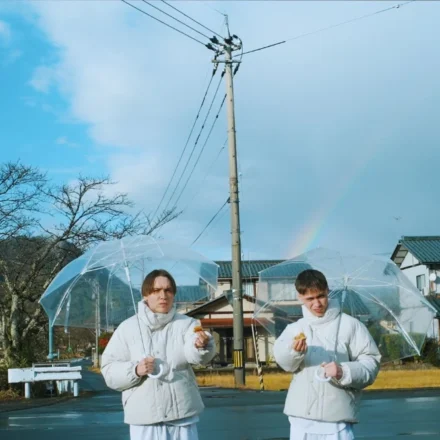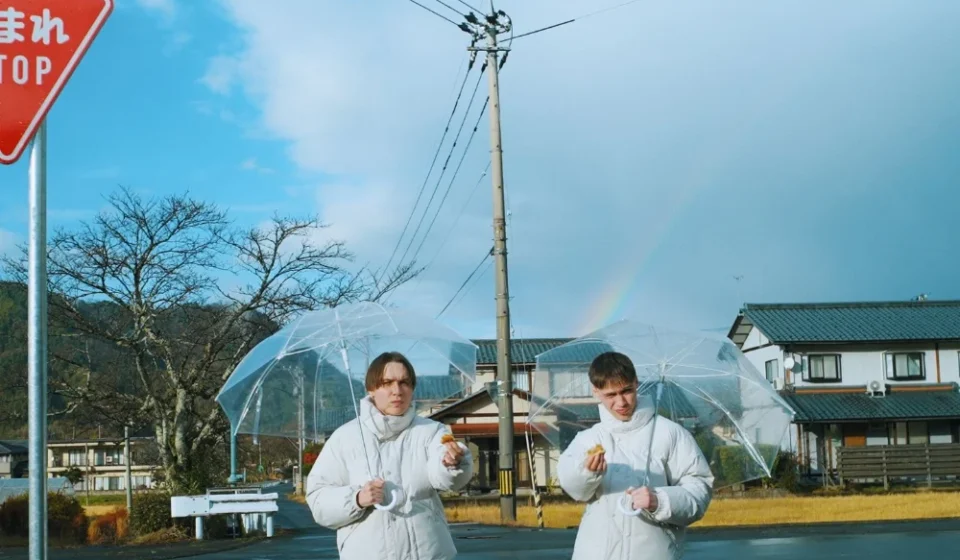

At this year’s Tokyo International Film Festival (TIFF), tucked away within the eclectic “Nippon Cinema Now” section, lies a film that defies easy categorization. Kefi, the debut feature from cinematographer-turned-director Saito Kisin, has emerged as arguably the strangest, most ambitious, and most jarringly intimate entry in the festival’s lineup. A surreal tapestry of short stories stitched together into a cohesive feature, Kefi serves as a kaleidoscopic meditation on the complex, often non-linear, and frequently surreal nature of processing a parent’s death.
By blending the mundane with the extraterrestrial—featuring dinosaurs, alien encounters, and dreamlike affairs—Saito has crafted a narrative that eschews traditional cinematic signifiers of mourning. Instead, he offers a raw, unfiltered exploration of how individuals navigate the vacuum left by a distant, estranged father.
The Genesis of a Surrealist Vision
The evolution of Kefi was not a linear path, but rather a structural experiment that took on a life of its own. Initially, Saito envisioned a four-part anthology, with each segment tackling heavy, distinct thematic pillars: ethics, hypocrisy, discrimination, and the duality of life and death.
“Initially, I wanted to do four series of short films and put it together, and that would become a feature,” Saito explains. “Those four would all have individual themes.”
However, the project underwent a radical transformation in 2024 following the sudden death of Saito’s father. Having been separated from his father for a decade following his parents’ divorce, the filmmaker found himself in a state of emotional ambiguity. He did not feel the crushing weight of traditional grief; instead, he felt a strange, detached numbness—a sentiment that became the heartbeat of the film.
In Kefi, this transition is literal. The film opens with the disembodied narration of a father figure, an echo from beyond the grave, before introducing the three protagonists: Kyo, Asumi, and Kino. Like their creator, these three sisters are forced to grapple with the news of their own father’s passing, a man who has been a ghost in their lives since their parents’ separation.
Chronology of a Creative Catharsis
The production of Kefi serves as a timeline of Saito’s own psychological reconciliation with his family history. As the youngest of three brothers, Saito initially intended to mirror his own life by centering the story on three brothers. He pivoted to three sisters to create a degree of separation that allowed him to explore the "what-ifs" of his own domestic estrangement.
- The Conceptual Phase: Saito begins the project as a four-part short film anthology, focusing on abstract moral themes.
- The Turning Point: In early 2024, the death of his estranged father shatters the original scope of the film.
- The Re-alignment: Saito integrates his personal reality—the numbness of a child who hasn’t seen their father in years—into the narrative of the three sisters.
- The Execution: Saito assumes total creative control, acting as writer, director, cinematographer, gaffer, and editor, shooting with a small, trusted circle of friends.
- The Premiere: Kefi debuts at the Tokyo International Film Festival, signaling a new, experimental voice in the landscape of contemporary Japanese cinema.
The Aesthetics of Disconnection
One of the most striking elements of Kefi is its visual volatility. Saito shifts aggressively between vivid, saturated color palettes and stark monochrome, and between chaotic, frantic handheld camerawork and meditative, static frames. When asked if these visual shifts were intended to map onto specific thematic movements, Saito admits to a more intuitive, experimental philosophy.
“It’s only because I wanted to test and try different approaches,” he says. “That’s why it ended up as it is. I think it’s important that people stay interested and will be attentive.”
This "attentive" viewing experience is aided by the film’s unique approach to family dynamics. Throughout the majority of the runtime, the three sisters are kept apart. Saito purposefully avoids the tropes of the "family reunion" drama, arguing that the mere act of sharing DNA does not necessitate a shared emotional reality.
“Just because you’re family, you’re not always together, it’s not like you always share something, always,” Saito notes. “Your siblings lead their separate lives, but at the very end, siblings or families think about the same things or have the same mindset.”
The "DIY" Manifesto: A Rejection of Institutional Noise
Saito’s production process for Kefi is a radical act of self-reliance. By handling virtually every technical role himself—from gaffing to editing—he bypasses the bureaucratic frictions that often plague large-scale productions. His tools are intentionally modest: a single-lens reflex camera, basic editing software like iMovie, and a cast comprised of close friends.
For Saito, this is not a limitation; it is a creative necessity. Having worked behind the camera on larger, more conventional sets, he has grown weary of the “noise” created by conflicting visions and corporate dilution.
“When you’re on a big set with bigger productions, sometimes not everybody’s looking in the same direction,” Saito observes. “And so sometimes that becomes kind of a noise when you’re trying to make a film. And so what I really wanted to do was make a film only with people I really trust.”
This ethos is central to his identity as a modern filmmaker. By retaining complete control, Saito ensures that his personal, often eccentric perspective is communicated directly to the audience, untarnished by the compromises that often define mainstream studio films.
Implications: Challenging the "Japanese Film" Monolith
Perhaps the most significant implication of Kefi is its role in expanding the global perception of what constitutes "Japanese film." Internationally, Japanese cinema is often pigeonholed into two extremes: the hyper-stylized world of mainstream anime or the revered, classical works of masters like Ozu and Kurosawa.
Saito views this binary as an outdated, reductive narrative that does a disservice to the diversity of the current generation of filmmakers. He sees himself as part of a new wave—citing figures like Ryusuke Hamaguchi—who are pushing the boundaries of what Japanese stories can look like.
“When you think about Japanese films done by Japanese people, people would imagine anime or films with [mainstream appeal],” Saito says. “But I think that’s a shame. I feel that there’s more interesting, more funny, more unique Japanese people in the world, so I really want to show that to people around the world through film.”
By positioning Kefi as a surreal, deeply personal, and highly experimental piece of work, Saito is not just mourning his father; he is mourning the death of a narrow, stereotypical definition of Japanese art.
Conclusion: A New Language for Loss
Kefi is not a film that provides easy answers. It does not offer a sentimental climax where all is forgiven or forgotten. Instead, it offers a mirror to the strange, sometimes hilarious, and often bizarre ways that human beings process the gaps in their lives.
By embracing the surreal, Saito has found a way to articulate the silence that follows a death. He proves that while grief is often portrayed as a somber, heavy affair, it can also be absurd, fragmented, and—at times—strangely optimistic. As the Tokyo International Film Festival spotlights this daring debut, it becomes clear that Saito Kisin is not interested in following the blueprints of the past. He is busy drawing his own, one frame at a time, with a camera in his hand and an unapologetic, idiosyncratic vision that challenges us to see the world—and our own families—with fresh, perhaps slightly disoriented, eyes.