
The act of adaptation is often described as a translation—a process of moving a narrative from the static geography of the page to the fluid, temporal domain of the screen. Yet, for Malaysian filmmaker Edmund Yeo, adapting Li Zi Shu’s sprawling, structurally defiant novel The Age of Goodbyes was less about translation and more about conducting a séance.
Premiering in the Special Presentations section of the Toronto International Film Festival (TIFF), Yeo’s latest feature film is a haunting exploration of generational trauma, the fragility of memory, and the indelible scars left by historical violence. By weaving together five decades of Malaysian history through the lens of a family cursed by early death, Yeo has created a cinematic experience that mirrors the labyrinthine, often unreliable nature of the human memory.
The Weight of History: From Page to Screen
At the heart of Li Zi Shu’s original work is a meta-fictional puzzle. The novel itself is famously difficult to categorize; its timelines fold into one another, its narrators are consistently unreliable, and the boundary between historical fact and family myth is left permanently blurred. The book begins on page 513—a deliberate, coded reference to May 13, 1969. On that date, catastrophic race riots erupted in Kuala Lumpur following a bitterly contested general election. The resulting state of emergency left hundreds dead and created deep-seated ethnic and political fault lines that continue to fracture and define Malaysian society to this day.
"I wasn’t interested in taking this very labyrinthine novel and making everything neat and chronological for the audience," Yeo tells Variety. "I wanted to find a cinematic equivalent for the experience of reading it."
When Yeo first approached the novelist about the project, her skepticism was palpable. "Her first question to me was, ‘Are you sure it is adaptable?’" Yeo recalls. It was a fair question. The source material resists traditional structure, favoring a fragmented approach that mirrors the way trauma disrupts a person’s sense of linear time. Yeo’s response was to forgo a literal reproduction in favor of capturing the novel’s "soul."
A Chronology of Loss and Inheritance
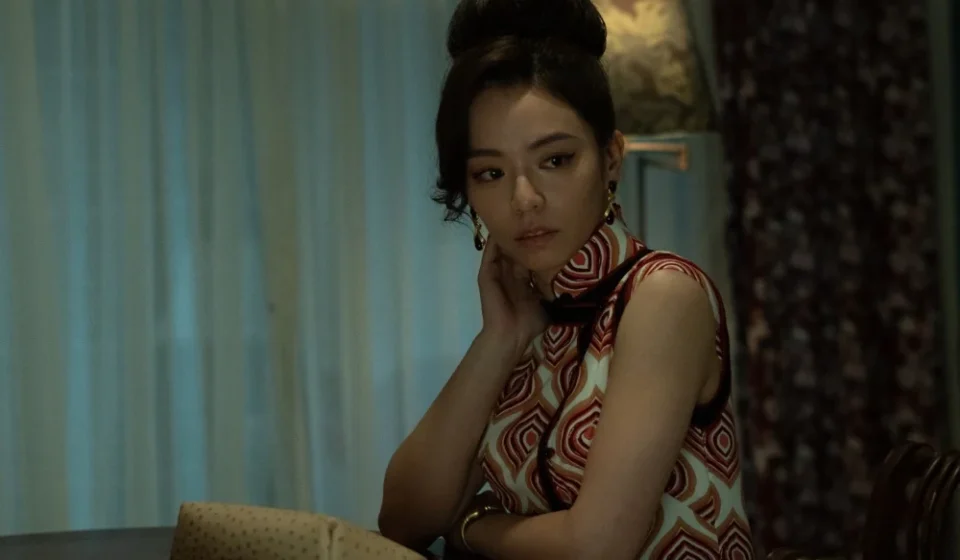
The film’s narrative architecture is as complex as the history it interrogates. The frame story follows a young boy named Kai (Troy Liu) who discovers a mysterious novel titled The Age of Goodbyes. Through this book, he is drawn into the life of Du Li An (Vivian Sung), a woman whose existence is defined by the disappearance of her lover, Lin Sang (Stanley Yau).
The romance, set in the town of Ipoh in 1969, is severed when Lin Sang vanishes after revealing his family’s terrifying "curse"—a foretold early death. Years later, a man named Mong Sang—also played by Yau—appears, bearing Lin Sang’s exact face but claiming to be a complete stranger. This duality serves as the film’s central mystery, a narrative anchor that allows Yeo to drift between the personal and the political.
The film is a polyglot achievement, a Taiwan-Malaysia co-production shot in Mandarin, Cantonese, Malay, Thai, and English. It represents a significant evolution in Yeo’s filmography, following his previous works River of Exploding Durians, We, the Dead, Malu, and Moonlight Shadow.
Perhaps the most daring departure Yeo takes from the source material is the explicit link between the personal and the national. In the novel, Lin Sang’s disappearance coincides with Du Li An’s marriage to another man. Yeo chose to tie this disappearance directly to the racial violence of May 13. "They are ordinary people living inside history," Yeo explains, "and its consequences are felt through fear, absence, separation, rumors, memories, and things people don’t say."
The Personal Archive: Authenticity and Atmosphere
The film’s profound sense of authenticity is not merely a product of production design; it is rooted in Yeo’s own familial history. While researching the project, the director visited his family’s ancestral shrine in Chaoshan, China. There, he uncovered fragmented stories about his grandfather’s migration to Southeast Asia, including a legendary tale of a great-grandfather—a kung fu master—who allegedly leapt across a moving train to save an infant.
"I think families are full of stories like this," Yeo reflects. "Someone tells a story, someone else remembers it slightly differently, certain details disappear while others become more dramatic, and eventually nobody is around anymore who can tell you what actually happened."
This theme of transmission—the way stories, myths, and gestures move through generations—is literally woven into the film’s soundtrack. Several songs featured in the film were written and performed by Yeo’s own parents in the 1970s. The inclusion of his mother’s voice, singing a song composed by his father decades before the film was conceived, serves as a bridge between the director’s personal history and the fictional world he created. "Suddenly my mother’s actual voice, singing a song composed by my father and recorded when they were young, was being transmitted through a film I was making decades later," he says.
Performance as Survival: Vivian Sung’s Transformation
For lead actress Vivian Sung, the challenge was to embody a woman whose identity shifts across decades. To prepare for the role, the Taiwanese actress spent five months working with language coaches to master 1960s Malaysian Chinese Cantonese and Hokkien dialects. She also spent a month living in Kuala Lumpur to immerse herself in the local atmosphere.
"When I first spoke with the director about the script, he told me that Du Li An was a ‘survivor,’" Sung says. That single word became her North Star. Playing opposite Stanley Yau—who inhabited two different men with the same face—required Sung to lean into psychological discomfort. She describes the scene where Du Li An first encounters Mong Sang: "My mind was telling me very clearly, ‘This isn’t him.’ But my body and my memories believed something else."
The film’s multilingual dialogue further enhances this tension. Du Li An speaks Cantonese at home, Mandarin with Lin Sang, and switches back to Cantonese with Mong Sang. Sung notes that these linguistic shifts are often unintentional slips, revealing the character’s subconscious desire to bridge the gap between the living and the dead.
Implications: A Mirror to the Future
The Age of Goodbyes is a film that refuses to offer closure, much like the history it depicts. By delaying the title card until 40 minutes into the runtime—the exact point where the novel begins—Yeo forces the audience to live in the "pre-history" of his characters. He treats adaptation as a conversation, prioritizing the emotional truth of the original text over the preservation of every plot point.
As the film makes its rounds at festivals, it stands as a testament to the power of regional cinema to tackle universal themes of displacement and the haunting nature of the past. Yeo, who is already developing a century-spanning vampire story and a multigenerational drama about filmmakers, admits that he has found a recurring theme in his work.
"Apparently, after making a film about people being haunted by stories from the past, I responded by developing several more films about people being haunted by stories from the past," he says with a smile.
For viewers, The Age of Goodbyes offers more than just a story; it offers an experience of historical haunting. It reminds us that we are all, in some capacity, living inside the echoes of previous generations—carrying their songs, their silences, and the unresolved mysteries that define who we are. In the hands of Edmund Yeo, the personal is not just political; it is a permanent, living dialogue with the ghosts of the past.