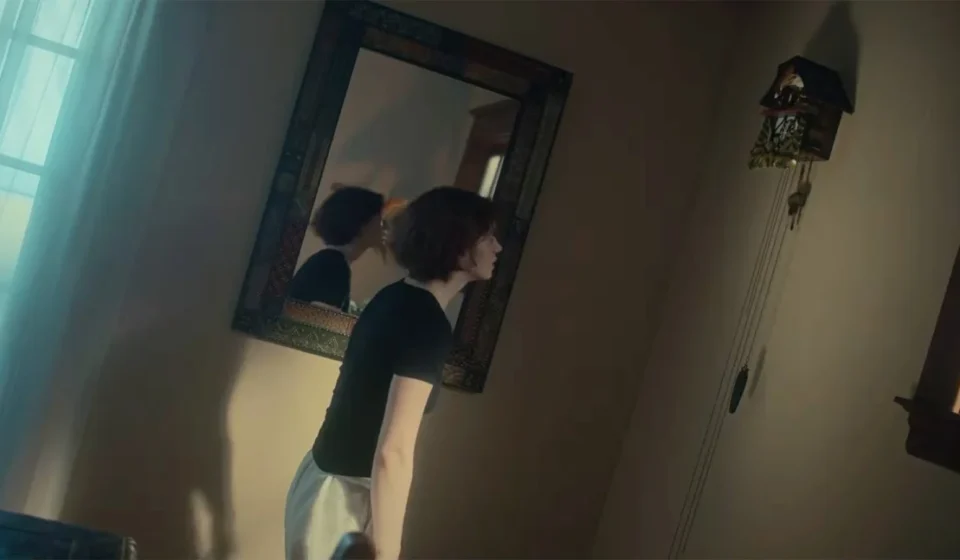
Tick-Tock, Terror: Lisa Jay’s ‘The Cuckoo Clock’ Promises a Surreal Descent into Madness this October

By Alex Billington | September 1, 2026
As the autumn leaves begin to turn and the air grows thin, the horror genre prepares for its annual resurgence. This year, the seasonal shift brings with it a uniquely unsettling debut: The Cuckoo Clock, the feature-length directorial debut of filmmaker Lisa Jay. Produced by Compassionate Disaster Films and Paisley Hat Productions, the film promises to be more than a standard jump-scare vehicle. By blending queer romance with psychological disintegration and supernatural dread, The Cuckoo Clock positions itself as one of the most anticipated indie horror offerings of the 2026 season.
The Premise: A House Built on Fractured Time
At its core, The Cuckoo Clock is a tragic, claustrophobic love story that curdles into a nightmare. The narrative centers on Penny, a young woman navigating the heavy burden of caregiving. Her life revolves around her grandmother, Adele, a woman bedridden and struggling with the encroaching shadows of dementia. Into this volatile household steps Megan, a compassionate live-in nurse.
The connection between Penny and Megan is instantaneous, offering a glimmer of hope amidst the sterility of medicine and the decay of memory. However, their romance is precarious from the start. Adele’s health is in decline following surgery, and the combination of her condition and a heavy regimen of prescription medication has left her grip on reality—and her temperament—severely compromised.
The domestic tension reaches a breaking point when Megan vanishes without a trace. With no police leads and her sanity frayed by grief and suspicion, Penny finds herself isolated. Her only anchor to reality becomes the most unlikely of informants: her grandmother’s antique cuckoo clock. The device begins to "speak" to Penny, whispering warnings that implicate Adele in Megan’s disappearance. As the boundaries between the past, the present, and a hallucinatory reality blur, Penny must confront whether she is losing her mind or uncovering a buried, violent secret.

A Chronology of Obsession: From Concept to Screen
Lisa Jay, a filmmaker whose previous work has primarily occupied the space of short-form storytelling, has spent years refining the visual language seen in The Cuckoo Clock. For Jay, the transition to a feature-length project was predicated on the desire to explore "dream logic"—the idea that the viewer should not just watch Penny’s journey, but inhabit her distorted point of view.
- Pre-Production: Development began under the banner of Compassionate Disaster Films, with producers Erich Cannon and Kim Hornsby working to secure the atmospheric settings necessary to anchor a film that relies heavily on interiority.
- The Festival Circuit: The film has already generated significant buzz within the independent circuit. Its upcoming premiere at the 2026 Dead Prairies Horror Movie Festival in Canada serves as a litmus test for the film’s reception, positioning it as a "must-watch" for genre aficionados.
- The Theatrical Rollout: Following the festival circuit, Compassionate Disaster Films has confirmed a limited theatrical release in the United States, slated for October 2, 2026. This strategic release places the film directly in the center of the pre-Halloween horror window.
Supporting Data: The Anatomy of "Clock Horror"
What distinguishes The Cuckoo Clock from standard fare is its commitment to symbolism. In the film, the clock is not merely a prop; it is a manifestation of Adele’s fading psyche and the ticking clock of Penny’s own fraying nerves. The production design utilizes the aesthetic of the "freaky cuckoo bird"—a grotesque, uncanny element shown in the official trailer—to signify moments where the supernatural bleeds into the mundane.
The performances are the engine of this dread. Hana Hahn, MaKenna DeCaro, and Laura Drake anchor the film in a grounded, emotional reality that makes the eventual descent into madness feel earned rather than forced. By focusing on the codependency between the three women, Jay creates a "pressure cooker" environment where the stakes feel personal. When the supernatural elements emerge—the whispering clock, the hallucinations—they serve as externalizations of the internal rot within the household.
Official Responses and Creative Intent
In interviews regarding the film’s development, Lisa Jay has emphasized that The Cuckoo Clock is designed to be a sensory experience. "We wanted to put the viewer in Penny’s mind," Jay noted in early press materials. "The horror shouldn’t come just from what is hiding in the dark, but from the fear that you can no longer trust your own perception of your loved ones."
The production team has been tight-lipped regarding the specific nature of the film’s climax, but they have confirmed that the project relies heavily on practical effects and lighting to capture the "dream logic" described by the director. Unlike films that rely on heavy CGI, The Cuckoo Clock aims for a tactile, grounded terror. The use of old photos and videos as a motif for Adele’s fragmented memory provides a secondary layer of visual storytelling, forcing the audience to piece together the narrative alongside the protagonist.

Implications for the Indie Horror Landscape
The release of The Cuckoo Clock arrives at a pivotal moment for indie horror. As audiences move away from the franchise-heavy, blockbuster horror model, there has been a notable surge in demand for intimate, character-driven supernatural thrillers.
1. The Rise of the "Caregiver" Sub-Genre
The Cuckoo Clock taps into a growing trend of horror films that explore the intersection of caregiving and trauma. Similar to films like Relic or The Taking of Deborah Logan, Jay’s work posits that the most frightening thing is not a ghost or a monster, but the loss of a person one loves to a condition that turns them into a stranger.
2. A New Voice in Genre Cinema
Lisa Jay’s transition from shorts to features represents a significant moment for Compassionate Disaster Films. By backing a filmmaker who prioritizes tone and symbolism over conventional pacing, the studio is signaling a shift toward "elevated" or atmospheric horror. If The Cuckoo Clock proves successful at the box office, it could pave the way for a wave of similar low-budget, high-concept projects that prioritize artistic vision over mass-market appeal.
3. The Return of Psychological Ambiguity
Perhaps the most intriguing implication of the film is its commitment to ambiguity. By framing the narrative through the lens of a protagonist who may be suffering from a breakdown, the film challenges the viewer to remain skeptical. Is the clock truly haunted? Or is the isolation and the stress of caring for a dementia patient finally breaking Penny’s reality? This "unreliable narrator" trope, when handled with the level of care displayed in the trailer, often results in the most memorable cinematic experiences.
A Final Warning: Why You Should Watch
As we approach the October 2nd, 2026 release date, the buzz surrounding The Cuckoo Clock is palpable. It is a film that demands attention, not just for its scares, but for its exploration of how grief and love can act as a catalyst for destruction. For fans of psychological horror, the film promises a harrowing journey into the depths of a home where time is not a measure of life, but a countdown to an inevitable, terrifying end.

Whether or not the cuckoo bird is truly the herald of doom remains to be seen, but one thing is certain: Penny’s story is one that will linger long after the final credits roll. Keep an eye on local listings as the horror season kicks off; The Cuckoo Clock is a clock you won’t want to ignore.
For more information, behind-the-scenes content, and the latest updates on the theatrical rollout, fans are encouraged to visit the official website for The Cuckoo Clock. Prepare to listen closely—the clock is ticking.