The Silent Symphony of Vengeance: How ‘Motor City’ Redefines the Cinematic Needle Drop

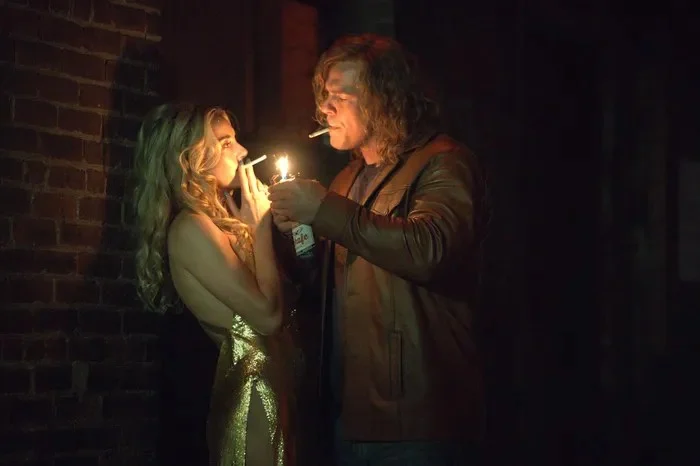
The "needle drop"—the art of placing a pre-existing popular song into a film to elevate a scene—is a technique as old as rock ‘n’ roll itself, yet it remains one of the most difficult feats for a director to master. It requires more than just a good ear; it requires a sense of rhythm, irony, and operatic timing. In his latest feature, Motor City, director Potsy Ponciroli attempts a daring cinematic experiment: a high-wire crime thriller set in 1970s Detroit that is almost entirely devoid of dialogue. Instead, the narrative is driven by the raw physicality of its leads and a series of "visionary, hypnotic" needle drops that place Ponciroli in the lineage of masters like Martin Scorsese and Quentin Tarantino.
Scheduled for release on July 24, Motor City is a gritty, stylized exploration of betrayal and revenge. Starring Alan Ritchson, Shailene Woodley, and Ben Foster, the film is a testament to the power of visual storytelling and the enduring influence of the "pop-music-as-score" aesthetic.
Main Facts: A New Paradigm in Visual Storytelling
Motor City is not merely a period piece; it is a formalist exercise. Set in 1977, the film follows John Miller (Alan Ritchson), a Vietnam veteran and ex-con trying to build a quiet life in Detroit. His world is shattered when he is framed for a narcotics crime by a ruthless drug kingpin named Reynolds (Ben Foster), who covets Miller’s girlfriend, Sophia (Shailene Woodley).
The most striking aspect of the film is its near-total lack of dialogue. Ponciroli eschews traditional exposition, choosing instead to let the actors’ expressions, the atmospheric sound design, and a curated selection of 1970s rock and pop hits carry the emotional weight. This "silent movie" approach forces the audience to engage more deeply with the screen, "coloring in" the subtext of conversations that occur only in glances and gestures.
The film serves as a spiritual successor to Ponciroli’s 2021 Western Old Henry, which similarly used a minimalist framework to explore themes of hidden identity and violence. However, Motor City scales up the ambition, trading the dusty plains for the crumbling, neon-soaked purgatory of late-70s Detroit.
Chronology of a Descent: From Bliss to Purgatory
The narrative of Motor City unfolds with the deliberate pacing of a Greek tragedy, punctuated by moments of explosive violence.
The Illusion of Peace
The film opens by establishing the domestic life of John Miller. Ritchson, known for his hulking physique in Reacher, plays Miller as a "party boy carved out of marble," a man whose brute strength is tempered by his love for Sophia. We see them in their home, a sanctuary of vintage muscle cars and quiet affection. Miller proposes; Sophia accepts. For a brief moment, the audience is allowed to believe in their happiness.
The Framing
The inciting incident is staged with what can only be described as operatic precision. As Miller and Sophia celebrate their engagement, the iconic acoustic plucking of Fleetwood Mac’s "The Chain" begins to bleed into the soundtrack. In a slow-motion sequence, a tear-gas canister shatters their window. The arrest is not just a plot point; it is a sensory assault. As the police—led by a sinister officer in a black leather coat—plant kilos of drugs in Miller’s car, "The Chain" builds toward its famous, driving bass-line climax. The song’s refrain—"Chain, keep us together"—serves as a cruel, ironic counterpoint to the literal and metaphorical chains being placed on Miller.
The Incarceration and the Twist
A newspaper headline provides the only necessary "dialogue": Miller is sentenced to 25 years. While Miller rots in a cell, Reynolds moves in. The film reveals through a series of dread-soaked flashbacks that Sophia was once "attached" to Reynolds, a man who looks like a "dweeb" but wields the absolute power of an underworld kingpin. Reynolds visits Miller in prison, hand-delivering a wedding photo of himself and Sophia with a taunting inscription: "You should have seen the honeymoon."
The Escape and the Quest for Blood
The film’s second act focuses on Miller’s transformation and eventual escape. Ponciroli stages an intricate prison break set to The Moody Blues’ "Nights in White Satin," utilizing the song’s sweeping orchestral melancholy to mask the grit of a breakout involving a "dagger made of smelted candy." The final act is a collision course between Miller’s righteous fury and Reynolds’ entrenched power.
Supporting Data: The Genealogy of the Needle Drop
To understand why Motor City is significant, one must look at the history of the technique Ponciroli is utilizing. The needle drop as a cinematic tool was popularized in 1969 with the use of "Born to Be Wild" in Easy Rider. However, its true "godfather" was Kenneth Anger, whose 1963 experimental film Scorpio Rising used pop music to create ecstatic juxtapositions of leather, motorcycles, and religious iconography.
This aesthetic was inherited by:
- Martin Scorsese: Who used music to provide a rhythmic, often ironic heartbeat to the violence of Mean Streets and Goodfellas.
- Quentin Tarantino: Who turned the needle drop into a cultural phenomenon, using "Stuck in the Middle with You" in Reservoir Dogs to transform a scene of torture into a dance.
- Michael Mann: Whose use of "In-A-Gadda-Da-Vida" in the climax of Manhunter remains a benchmark for the "visionary hypnotic" style.
Ponciroli enters this conversation by using music not just as a mood-setter, but as a primary narrator. In Motor City, the choice of David Bowie’s "Cat People (Putting Out Fire)" or Donna Summer’s "I Feel Love" isn’t just about period accuracy; it’s about tapping into the "dread-soaked rapture" of the characters’ internal states. For instance, the Donna Summer sequence is used to illustrate Miller’s jealous fantasies in prison, the pulsating disco beat mimicking the frantic, obsessive nature of his thoughts.
Official Responses and Critical Context
Early critical reactions to Motor City highlight a fascinating divide between its technical brilliance and its narrative structure.
The Visual Language: Critics have praised Ponciroli’s ability to draw "expressiveness" out of his actors without the crutch of dialogue. Alan Ritchson, in particular, is noted for his "blockish" presence, moving between the vulnerability of Bruce Banner and the unstoppable force of the Hulk. Shailene Woodley’s performance is described as "reading the situation," where her eyes convey the trauma of being a prize caught between two violent men.
The Narrative Dissonance: However, the film has faced criticism for its third-act shift. While the first two-thirds of the movie rely on carefully curated needle drops, the finale reportedly pivots to a "blandly orthodox suspense score." This change has been described by some as a "violation of the film’s aesthetic," leading to speculation about whether the production lost the rights to certain songs or if the director intended a tonal shift that didn’t quite land.
Despite these critiques, the consensus is that Ponciroli is a director with an "audacity of choice" that is rare in contemporary mainstream cinema. His work on Motor City suggests a talent that could be "explosive" if given the resources of a major studio.
Implications: The Future of "Pure Cinema"
The release of Motor City arrives at a time when the film industry is grappling with the "content" versus "cinema" debate. By removing dialogue, Ponciroli forces the medium back to its roots—"pure cinema"—where the image and the sound are the only tools available to move the audience.
1. The Resurgence of the Stylized Thriller
Motor City follows in the footsteps of films like Nicolas Winding Refn’s Drive and S. Craig Zahler’s Dragged Across Concrete, which prioritize atmosphere and "grungy primal pop" over traditional storytelling. Its success (or failure) will serve as a bellwether for whether audiences are still willing to "use their noodles" to participate in a film’s telling.
2. The Evolution of the Action Star
For Alan Ritchson, Motor City represents a significant career pivot. It proves he can carry a film not just with his physique, but with a silent, brooding interiority. This could open doors for more experimental roles for actors typically pigeonholed into the "tough guy" archetype.
3. A Template for Low-Dialogue Filmmaking
In an era of "second-screen viewing," where audiences often look at their phones during dialogue-heavy scenes, a movie that requires visual attention could be a radical antidote. Motor City demonstrates that when the words are removed, the presence of the actors and the power of the music become impossible to ignore.
Conclusion
Motor City is a flawed but fascinating immersive experience. It is a movie that, at its best, qualifies as a "glittering underworld opera." While it may stumble in its final moments, the "needle drops" it does provide—specifically the "The Chain" and "Nights in White Satin" sequences—are destined to be studied by film students for years to come. Potsy Ponciroli has crafted a film that almost entirely lacks words, yet speaks volumes about the enduring power of the cinematic image. As the credits roll, the audience is left with the haunting realization that sometimes, the most profound stories are the ones that don’t need to be told—only felt.