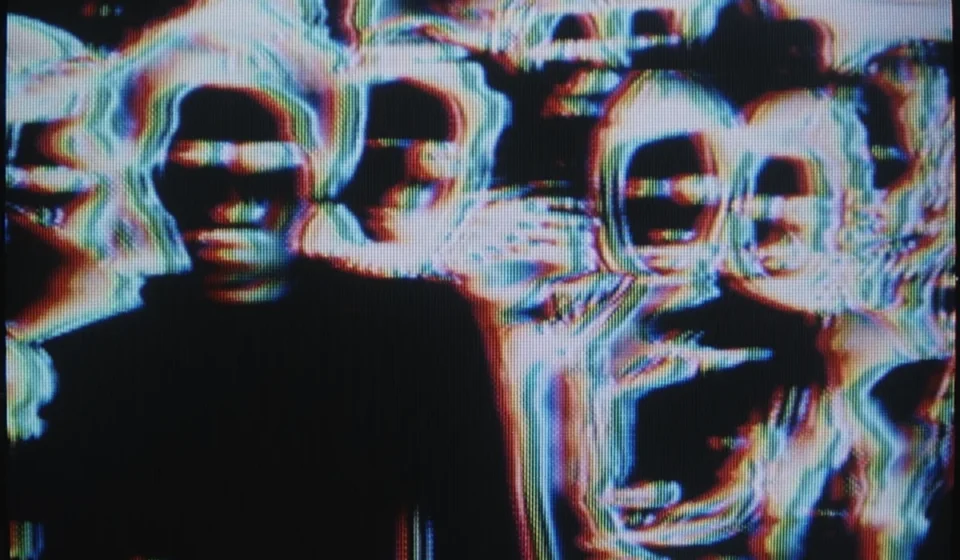
The Archivist’s Abyss: Inside the Compulsive Cinematic Mystery of ‘Chronovisor’

Watching a character sit alone at a desk, methodically turning pages or staring at a flickering screen, is rarely the stuff of high-octane cinema. Yet, the directorial debut from Jack Auen and Kevin Walker, Chronovisor, transforms this sedentary, scholarly labor into an addicting, claustrophobic rabbit hole. By blurring the lines between historical documentary and psychological thriller, the film captures the singular, consuming vertigo of obsession.
The film follows Béatrice (played by Anne-Laure Sellier), an academic at Columbia University’s Zuckerman Institute. Her field of expertise is the historical evolution of memory, a pursuit that leads her to the titular "Chronovisor"—an alleged occult device said to have been constructed by the Italian Benedictine monk and scientist Father Pellegrino Ernetti in 1972. Ernetti claimed the machine could tune into electromagnetic signals from the past, effectively acting as a window into history. As Béatrice descends into the archives, the dusty, forgotten texts she studies begin to transform, with key sections illuminating in stark white subtitles, pulling the audience into her point of view.
The Genesis of an Obsession: A Historical Chronology
The real-life history of the Chronovisor is as bizarre as the film that depicts it. In the early 1970s, Father Pellegrino Ernetti, a respected exorcist and musician, claimed he had assembled a team of world-class scientists—including, allegedly, Nobel laureate Enrico Fermi and Wernher von Braun—to build a device capable of capturing visual and auditory "ghosts" of the past. Ernetti famously claimed the device allowed him to witness, and even photograph, the Crucifixion of Jesus Christ.
Auen and Walker spent nearly a year of pre-production scouring archives, building the film’s narrative around genuine, often obscure historical documentation. The film presents a meticulous timeline of the device’s "discovery" and its subsequent discrediting by the Vatican and the scientific community. By integrating actual magazine articles, newspapers, VHS tapes, and audio recordings, the directors force the viewer to engage in a form of media archeology. The film does not merely tell the story of the Chronovisor; it acts as an evidence board, presenting the viewer with a sprawling conspiracy that feels dangerously tangible.
The Academic as Protagonist: Performance and Perspective
The choice of Anne-Laure Sellier to lead this project is a masterstroke of casting. A real-life professor of behavioral sciences at HEC Paris, Sellier brings a grounded, stoic intellectualism to a character who functions primarily as an audience surrogate.

For the vast majority of its 90-minute runtime, Chronovisor operates as a one-hander. We rarely see the faces of the people Béatrice speaks to; they are voices on the other end of a phone line or off-screen entities at a restaurant table. This isolation emphasizes the singular nature of her quest. As she unearths more fragments of Ernetti’s life—and his mysterious disappearance from public discourse following the device’s debunking—her own life outside of the archives seems to dissolve.
Sellier’s performance is a study in subtle physical deterioration. Early scenes show a woman energized by the thrill of the hunt; her eyes light up at a breakthrough in a dusty library stack. As the film progresses, however, the toll of her fanatical research becomes visible. She becomes distracted, irritable, and physically exhausted, conveying the psychological weight of a woman who has sacrificed her connection to the present to live entirely in the shadow of a historical ghost.
Supporting Data: Aesthetic and Narrative Construction
Cinematographer Leo Zhang plays a vital role in the film’s success, utilizing 16mm film to capture New York City’s libraries and university halls. The aesthetic is intentionally anachronistic—basked in warm, golden, grainy light that feels as though it belongs to the 1970s rather than the modern digital era. This visual texture creates a palpable sense of claustrophobia, grounding the viewer in a world where the past feels more immediate than the present.
The soundscape is equally deliberate. Rather than a standard thriller score, the directors utilize bombastic, classical compositions by Gustav Holst. The music imbues the act of reading with an almost religious gravity, suggesting that the search for truth is an epic undertaking, regardless of whether the object of that search is a hoax or a hidden reality.
The film owes a significant creative debt to the literary tradition of essayists like Jorge Luis Borges and Umberto Eco. Much like The Name of the Rose or Ficciones, Chronovisor is a labyrinthine text about the dangers of reading too deeply. It is a work of metafiction that asks the audience to consider why we are so desperate to "see" the past, and what we lose when we try to pull history into the light of the present.

Official Responses and the "Debunking" Narrative
While the film remains respectful of its source material, it does not shy away from the skeptical reception that met Ernetti’s claims. The "Chronovisor" was widely dismissed as a fraud by the scientific community and even faced internal pressure from the Church. The film cleverly mirrors this by never confirming whether the device was a functional miracle or a sophisticated, perhaps tragic, elaborate lie.
By refusing to offer a definitive "gotcha" moment, Auen and Walker maintain the film’s status as an intellectual thriller rather than a standard genre flick. The narrative structure raises a pertinent question: does the truth of the device matter as much as the desire to believe it exists? In an age where digital information is ubiquitous and easily manipulated, the film’s obsession with a 1970s occult mystery feels strikingly relevant. We, like Béatrice, spend our lives staring at screens, searching for signals from worlds we cannot touch.
Implications: The Mirror of the Past
Chronovisor arrives at a moment where the line between reality and simulation is increasingly porous. The implications of the film are twofold. First, it critiques the modern condition of being "plugged in." By spending 90 minutes watching a character obsessively curate and cross-reference information, the audience is forced to confront their own habits of media consumption. We are all researchers in our own small way, scrolling through timelines and archives, hoping to find a pattern in the chaos.
Second, the film explores the fragility of legacy. Father Ernetti, whether he was a visionary or a charlatan, remains a figure of intense fascination precisely because he occupied the space between the scientific and the divine. The film suggests that human beings are fundamentally wired to chase these mysteries, even when the pursuit threatens to consume us.
When the film reaches its final, enigmatic conclusion, it does not provide the catharsis of a solved case. Instead, it leaves the audience with a set of lingering, haunting questions about the cost of curiosity. By the time the credits roll, the viewer is left in the same state as Béatrice: wanting to comb through every frame one more time, looking for a secret that might not be there.

Chronovisor is a rare, intellectually demanding, and visually intoxicating debut. It is a film that rewards the patient viewer, turning the simple act of observation into an act of discovery. It is, quite simply, a triumph of independent cinema.
Grade: A-
Grasshopper Film will release the film in select theaters on Friday, September 4.