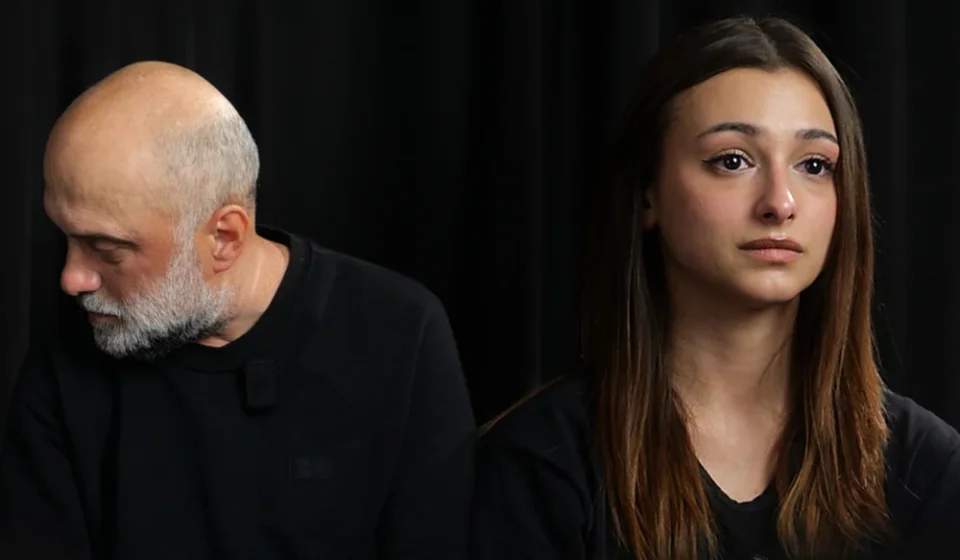
Through the Flames: Milcho Manchevski’s ‘Good People’ and the Haunting Legacy of the Pulse Nightclub Tragedy

SARAJEVO — On the night of March 16, 2025, the small North Macedonian town of Kočani was transformed from a quiet industrial hub into the site of one of the most harrowing civilian tragedies in the history of the Balkans. A catastrophic fire at the Pulse nightclub claimed the lives of 63 young people and left hundreds more with life-altering physical and psychological scars. The disaster, which unfolded in a matter of minutes, has now become the subject of a devastating new documentary by Academy Award-nominated director Milcho Manchevski.
Making its world premiere in the documentary competition at the Sarajevo Film Festival, Good People marks a departure for Manchevski. Known for the sweeping, lyrical visuals of his Venice Golden Lion-winning debut After the Rain, Manchevski has delivered a film that is strikingly austere, self-funded, and purposefully devoid of cinematic flourish. By eschewing the broader political post-mortem and focusing entirely on the raw, unvarnished testimonies of those who survived the inferno, Good People offers a haunting portrait of a society’s failure and the fragile thinness of the veneer we call civilization.
Main Facts: The Night the Pulse Stopped
The Pulse nightclub was a popular weekend destination for the youth of Kočani and the surrounding rural districts. On the night of the fire, the venue was hosting a performance by a local pop group, an event that drew a crowd far exceeding the building’s legal limits. While the venue was officially rated for a maximum capacity of 250 people, investigators later estimated that over 500 attendees were packed into the space.
The majority of those present were between the ages of 16 and 25. The tragedy was compounded by a series of egregious safety violations that turned the nightclub into a pressurized death trap:
- Single Point of Failure: Despite the crowd size, the venue operated with only one functional exit.
- Flammable Interior: The ceiling was lined with highly flammable acoustic foam and decorative materials that ignited instantly.
- Insufficient Equipment: Only one fire extinguisher was found on the premises, and it was reportedly inaccessible during the initial outbreak.
- The Toll: 63 confirmed fatalities, primarily due to smoke inhalation, thermal burns, and traumatic asphyxiation during the stampede for the exit.
Chronology of a Catastrophe: Minutes to Midnight
Manchevski’s documentary reconstructs the timeline of the night through a "chorus-like" assembly of over 20 first-hand accounts. The narrative begins not with fear, but with a tragic misunderstanding.
As the pop group performed, a spark—likely caused by faulty wiring or unauthorized pyrotechnics—ignited a section of the ceiling. In the film’s rare use of archival footage, a grainy cell phone video shows the initial flicker. Witnesses recall that the crowd initially cheered, believing the flames were a programmed special effect. This brief window of confusion proved fatal. Within seconds, the "special effect" transformed into a ceiling-wide flashover.
"My eyes were seeing so many things that my brain couldn’t process," recalls one survivor in the film, a young woman whose shell-shocked expression anchors the documentary’s middle act.
As the realization of the danger set in, the 500-person crowd surged toward the lone exit. The chronology of the next ten minutes is a descent into what the film describes as "medieval" horror. The power failed, plunging the smoke-filled room into total darkness. Attendees describe navigating by the orange glow of the ceiling, which began to drip "liquid fire" onto the crowd below.
The rush for the door resulted in a fatal stampede. Survivors speak of a "carpet of dead kids"—a literal pile of bodies at the bottleneck of the exit—under which others were trapped. Those at the bottom of the pile were killed not by fire, but by the weight of those above them, suffocating while the air around them reached temperatures capable of melting synthetic clothing onto skin.
Supporting Data: Technical Failures and Environmental Factors
The documentary, while focusing on the human element, implicitly highlights the technical negligence that defined the Pulse tragedy. Forensic reports cited in the aftermath indicated that the smoke produced by the burning ceiling foam was highly toxic, containing hydrogen cyanide and carbon monoxide. This explains why many victims were found without external burn marks; they had been rendered unconscious within three to four breaths.
The "sole exit" mentioned in the film was a narrow corridor that violated every modern fire code. In North Macedonia, the tragedy sparked an immediate review of provincial nightlife regulations. Data released by regional inspectors in the months following the fire suggested that nearly 40% of venues in similar small towns were operating with expired safety permits or significant structural violations.
Manchevski’s film uses silent, phone-recorded footage to punctuate these facts. One clip shows the exterior of the club obscured by thick, oily plumes of smoke, a visual testament to the chemical composition of the building materials. The director’s choice to keep these segments brief and scoreless emphasizes the clinical, undeniable reality of the physical environment that killed 63 people.
Official Responses: A Silence Echoed in Art
In the wake of the March 16 disaster, the official response from the North Macedonian government was characterized by a mixture of mourning and defensive bureaucracy. While several local officials in Kočani were suspended, the broader systemic failures—corruption in the licensing of venues and the lack of rigorous fire inspections—remained a point of contention for journalists and activists.
Manchevski’s Good People purposefully leaves these "broader political contexts to the journalists." However, by doing so, the film creates a vacuum that highlights the inadequacy of any official response. No amount of legislative change can address the "indignity" described by the survivors.
The documentary’s title and tagline—"When good people burn in hell"—serves as a provocative critique of the social contract. The "good people" are the victims and the rescuers who, in the absence of functioning safety systems, had to rely on "pure animal instinct." The film includes interviews with locals and early escapees who went back into the inferno. Their descriptions are visceral: pulling victims out by their limbs, only to have the skin "melt and rip off the bone" because the bodies were so hot to the touch.
Implications: The Fragility of the Modern World
The final act of Good People moves beyond the timeline of the fire to explore the psychological and social implications of the tragedy. Manchevski’s use of frequent fades to black and plain intertitles (featuring phrases like "like helpless animals") forces the audience to sit in the silence of the aftermath.
The film suggests that the Pulse nightclub fire was not just a freak accident, but a symptom of a "social collapse." It highlights how easily a modern setting—a nightclub filled with smartphones and pop music—can devolve into a scene of primitive carnage. The survivors speak of "kicking, clawing, and biting" to reach the exit, a revelation of the dark survival instincts that emerge when the structures of safety vanish.
One of the most profound implications raised by the film is the concept of "survivor’s indignity." One subject explains that she feels violated by what she was forced to see and do to stay alive. This trauma suggests that the damage of such tragedies extends far beyond the physical count of the dead and injured; it permanently alters the moral fabric of the community.
Conclusion: A Monument in Film
Good People is an 86-minute exercise in mournful respect. By stripping away the score (save for Novogradska’s somber cello refrain) and focusing on medium-range interviews against black curtains, Manchevski has created a digital cenotaph for the victims of Kočani.
The film does not offer a neat narrative of heroism or a hopeful message of "moving on." Instead, it serves as a stark reminder of the responsibility inherent in governance and urban management. As the drone shots of the Macedonian countryside bookend the film, the contrast between the enduring beauty of the landscape and the preventable horror of the Pulse fire leaves the viewer with a chilling realization: the modern world is only as safe as the exits we provide, and the "good people" of Kočani were failed by a system that valued capacity over conscience.
In Sarajevo, Good People was met with a heavy, contemplative silence. It stands not just as a documentary, but as a warning—a visceral demand that we never again allow the youth of a nation to be consumed by the flames of negligence.