The Echoes of History: Philippe Rombi’s Score for Women on Trial Captures a Landmark Legal Battle

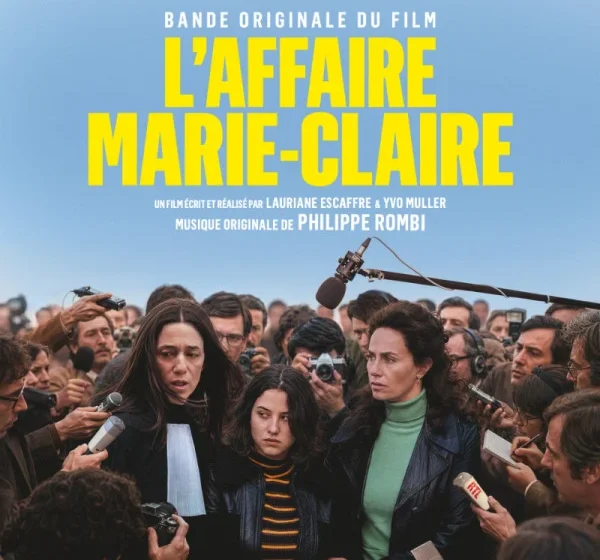
Music Box Records has officially announced the release of the original motion picture soundtrack for the poignant French drama Women on Trial (L’Affaire Marie-Claire). Featuring a haunting and evocative score by the acclaimed composer Philippe Rombi, the album arrives as the film prepares for its wider theatrical release, serving as both a musical companion to a cinematic achievement and a tribute to one of the most significant legal battles in modern French history.
Main Facts: A Collaboration of Cinematic Depth
The soundtrack, now available for order on the Music Box Records official website, showcases the singular talents of Philippe Rombi. Known for his versatility and ability to underscore the psychological nuances of his subjects, Rombi has composed, orchestrated, and conducted a score that navigates the tension, desperation, and eventual triumph inherent in the film’s narrative.
Women on Trial is the latest directorial effort from the creative duo Lauriane Escaffre and Yvo Muller. The film boasts a powerhouse ensemble cast, including Charlotte Gainsbourg, Saül Benchetrit, Cécile de France, Grégory Gadebois, and Michèle Chevalier. While the physical CD is currently available for collectors, the label has confirmed that a digital release will follow in the coming weeks, ensuring that the score reaches a global audience across all major streaming platforms.
The Bobigny Trial: A Chronology of Change
To understand the emotional gravity of Rombi’s score, one must understand the history it serves. The film centers on the 1972 Bobigny trial, a watershed moment in the struggle for reproductive rights in France.
The Spark (1971–1972)
In the early 1970s, abortion remained a criminal offense in France under the 1920 law. In 1971, the "Manifesto of the 343"—a declaration signed by prominent French women admitting to having had abortions—shook the nation. Against this backdrop of growing civil disobedience, 16-year-old Marie-Claire Chevalier was arrested after seeking an abortion following a rape.
The Trial (1972)
The ensuing trial in Bobigny became a spectacle of political defiance. Marie-Claire’s mother, along with two other women who assisted her, were prosecuted alongside her. The defense, led by the legendary lawyer Gisèle Halimi, transformed the courtroom into a stage for public debate. They argued not just for the innocence of the individuals, but for the fundamental right to bodily autonomy.
The Legal Legacy
The trial served as the catalyst that eventually forced the French government to reconsider its stance. It paved the way for the 1975 Veil Law, which effectively decriminalized abortion in France. The film Women on Trial documents this transition, framing the personal trauma of the Chevalier family within the larger, sweeping arc of social justice.
Philippe Rombi: A Composer’s Perspective
Philippe Rombi is no stranger to projects that require a delicate balance of period authenticity and modern emotional resonance. With a filmography that includes Swimming Pool, Potiche, Asterix: The Secret of the Magic Potion, and In the House, Rombi has established himself as a master of mood.
For Women on Trial, Rombi faced the challenge of underscoring a story that is both claustrophobically personal and grandly political. In the hands of a lesser composer, the score might have drifted into melodrama. However, Rombi’s approach—characterized by his precise orchestration and his penchant for melodic melancholy—provides a rhythmic backbone to the courtroom drama. By utilizing subtle strings and thematic motifs that mirror the tension of the judicial proceedings, he allows the audience to feel the stifling nature of 1970s societal constraints while hinting at the liberation that the trial ultimately heralded.
Supporting Data and Production Insights
The soundtrack album provides a comprehensive look at Rombi’s creative process. For enthusiasts, the Music Box Records website offers not just the tracklist, but high-fidelity audio samples that highlight the complexity of the arrangements.
The production of the soundtrack was handled with the same care as the film itself. Given that the story takes place in the early 70s, the music had to avoid anachronisms while remaining accessible to a 21st-century audience. Rombi’s work here is a testament to the "invisible art" of film scoring—music that informs the audience’s emotional response without ever overpowering the dialogue or the performance.
Key Elements of the Score:
- Minimalist Motifs: Used during the scenes of Marie-Claire’s isolation and questioning.
- Orchestral Grandeur: Reserved for the courtroom sequences, heightening the stakes of the public debate.
- Character Themes: Rombi develops specific musical identities for the mother and the defendants, highlighting their shared vulnerability and strength.
Official Responses and Critical Reception
The film made its debut at this year’s Cannes Film Festival, where it received widespread acclaim for its direction and performances. Critics have noted that while the subject matter is heavy, the film manages to maintain a propulsive, narrative drive.
Lauriane Escaffre and Yvo Muller have emphasized that the goal of the project was to humanize the statistics of the 1972 trial. In official press statements, the directing duo noted, "We wanted to ensure that the music did not simply comment on the action, but acted as a bridge between the historical significance of the trial and the lived experience of the women involved."
Music Box Records, a label renowned for its dedication to European film music, has championed this release as one of the highlights of their current catalog. The label’s commitment to providing both physical media for collectors and digital access for modern listeners reflects the ongoing importance of film music as a standalone art form.
Implications: The Relevance of the Past
The release of Women on Trial and its accompanying soundtrack comes at a time when the debates surrounding reproductive rights have regained global prominence. By revisiting the Bobigny trial, the film serves as a reminder that legal rights are often won through the courage of individuals who are willing to face the judicial system to challenge unjust laws.
The implications for the film industry are also significant. By focusing on historical narratives that shaped modern social policy, filmmakers like Escaffre and Muller are finding new ways to engage audiences with "issue-driven" cinema that avoids the trap of being purely pedagogical. The music, in turn, ensures that these stories resonate on a visceral level.
As the film prepares for its November 4 release in French theaters, the soundtrack acts as a harbinger of the emotional experience to come. It invites listeners to sit with the weight of history and the power of the human spirit. Whether you are a devotee of Philippe Rombi’s past works or a newcomer to the historical drama genre, the Women on Trial soundtrack is a vital addition to any collection—a sonic documentation of a turning point that changed a nation forever.
For those eager to dive into the score before the film hits theaters, the physical CD is available now through the Music Box Records store. Keep a close watch on the official page for updates regarding the digital streaming release, which is expected to bridge the gap for international listeners who cannot access the physical import. In the meantime, the trailer provides a haunting glimpse into the atmosphere that Rombi has so masterfully crafted, setting the stage for what is undoubtedly one of the most important cinematic reflections on history released this year.