Rewind and Relive: How ‘Bingebuster’ is Solving the Streaming Paradox Through Nostalgia

By [Your Name/Journalist Alias]
August 7, 2026
In the era of endless scroll and algorithmic fatigue, the simple act of choosing a movie has become a chore. We find ourselves trapped in the "Paradox of Choice"—scrolling through Netflix, Disney+, and Prime Video for forty minutes only to give up and re-watch a sitcom we’ve already seen. But what if the solution to our modern streaming malaise wasn’t a better algorithm, but a trip back to 1999?
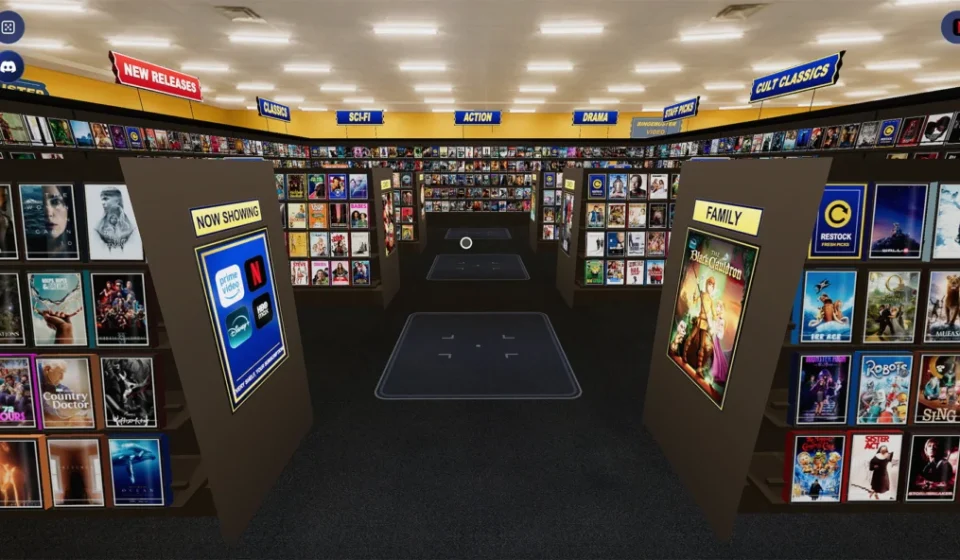
Enter Bingebuster, a brilliant new web-based project that doesn’t just mimic the aesthetic of a bygone era; it serves as a functional, interactive interface for the streaming landscape. By transforming the clinical, data-heavy menus of modern platforms into the familiar, tactile aisles of a Blockbuster video store, developers Oliver and Patrick Evans have created more than a website—they’ve built a time machine for cinephiles.
Main Facts: The Digital Video Store
Bingebuster is an immersive, virtual recreation of a classic video rental store. Upon visiting the site, users are transported into a 3D-rendered store environment that captures the distinct aesthetic of the late 90s and early 2000s. However, the brilliance of the project lies under the hood: the "tapes" on the shelves aren’t just decorative. They are dynamic placeholders for content currently available on your personal streaming subscriptions.
The platform integrates with major streaming services—including Netflix, Prime Video, HBO Max, Disney+, Apple TV, Tubi, and ITVX—to pull real-time data. When a user navigates the virtual aisles, they are browsing movies that they can actually watch right now. By filtering the shelves based on their own subscriptions and regional availability, users can browse by genre or "new releases," effectively gamifying the selection process. It is a seamless marriage of modern API utility and retro-digital design.

The Chronology of a Cultural Shift
To understand why Bingebuster resonates so deeply, one must look at the trajectory of home media.
- 1985: Blockbuster Video opens its first store in Dallas, Texas. The company would go on to revolutionize home entertainment, eventually peaking in 2004 with 9,094 stores worldwide. For two decades, the "Friday Night Rental" was a foundational ritual of American social life.
- 2000s: The rise of DVD-by-mail and, subsequently, high-speed internet, begins to erode the necessity of physical rental locations.
- 2014: The final corporate-owned Blockbuster store closes its doors, marking the definitive end of the "rental era."
- 2020–2025: The streaming wars reach a saturation point. Consumers are overwhelmed by dozens of platforms, fragmented libraries, and a lack of curation. The "choice overload" phenomenon becomes a recognized psychological hurdle in home entertainment.
- August 2026: Oliver and Patrick Evans launch Bingebuster, following the success of their previous viral project, "The Closet" (a virtual recreation of the Criterion Collection’s famous film closet).
The transition from physical browsing to digital scanning stripped away the "serendipity" of the rental store. In a physical shop, you might walk to the "Horror" section and find a hidden gem because the cover art caught your eye. On a streaming service, you are limited to what an algorithm thinks you want based on your past viewing habits, which often leads to a feedback loop of similar content.
Supporting Data: The Cost of Choice Overload
Psychologists and tech analysts have long noted that when faced with too many options, humans often experience "decision paralysis." In a 2023 study regarding digital media consumption, it was found that the average user spends 18 minutes just deciding what to watch before ultimately selecting a title.
Bingebuster addresses this by introducing "forced constraints." By limiting the user’s field of vision to a specific "aisle" or shelf, the brain is no longer overwhelmed by the infinite scroll of a global library. Instead, it recreates the physical sensation of browsing. The act of "walking" through a virtual store provides a spatial anchor that helps users make decisions faster.
Furthermore, the technical implementation is highly sophisticated. The site uses a responsive design that allows for:

- Customization: Users can toggle which streaming services they have access to, ensuring the "inventory" on the shelves matches their personal budget.
- Search and Bookmark: A built-in system allows users to flag movies for later, mimicking the old-school habit of grabbing a stack of tapes and heading to the counter.
- Cross-Platform Syncing: The site successfully bridges the gap between competing streaming giants, creating a unified front-end for a fractured market.
Official Responses and Creator Vision
The developers, brothers Oliver and Patrick Evans, have remained humble regarding the viral success of the platform. In brief communications, they have emphasized that the project was born out of a genuine love for film culture and the specific, tactile joy of the video store experience.
"We wanted to bring back the feeling of discovery," the brothers noted in early promotional materials for the site. "The internet is a library, but it’s a cold one. We wanted a store."
Industry reaction has been overwhelmingly positive. Critics have praised the project for its "User Experience (UX) brilliance," noting that it makes the act of browsing feel like play rather than labor. While some skeptics wonder if the novelty will wear off, early usage data suggests that users are spending significantly more time on the site than they would on a standard streaming app interface, suggesting that the "gamified" browsing experience is indeed a more engaging way to discover content.
Implications: The Future of Interface Design
The success of Bingebuster suggests a larger trend in web design: Nostalgia as a Utility.
As we move deeper into the decade, we are seeing a pushback against the "flat," minimalist design language of the early 2020s. Users are craving textures, shadows, and environments that feel lived-in. Bingebuster proves that retro-aesthetics can be more than just a skin; they can provide a structural solution to modern problems.

1. The Death of the Algorithm?
While Bingebuster still relies on data, it changes the presentation of that data. By removing the "Top Picks for You" banner and replacing it with physical shelf space, the site empowers the user to be the curator. It suggests that the future of streaming interfaces might involve more "spatial" navigation rather than infinite vertical scrolling.
2. A New Paradigm for Streaming Aggregators
If a small team of independent developers can create a unified, store-like interface that traverses multiple streaming giants, one has to wonder why the platforms themselves haven’t attempted this. Perhaps the "walled garden" approach of major services is the real enemy of discovery. Bingebuster acts as a meta-layer, suggesting that the most valuable streaming service of the future might be one that doesn’t host content, but organizes the chaos of everyone else’s.
3. Preserving the "Rental" Culture
The project also serves an archival purpose. For a generation of younger viewers who never stepped foot in a Blockbuster, this site provides a cultural education. It explains how we used to discover movies, providing context to a historical period that has become mythologized in pop culture.
Final Thoughts
Whether you are a nostalgic Gen-Xer who remembers the smell of the carpet and the sound of the plastic cases hitting the rack, or a digital native looking for a better way to find your next favorite film, Bingebuster is a must-visit.
It is a rare example of a digital project that understands the human element of technology. It recognizes that movies are not just data points to be consumed; they are experiences to be discovered. By turning our screens back into shelves, the Evans brothers haven’t just recreated the past—they’ve provided a blueprint for a more thoughtful, intentional, and enjoyable future of streaming.

As the industry continues to evolve, one thing is certain: we are tired of scrolling. We want to browse. And for the first time in a decade, we finally can.
To experience the nostalgia for yourself, visit Bingebuster.net. And for those interested in the history of home media, be sure to check out the developers’ other projects, including the Criterion Closet.