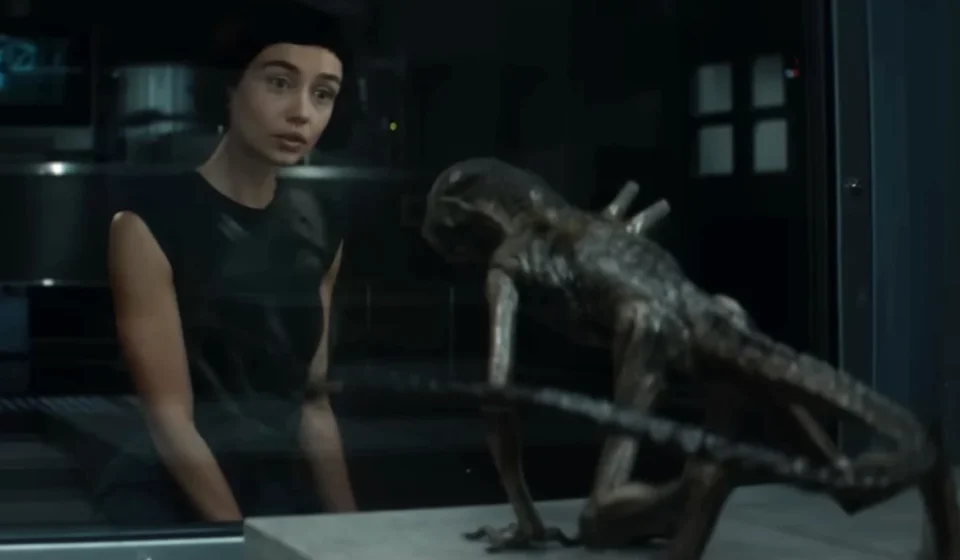

The terror that began in the deep reaches of space has officially touched down on terra firma, and the nightmare is only beginning. FX has confirmed that cameras are officially rolling on the second season of Alien: Earth, the ambitious television expansion of one of cinema’s most storied science-fiction franchises. As the production migrates from the tropical landscapes of Thailand to the legendary stages of Pinewood Studios in London, anticipation for the next chapter of Noah Hawley’s vision has reached a fever pitch.
Main Facts: A New Home for a Growing Threat
The announcement of Season 2 production comes with a significant shift in logistics. While the first season utilized the lush, atmospheric backdrops of Thailand to ground the crash-landing of the USCSS Maginot, the production has relocated to the industrial heart of British filmmaking: Pinewood Studios. This move to London suggests a shift in the narrative’s scope, perhaps moving from the frantic, isolated survival of the series’ debut toward a more sprawling, urban, or institutional conflict.
Showrunner Noah Hawley, the visionary architect behind the series, returns to steer the ship. His unique ability to blend high-concept sci-fi with grounded, character-driven drama has been the bedrock of the show’s success. Sydney Chandler is confirmed to return as Wendy, the resilient protagonist whose encounter with the Xenomorph in the first season serves as the anchor for the franchise’s new direction.
The production release included a brief, tantalizing behind-the-scenes teaser, showcasing the grit and meticulous set design that defined the series’ aesthetic. The footage offers fans a glimpse into the controlled chaos of a high-budget sci-fi set, signaling that while the location has changed, the commitment to visceral, tactile horror remains paramount.
Chronology: From the Maginot to the Mainstream
To understand the weight of this production milestone, one must look at the series’ rapid ascent. The franchise, long confined to the cinematic silver screen, faced immense skepticism when it was announced that the Alien saga would be adapted for television.
The first season’s narrative arc was a masterclass in tension: the USCSS Maginot, a deep-space research vessel, suffered a catastrophic systems failure, resulting in an emergency crash-landing on Earth. This event served as the catalyst for the entire series, effectively bringing the Xenomorph threat out of the vacuum of space and into the planetary ecosystem. The tactical soldiers and civilians caught in the wreckage were forced into a desperate, claustrophobic struggle against an apex predator that has no natural habitat on our world.
Following the critical and commercial success of the debut season, FX greenlit a second outing with remarkable speed. The transition from Thailand to Pinewood Studios marks the formal evolution of the production, moving from "location-heavy" guerrilla-style filmmaking to the controlled, massive-scale environment required for what is expected to be a significantly more ambitious narrative arc.
Supporting Data: An Ensemble of Titans
Perhaps the most exciting revelation regarding Season 2 is the expansion of its cast. FX has curated a roster of talent that elevates Alien: Earth from a genre exercise to a prestige television event.
Joining Sydney Chandler are several industry heavyweights who bring significant gravity to the project:
- Peter Dinklage: A veteran of complex, high-stakes narratives, the Game of Thrones alum brings a level of prestige and acting range that promises to deepen the human stakes of the series.
- Tracey Ullman: A legendary comedic talent, Ullman’s inclusion is particularly intriguing. Her ability to navigate tone—ranging from sharp wit to profound drama—suggests that Hawley is looking to inject a new layer of character complexity into the human survivors.
- Sam Spruell: Reuniting with Hawley after their successful collaboration on Fargo, Spruell is a natural fit for the series’ specific brand of grounded, dark, and often bleak storytelling.
- Jerome Flynn: Another Game of Thrones veteran, Flynn is well-versed in the demands of large-scale, physically demanding roles, making him an ideal candidate for the series’ intense action sequences.
This infusion of talent creates a "ridiculously stacked" ensemble, as described by early reports. The chemistry between the returning cast and these newcomers is expected to be a focal point of the sophomore season, as the survivors grapple not just with the threat of the Xenomorph, but with the fracturing of their own social structures under extreme duress.

Official Responses and Creative Vision
Noah Hawley has consistently stated that his intent with Alien: Earth is not to reboot the lore, but to explore what happens when the most lethal organism in the galaxy is introduced to a populated environment. In various press junkets, Hawley has emphasized that the "alien" in Alien should remain exactly that—a terrifying, unknowable force that challenges the human capacity for morality.
FX, for its part, has provided the necessary resources to ensure that the jump to London’s Pinewood Studios is seamless. By providing the infrastructure of a major studio lot, FX is signaling a massive investment in the production value of the show. The move allows for the construction of more elaborate sets, higher-end creature effects, and the space to film complex sequences that would be impossible in the humid, unpredictable climate of a remote location.
The casting choices also speak volumes about the show’s evolution. By bringing in actors with diverse backgrounds—from prestige television to high-concept film—the showrunners are clearly aiming to broaden the show’s appeal while maintaining the "hard sci-fi" edge that made the first season a standout.
Implications: The Future of the ‘Alien’ Franchise
The significance of Alien: Earth cannot be overstated. By successfully pivoting the franchise to a serialized television format, the show has revitalized a brand that was, at one point, struggling to find its identity in a post-Ridley Scott landscape.
A New Standard for Sci-Fi Horror
The success of Alien: Earth challenges the notion that horror-science fiction cannot sustain long-form storytelling. By focusing on the impact of the creature rather than just the slasher elements, the series has tapped into a vein of existential dread that resonates with modern audiences.
The "Earth" Factor
The title itself is a provocation. By bringing the Xenomorph to Earth, the series has effectively destroyed the "containment" safety net that existed in the films. There is no airlock to vent the creature into, no ship to self-destruct to save the colony. The stakes are now planetary, and the implication for Season 2 is that the threat is no longer a localized incident—it is a societal crisis.
The Legacy of the Xenomorph
As the production moves forward, the primary challenge remains: keeping the creature scary. In an age of high-fidelity CGI, the reliance on the practical, tactile dread that made the original 1979 film a masterpiece is what sets this series apart. The move to Pinewood—a studio synonymous with the history of the Alien and Star Wars franchises—suggests that the production team is doubling down on the practical, "lived-in" aesthetic that fans crave.
Conclusion: Waiting for the Premiere
While the official premiere date for Alien: Earth Season 2 remains under wraps, the industry consensus is that we are looking at a late 2026 or early 2027 release. The shift in production geography and the expansion of the cast list suggest that the creative team is not resting on the laurels of their successful first outing.
Instead, they are building a bridge between the classic horror of the original Alien and a modern, high-stakes political and social thriller. As the cameras capture the next phase of this invasion at Pinewood, one thing is certain: the Xenomorph is no longer a visitor in our nightmares. It is a resident, and it is here to stay.
For fans of the franchise, the wait for more information will be agonizing, but given the trajectory of this series, it is shaping up to be an essential piece of science fiction television. As we await further updates from FX, the primary question remains: who among the new ensemble will survive the encounter, and more importantly, what will be left of Earth once they do?