The Mirror of Madness: Werner Herzog’s ‘Bucking Fastard’ Defies Logic at Venice

At the 2026 Venice Film Festival, amidst a slate of high-minded dramas and prestige biopics, one film arrived like a bolt of lightning in a stagnant room: Werner Herzog’s Bucking Fastard. A fever dream of Irish pastoral life, existential obsession, and the unsettling symmetry of the human spirit, the film serves as a reminder that even at 83, the legendary German auteur remains the cinema’s most intrepid explorer of the "ecstatic truth."
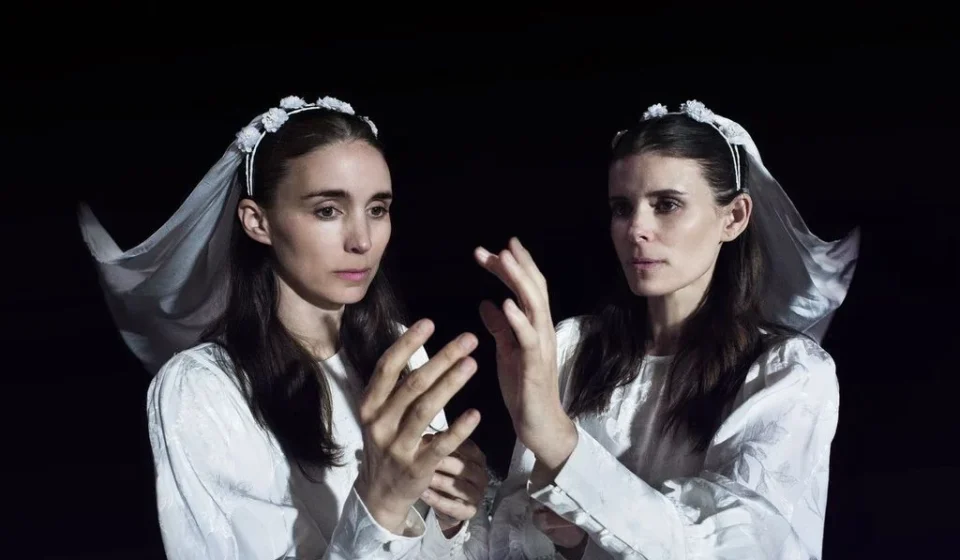
Anchored by the uncanny, synchronized performances of sisters Kate and Rooney Mara, Bucking Fastard is a work that defies categorization. It is a comedy, a fable, and a psychological portrait of folie à deux—the shared madness of two souls who exist as mirror images of one another.
The Premise: A Shared Reality in the Irish Countryside
The story follows the Holbrooke sisters, Jean (Rooney Mara) and Kate (Kate Mara), two women who move, speak, and even breathe in lockstep. They are not merely siblings; they are a singular entity split into two physical forms. Their existence is a tightly wound ritual of mirroring that begins to unravel when they encounter the rakish Gareth Mulroney (Orlando Bloom), a neighbor whose arrival shatters the sisters’ internal ecosystem.

The plot is picaresque, drifting from the mundane, gray streets of Dublin—where they are subjected to state-mandated social work—to the rugged, wind-swept landscapes of an Irish farm. Along the way, the sisters engage in a series of increasingly bizarre actions: building tunnels toward the Orkney Islands, engaging in competitive voyeurism, and ultimately finding themselves in a courtroom, presided over by bewildered magistrates, to account for their behavior.
Chronology of a Descent
The film’s structure mimics the erratic, circular logic of a dream. Its progression can be broken down into three distinct movements:
- The Domestic Static: The early scenes establish the Holbrooke sisters’ insular world. Their lives are defined by symmetry—wearing identical clothes, sharing a bed, and finishing each other’s sentences with a rhythmic, choral cadence. The tension is introduced when they spot Gareth, leading to an impulsive, shared obsession that culminates in the physical alteration of their property, literally raising the fence that separates them to better observe him.
- The Judicial Incursion: As their obsession with Gareth turns from flirtatious to invasive, the sisters are thrust into the public eye. The trial sequence serves as the film’s moral and narrative pivot. Here, the state attempts to intercede, represented by a well-meaning but utterly outmatched social worker played by Domhnall Gleeson. His futile attempts to separate the sisters—even through simple domestic tasks like vacuuming or opening a tin of sardines—provide the film with its most poignant and humorous moments.
- The Picaresque Escape: Following their brush with the law, the sisters retreat to a remote farm, where they are tasked with labor by a mysterious, long-lost aunt. This final act moves away from the constraints of society and into the raw, indifferent landscape, reflecting Herzog’s career-long fascination with nature as an entity that does not care for human morality.
Supporting Data and Creative Genesis
The origins of Bucking Fastard are as eccentric as the film itself. Herzog conceived the screenplay alongside producer Ariel León Isacovitch during an eight-night expedition through the wilderness of Patagonia. The project was rooted in a long-standing fascination with real-world cases of "twin phenomena," specifically the 1980s media circus surrounding Freda and Greta Chaplin, who became notorious for their synchronized harassment of a truck driver.

Herzog also drew inspiration from the viral 2016 appearance of Australian bird rehabilitators Bridgette and Paula Powers on Good Morning Britain. Their uncanny ability to recount a traumatic carjacking incident while speaking in near-perfect unison provided the tonal blueprint for the Mara sisters’ dialogue.
To achieve this level of synchronization, Herzog made the rare decision to hold extensive rehearsals with his leads. While the Mara sisters are not biological twins—Kate is two years older than Rooney—their dedication to the role is total. Through precise choreography of movement and vocal pitch, they shed their individual physiognomies, creating a character portrait that feels both alien and deeply human.
The Herzogian Lens: Beyond the Freakshow
Critics might be tempted to label the Holbrooke sisters as a "freakshow," but such a reading ignores Herzog’s fundamental philosophy. Throughout his career, whether documenting the doomed idealism of Timothy Treadwell or the volatile genius of Klaus Kinski, Herzog has avoided the role of the pathologist. He does not judge his subjects; he observes them with an unwavering, often fatalistic, but ultimately compassionate eye.

In Bucking Fastard, this manifests in the camera work. Working with his longtime cinematographer Peter Zeitlinger, Herzog uses a gimbal-mounted camera that glides through spaces, capturing the sisters in their environment with the same observational detachment he applied to the cave paintings in Cave of Forgotten Dreams. The camera wanders, frequently distracted by the natural world—a waddling porcupine, a rumored-to-be-rabid fox named Cupid—reminding the audience that the universe continues its own course, regardless of the sisters’ private dramas.
Implications and Reception
The implications of Bucking Fastard are found in its refusal to offer closure. The film ends abruptly, effectively slamming a door in the audience’s face just as the sisters approach a semblance of independent belonging. It is a bold, uncompromising choice that reinforces the film’s central theme: that true connection—the kind that exists outside of social norms—is a mystery that cannot be fully unpacked by the observer.
Initial reception at the Venice Film Festival has been polarized, which is precisely the reaction Herzog has come to expect and embrace. It is a film for those willing to get on the "train" of his logic, and for those who aren’t, the experience is designed to be jarring.

Bucking Fastard stands as a testament to Herzog’s late-career vitality. It is a film about the desire to be understood, the danger of being truly seen, and the terrifying beauty of being two people trapped in one mind. As the credits roll, the audience is left with the haunting realization that the Holbrookes’ struggle for identity in a world that demands individual categorization is not just their struggle—it is a reflection of the human condition itself.
Technical Credits and Distribution
- Director: Werner Herzog
- Cast: Kate Mara, Rooney Mara, Orlando Bloom, Domhnall Gleeson
- Cinematography: Peter Zeitlinger
- Festival Premiere: Venice Film Festival, 2026
- Status: Seeking U.S. distribution
With a current critical grade of B+, the film is expected to generate significant discourse upon its eventual release. Whether it is viewed as a comedy of errors or a dark, fable-like meditation on the nature of the self, Bucking Fastard is indisputably one of the most singular, defiant, and "batshit" films of the decade.