
As the dog days of summer surrender to the crisp, foreboding chill of autumn, the landscape of home entertainment undergoes a familiar shift. For the horror aficionado, this transition represents more than just a change in weather; it marks the beginning of the "spooky season." While major subscription platforms often rotate their libraries with frustrating frequency, Tubi remains a consistent, cost-free sanctuary for the genre. With a vast catalog exceeding 300,000 titles, the platform has solidified its reputation as a digital graveyard—a place where forgotten classics and cult oddities go to be rediscovered.
This month, we delve into the dark halls of the streamer to curate a selection of five essential films. From the atmospheric dread of small-town folk horror to the unhinged, creative excess of international creature features, these selections offer a comprehensive look at the breadth of horror history. Whether you are looking to ease into the autumnal transition or searching for a visceral survival nightmare, these films represent the pinnacle of what free, ad-supported streaming can offer.
The Seasonal Shift: Why Curated Streaming Matters
In the contemporary media landscape, "choice paralysis" is a genuine issue for subscribers. The sheer volume of content available on platforms like Tubi can be overwhelming, often leading viewers to default to familiar, mainstream hits. However, the true value of a platform with such a deep library lies in its archival capacity. By highlighting specific sub-genres—such as 1980s television horror, Australian genre experiments, and modern survival thrillers—we can better understand the evolution of fear on screen.

Tubi’s model, which requires no subscription fee or registration, democratizes access to these cinematic artifacts. For the horror community, this is not merely a convenience; it is a preservation effort. By keeping these titles in rotation, the platform ensures that the legacies of directors like Philippe Mora or the writing team of Huyck and Katz remain accessible to a new generation of fans.
A Chronological Descent into Terror
To appreciate the current horror landscape, one must look at the timeline of the genre’s evolution. Our selection spans four decades, tracing the shift from the eerie, slow-burn television productions of the early 1980s to the high-concept, subversive comedies of the 2010s.
1. The Television Masterpiece: Dark Night of the Scarecrow (1981)
September is colloquially known among enthusiasts as "Scarecrow Season," and no film defines this niche sub-genre with more authority than the 1981 made-for-TV classic, Dark Night of the Scarecrow. Directed by Frank De Felitta, the film serves as a poignant study of mob mentality and rural prejudice.

The narrative follows a group of local vigilantes who take the law into their own hands, brutally murdering a mentally challenged man named Bubba (portrayed with heart-wrenching vulnerability by Larry Drake) after a misunderstanding involving a young girl. When the legal system fails to provide justice—classifying the murder as a mere "accident"—the perpetrators believe they have escaped retribution. They are wrong. A spectral, straw-stuffed figure begins to stalk them, picking them off with rhythmic, terrifying precision.
The brilliance of the film lies in its restraint. It eschews gratuitous gore in favor of pervasive, bone-chilling dread. It is the quintessential autumn film, capturing that specific moment when the sun dips below the horizon early and the evening wind carries the scent of dry corn stalks and impending doom.
2. The Surrealist Nightmare: Messiah of Evil (1974)
Stepping back to the mid-70s, we encounter Messiah of Evil, a film that defies easy categorization. Written by the legendary duo Willard Huyck and Gloria Katz—who would later pen Indiana Jones and the Temple of Doom—this film is a masterclass in dream logic and atmospheric tension.

The plot is deceptively simple: a woman travels to a remote California coastal town to track down her missing father, an artist who has seemingly vanished. What she finds is a town slowly succumbing to a collective, supernatural madness. The film operates on a level of "nightmare logic," where the visuals are prioritized over conventional narrative progression. The cinematography by Stephen M. Katz is nothing short of luscious, painting the seaside town in hues of isolation and existential decay. One particular sequence, set within the confines of a movie theater, remains one of the most unsettling moments in 1970s horror, effectively weaponizing the act of sitting in a dark room watching a screen.
3. The Unhinged Experiment: Howling III (1987)
If Messiah of Evil represents the artistic height of the genre, Howling III (1987) represents its most chaotic, imaginative frontier. Directed by Philippe Mora, this film is widely regarded as the "weirdest" entry in the Howling franchise, and perhaps in the history of werewolf cinema.
Set in Australia, the film introduces a radical new mythology: the "marsupial werewolf." The narrative follows a female werewolf who flees her pack to find love with a human, leading to a frantic chase involving government agencies, sociologists, and religious zealots. To call the film "absurd" is an understatement; it is a riotous display of B-movie energy that includes werewolf nun assassins, a deity of the moon, and infants who reside in their mothers’ pouches. While it lacks the polish of a Hollywood blockbuster, its sheer, unrestricted ambition makes it a mandatory watch for those who prefer their horror to be unpredictable and completely devoid of conventional boundaries.

Survival and Subversion: Modern Horror Perspectives
As we move into the 21st century, the focus shifts toward survivalism and the deconstruction of established tropes. These films reflect the anxieties of their respective eras, whether it be our vulnerability to the natural world or the socio-political critique of the "hillbilly horror" sub-genre.
4. The Raw Reality of The Reef (2010)
In the realm of animal-attack horror, the bar was set incredibly high by Steven Spielberg’s Jaws. Many films have attempted to replicate that success, but few manage to achieve the terrifying realism of Andrew Traucki’s 2010 film, The Reef.
Based on true events, the film depicts a group of friends whose sailing expedition in the Great Barrier Reef goes catastrophically wrong when their vessel capsizes. Stranded in the open ocean, the group must navigate the treacherous, shark-infested waters to find safety. Unlike other entries in the "sharksploitation" genre that rely on cartoonish behavior or impossible stunts, The Reef is a grueling, minimalist exercise in tension. It treats the shark not as a sentient villain, but as an apex predator reacting to its environment. It serves as a stark reminder of human vulnerability, stripping away the comfort of the modern world and leaving the protagonists—and the audience—completely exposed.

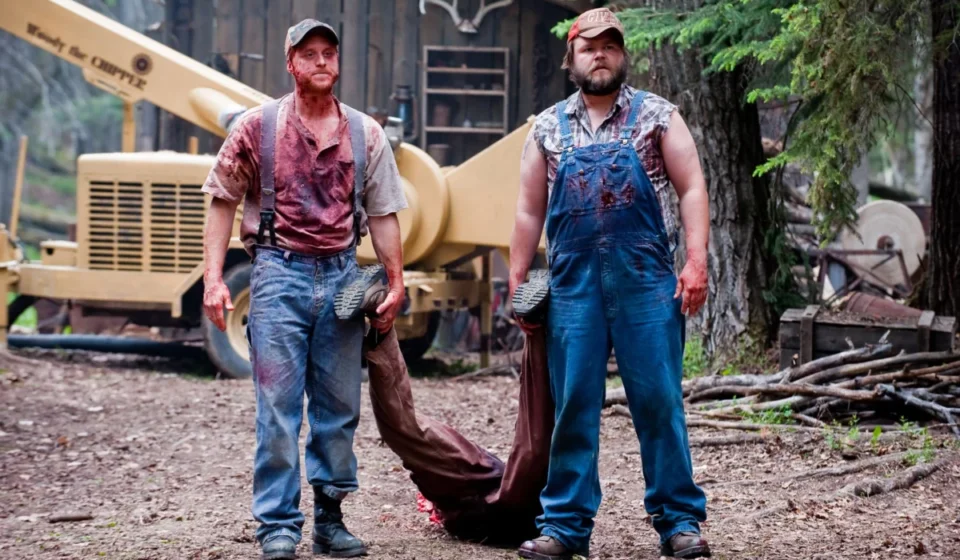
5. Flipping the Script: Tucker and Dale vs. Evil (2011)
The final recommendation in our list is Eli Craig’s Tucker and Dale vs. Evil, a film that serves as a necessary, humorous antidote to the darkness of the previous titles.
For decades, the horror genre has relied on the "hillbilly killer" trope—a legacy that stretches back to Deliverance and beyond. Craig’s directorial debut brilliantly subverts this by presenting us with two well-meaning, kind-hearted mountain men who simply want to renovate their vacation cabin. When a group of arrogant college students mistake them for psychotic slasher-villains, the resulting "accidents" turn into a series of gruesome, slapstick deaths. The film’s brilliance lies in its social commentary; it challenges the audience to recognize their own prejudices and the dangers of making snap judgments based on appearance. It is a hilarious, bloody, and surprisingly heartwarming take on the slasher genre.
The Implications of Curated Streaming
The shift toward platforms like Tubi signifies a broader change in how audiences interact with cinema history. By providing a home for these films, the platform does more than just fill a content queue; it preserves the cultural dialogue surrounding horror.

Key Takeaways for the Horror Enthusiast:
- Accessibility: The lack of a paywall ensures that niche, lower-budget, or older films are not lost to the "digital dark age."
- Discovery: Through curated hubs and monthly spotlights, platforms help bridge the gap between casual viewers and hardcore genre fans.
- Legacy Preservation: Films like Dark Night of the Scarecrow and Messiah of Evil are granted a second life, ensuring their influence on modern directors continues to be felt.
As we look toward the upcoming month, it is clear that the appetite for diverse, challenging, and terrifying content remains as strong as ever. Whether you are revisiting these titles as a veteran fan or experiencing them for the first time, these five films serve as an excellent foundation for any horror library. Stay vigilant, stay curious, and keep your eyes on the shadows—because as we’ve learned from the history of cinema, the most interesting stories are often the ones hiding in plain sight.