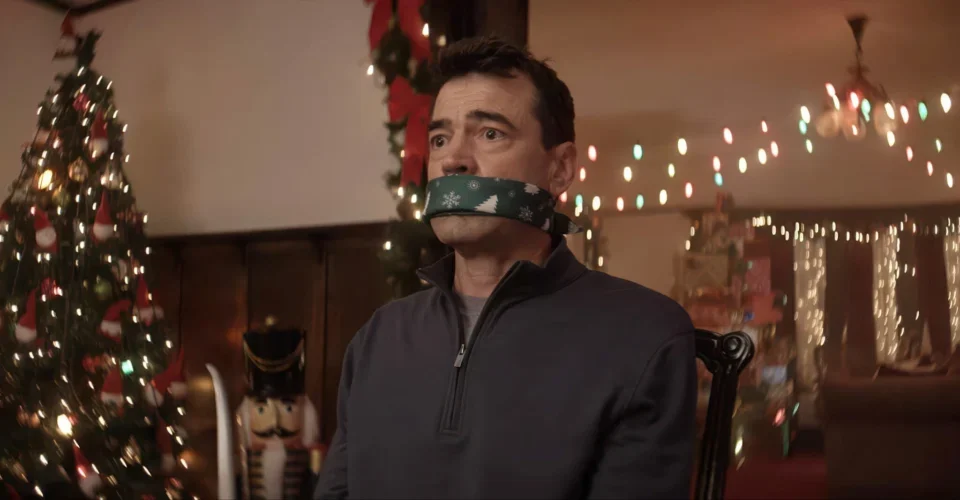
Cinema’s Coal in the Stocking: The Critical and Creative Collapse of ‘Christmas at the Kringles’

The intersection of holiday cheer and blood-soaked horror has long been a fertile, if treacherous, ground for filmmakers. From the slasher heights of Black Christmas to the mischievous chaos of Gremlins, the "Holiday Horror" subgenre relies on a delicate alchemy of atmosphere, subversion, and—ideally—a sharp comedic edge. However, the latest entry into this seasonal canon, Christmas at the Kringles, has arrived not as a festive treat, but as a cautionary tale of wasted potential.
Directed by Kevin Lewis and featuring an ensemble cast of seasoned comedic veterans, the film has been met with a scathing critical reception, being described as a "cynical," "unfunny," and "visually obnoxious" endeavor that fails to find the pulse of either horror or comedy.
Main Facts: A Star-Studded Disappointment
Christmas at the Kringles centers on a narrative that attempts to subvert the "perfect" suburban holiday trope. The film follows the Severson family as they relocate to a seemingly idyllic small town, only to find themselves ensnared by the Kringles, a family whose devotion to Christmas extends far beyond the month of December—and far beyond the boundaries of sanity.
Despite its lackluster execution, the film boasts a high-profile cast that would typically signal a cult hit or a mainstream success. The production features:
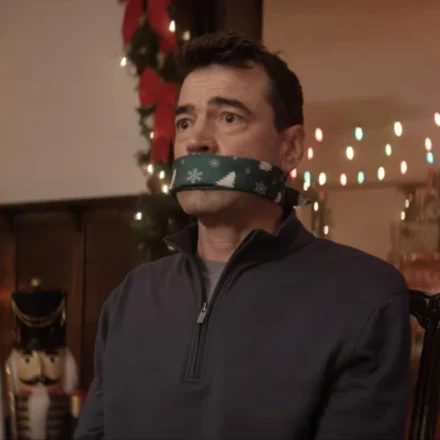
- Ron Livingston (Office Space, The Flash) as Mark Severson.
- Rachel Bilson (The O.C.) as Julie Severson.
- Thomas Lennon (Reno 911!) as Nick Kringle.
- Arden Myrin (Insatiable) as Carol Kringle.
- Donald Faison (Scrubs) as the neighbor, Daryl.
- Rob Riggle (The Hangover) as a rogue mall Santa.
- David Wain (Wet Hot American Summer) in a supporting capacity.
Directed by Kevin Lewis, who previously found moderate success with the Nicolas Cage-led Willy’s Wonderland, the film was written by Zack Imbrogno. Despite the pedigree of those involved, the consensus suggests a film that is "stale and tasteless as last year’s fruitcake," failing to leverage the improvisational strengths of its cast or the stylistic flair of its director.
Chronology: From Yuletide Dreams to Valentine’s Nightmares
The narrative structure of Christmas at the Kringles is divided into a jarring timeline that attempts to show the slow erosion of the Severson family’s safety.
The Arrival and the "Perfect" Christmas
The story begins with Mark Severson (Livingston), a workaholic stock trader whose professional obsession has pushed his marriage to the brink. In a desperate "band-aid" move to save his relationship with his wife Julie (Bilson) and their son Bobby (Jack Jewkes), the family moves to a quiet suburb just a week before Christmas.
Mark’s initial skepticism is challenged when they meet their neighbors, the Kringles. Nick (Lennon) and Carol (Myrin) Kringle appear to be the ultimate holiday enthusiasts, celebrating the season with a 365-day-a-year intensity. After a successful Christmas Eve dinner, Mark begins to let his guard down, believing that the change of scenery might actually be the miracle his family needed.
The February Pivot
The film then jumps forward two months to February. The "magic" of the move has worn off; Mark has retreated into his work habits, neglecting Julie’s desire for a meaningful Valentine’s Day. When Carol Kringle invites Julie and Bobby over for dinner, Mark initially sees it as a convenient distraction.
However, the tone shifts abruptly when Mark is approached by another neighbor, Daryl (Faison). Daryl provides the first "red flag," warning Mark that the Kringles are not merely eccentric, but dangerous. This revelation sparks a frantic rescue mission as Mark discovers he has been locked out of the Kringle residence while his family is trapped inside.
The Siege of the Kringle Estate
The final act of the film follows Mark and Daryl as they attempt to infiltrate the Kringle home. They seek reinforcements from a mall Santa (Riggle), who is revealed to be part of an underground network of "mirth-bringers" who have been tracking the Kringles as "dangerous maniacs." When their backup fails to materialize, the untrained duo of Mark and Daryl must face the Kringles alone, leading to a confrontation intended to be a high-stakes blend of comedy and carnage.
Supporting Data: Technical and Performance Analysis
The failure of Christmas at the Kringles is often attributed to a disconnect between the script’s intent and the final execution.
Performance Disparities
Critics have noted a significant imbalance in the acting styles. Ron Livingston has been criticized for playing the lead with a "jaded, unhappy" edge that lacks the necessary charm to make the audience root for his redemption. His performance has been unfavorably compared to his role as "Berger" in Sex and the City—a character famously loathed by fans.
In contrast, Thomas Lennon and Arden Myrin lean into a heightened, almost "cult-member" zeal. While Lennon is known for his commitment to absurd characters, reviewers noted that his performance lacks the genuine menace required to make the Kringles a credible threat. Donald Faison is cited as one of the few bright spots, bringing a much-needed sense of "funny incredulity" to the film’s increasingly nonsensical third act.
Direction and Editing
Director Kevin Lewis’s approach has been described as derivative. The film utilizes quick-cut montages and stylistic flourishes that appear heavily "pilfered" from the playbook of Edgar Wright (Shaun of the Dead). However, without Wright’s precision and narrative justification, these techniques feel like "zhuzhing up" uninspired material.
The editing by Ryan Leibert has also come under fire. The film’s "cold-open" chase scene is reportedly marred by a lack of spatial geography and visual continuity. This disjointed pacing persists throughout the film, leaving little room for character development or the building of genuine suspense.
Script Inconsistencies
The script by Zack Imbrogno leaves several glaring narrative holes that have frustrated viewers:
- The Mystery of the Children: It is never clarified if the children in the Kringle house are their biological offspring or victims of their "naughty list" obsession.
- The Lack of Law Enforcement: Despite repeated disappearances linked to the Kringles, the local police are inexplicably absent.
- The "Christmas Gimp": The inclusion of a "Christmas gimp" living in the home is cited as a bizarre attempt at "edgy" humor that fails to land or provide any meaningful context.
Official Responses and Critical Landscape
While the production company has not issued a formal rebuttal to the negative reviews, the critical consensus from outlets like Variety paints a picture of a missed opportunity. The primary critique is not just that the film is "bad," but that it is "cynical."
In the world of genre filmmaking, "cynicism" often refers to a movie that feels "gift-wrapped with nothing inside"—a product created to fill a streaming slot rather than to tell a compelling story. The film’s failure to balance its two primary tones (humor and horror) serves as a case study in why the "Venn diagram" of these genres is so difficult to navigate.
Industry analysts suggest that the film may suffer from "talent-mismatch." When seasoned improvisers like Riggle and Lennon are given a script that lacks a solid foundation, the result is often a series of "bits" that never coalesce into a coherent movie.
Implications: The Future of Holiday Horror-Comedy
The reception of Christmas at the Kringles has broader implications for the "Holiday Horror" subgenre and the current state of independent film production.
The "Content Trap"
The film’s existence highlights a growing trend in the streaming era: the "Content Trap." Producers often assemble a recognizable cast and a high-concept premise (e.g., "Evil Christmas Family") to ensure high click-through rates on digital platforms. However, when the writing and technical execution are neglected, these films often damage the "brand" of the actors involved and lead to audience fatigue.
The Difficulty of Tone
The failure of this film reinforces the idea that comedy-horror is perhaps the most difficult genre to master. It requires the director to make the audience laugh while simultaneously maintaining a sense of stakes. When the protagonist is as "ineffectual" and "unlikable" as Mark Severson is portrayed, the audience loses interest in the "horror" because they aren’t invested in the survival of the characters.
A Forgiving Fanbase
Despite the scathing reviews, horror fans are historically some of the most forgiving audiences in cinema. There is a market for "so bad it’s good" holiday films. However, Christmas at the Kringles may even miss that mark. For a film to become a "cult classic," it usually requires a level of earnestness or a unique visual vision—elements that critics say are entirely absent here.
Conclusion
Christmas at the Kringles serves as a stark reminder that a talented cast and a proven director are not enough to overcome a disjointed script and a cynical approach to genre. Instead of becoming a new holiday staple, the film appears destined to be remembered as a "visually obnoxious but uninventive" entry in the crowded field of festive frights. As the metaphorical "gift-wrapped box with nothing inside," it offers little joy to the viewer—except, perhaps, for the relief felt when the credits finally roll.