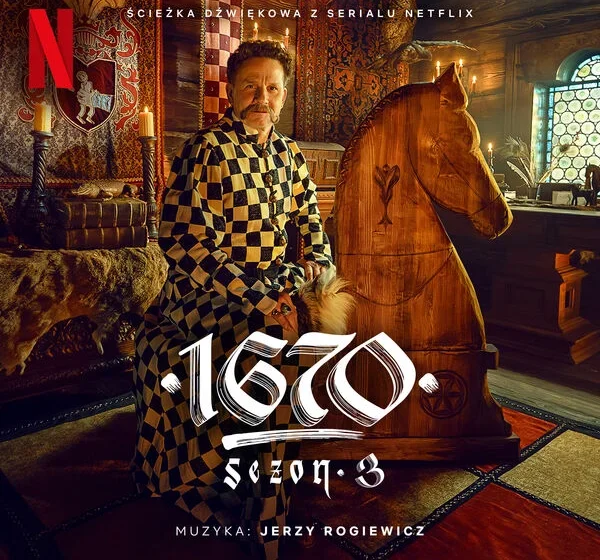
The Sound of Satire: Jerzy Rogiewicz Returns with the Season 3 Score for Netflix’s ‘1670’

August 7, 2026 – As the third season of the breakout Polish satirical comedy 1670 arrives on Netflix, audiences are once again being transported back to the seventeenth-century Polish-Lithuanian Commonwealth. While the biting wit, historical revisionism, and the eccentric antics of the noble Jan Paweł remain the show’s primary draw, a crucial component of the series’ atmosphere has returned to center stage: the original musical score composed by Jerzy Rogiewicz.
Netflix Music has officially released the soundtrack for the third season, offering fans a deep dive into the sonic landscape that defines this unique mockumentary. This latest release marks a consistent tradition for the streamer, which has now chronicled the musical evolution of the series across three consecutive years.
Main Facts: A New Chapter in the ‘1670’ Soundscape
The 1670 Season 3 soundtrack, now available on all major streaming platforms, captures the idiosyncratic blend of period-appropriate instrumentation and modern comedic sensibilities that has become the show’s hallmark. Composer Jerzy Rogiewicz, known for his versatile work on projects like Glitter, Krew Boga, and Absolute Beginners, has once again managed to bridge the gap between historical parody and contemporary entertainment.
The score is designed to underscore the absurdity of the series, which follows the delusions of grandeur held by the protagonist, Jan Paweł, a nobleman who considers himself the most important figure in the Commonwealth. Rogiewicz’s compositions fluctuate between the pompous, orchestral flourishes expected of 17th-century nobility and the frantic, rhythmic tension required for the show’s modern-day mockumentary style.
The album is available for streaming and digital download, accompanied by a full tracklist that highlights the composer’s ability to weave recurring motifs across the season’s narrative arc. As a special treat for fans, the label has also highlighted the final track of the album, allowing listeners to experience the emotional and comedic resolution of the series’ latest chapter.
Chronology: A Three-Year Musical Journey
The release of the Season 3 soundtrack is the culmination of a successful three-year partnership between Netflix and Rogiewicz. To understand the significance of this latest album, one must look back at the show’s rapid ascent.
Season 1: Establishing the Tone (2024)
When 1670 first debuted, it was met with immediate critical acclaim for its daring premise: applying the format of a modern reality TV show to the life of a minor nobleman in 1670. The Season 1 soundtrack, released in early 2024, was tasked with the heavy lifting of introducing the world to this tonal experiment. Rogiewicz’s music helped audiences understand that despite the powdered wigs and horse-drawn carriages, the show was, at its heart, a commentary on modern Polish society.
Season 2: Expanding the World (2025)
By the time the second season arrived in the fall of 2025, the series had established a dedicated fanbase. The second soundtrack album demonstrated a more confident, adventurous approach from Rogiewicz. The music began to incorporate more complex character themes, reflecting the deepening entanglements of the villagers in Adamczycha and the increasing absurdity of the local power struggles.
Season 3: The Climax (2026)
With the premiere this past Wednesday, the third season represents the most polished version of the 1670 universe to date. The soundtrack release follows the established pattern of previous years, providing a cohesive collection that tracks the growth of the series’ narrative. The speed of the release—coinciding with the streaming debut—highlights Netflix’s commitment to supporting the show’s ancillary media assets.
Supporting Data: The Creative Force Behind the Lens
The success of 1670 is not merely in its music; it is a collaborative effort led by writer Jakub Rużyłło. The series has become a cultural phenomenon, bolstered by a powerhouse ensemble cast that brings the satire to life.
The Cast of Characters
The show’s performance is anchored by:
- Bartłomiej Topa as the central figure, Jan Paweł
- Katarzyna Herman as the matriarchal force
- Martyna Byczkowska and Filip Zaręba representing the younger generation’s clash with tradition
- Michał Sikorski, Andrzej Kłak, Kirył Pietruczuk, Dobromir Dymecki, and Jędrzej Hycnar
The chemistry between these actors, combined with the dry, often cynical writing of Rużyłło, creates a fertile ground for Rogiewicz’s compositions. The music often serves as the "straight man" to the characters’ ridiculous behavior, playing the period-correct elements completely straight while the action on screen descends into chaos.
Official Responses and Industry Context
Netflix’s decision to continue releasing dedicated soundtrack albums for 1670 is a testament to the platform’s strategic focus on local-language content that resonates globally.
"The music is a character in its own right," says one industry observer familiar with the production. "Rogiewicz has mastered the art of ‘anachronistic scoring.’ It isn’t just about playing music that sounds like 1670; it’s about playing music that captures how we perceive 1670 through the lens of a 2026 satire."
Jerzy Rogiewicz has remained relatively low-profile regarding his specific process, but his portfolio speaks to a composer who thrives in genre-bending environments. His background in film and television has allowed him to cultivate a sound that feels organic to the Polish heritage of the show while remaining accessible to international audiences who may not be familiar with the historical context of the Commonwealth.
Implications: The Legacy of ‘1670’
The consistent release of these soundtracks has several long-term implications for both the show and the broader Polish television industry.
1. Elevating Local Content
By treating the music of 1670 with the same level of care as a major Hollywood production, Netflix is signaling that international originals are high-priority assets. This professionalizes the local industry and sets a high bar for future Polish productions looking to bridge the gap between national humor and global appeal.
2. The Role of the Soundtrack in Comedy
Comedy scores are notoriously difficult to write. Too much music can drown out the jokes, while too little can make the production feel "cheap" or like a stage play. Rogiewicz’s work proves that a high-quality, thoughtful score can actually enhance the comedic timing. By providing a musical bed for the dialogue, he allows the actors to land their punchlines without the music feeling intrusive.
3. Fan Engagement
The availability of these albums on streaming platforms fosters a deeper connection between the audience and the show. Fans of 1670 are not just watching the episodes; they are integrating the show’s aesthetic into their lives through the music. The high volume of streaming and downloads for the previous two albums suggests that there is a robust market for television scores, even for niche satirical comedies.
Conclusion: A Sonic Time Capsule
As 1670 continues to unfold, the music of Jerzy Rogiewicz serves as a vital bridge. It connects the historical setting with the modern viewer, acting as a constant reminder that while the costumes may change, the human tendency toward hubris, ambition, and absurdity remains constant throughout the centuries.
With the release of the Season 3 soundtrack, fans have the perfect opportunity to revisit the highs and lows of the latest season. Whether it is the recurring themes of Jan Paweł’s misguided quests or the lighthearted musical cues that define the village life of Adamczycha, the album is a testament to the creative synergy between the writers, the cast, and the composer.
As the series remains available to stream exclusively on Netflix, the soundtrack stands as a companion piece—a sonic time capsule that captures the wit and wonder of one of Poland’s most successful television exports. Whether you are a long-time fan of the series or a newcomer intrigued by the blend of history and humor, the Season 3 score is a must-listen for anyone who appreciates the art of television composition.
The 1670 Season 3 soundtrack is now available on all major music platforms. For the latest updates on the series and its musical production, stay tuned to the latest news on film and television scoring.