A Collision of Folklore and Freneticism: Inside DreamWorks’ Ambitious Forgotten Island

In the ever-evolving landscape of modern animation, DreamWorks has long balanced the line between the sentimental and the irreverent. From the subversive, fairytale-skewering humor of Shrek to the profound, atmospheric maturity of The Wild Robot, the studio has consistently redefined its creative boundaries. Their latest feature, Forgotten Island, directed by Joel Crawford and Januel Mercado, represents perhaps their most ambitious, chaotic, and culturally distinct project to date. It is a film that functions as a kaleidoscopic remix—blending the buddy-comedy DNA of Superbad and The Hangover with the cerebral, existential heartache of Eternal Sunshine of the Spotless Mind, all set against a vibrant tapestry of Filipino folklore.
The Premise: A Tale of Two Friends
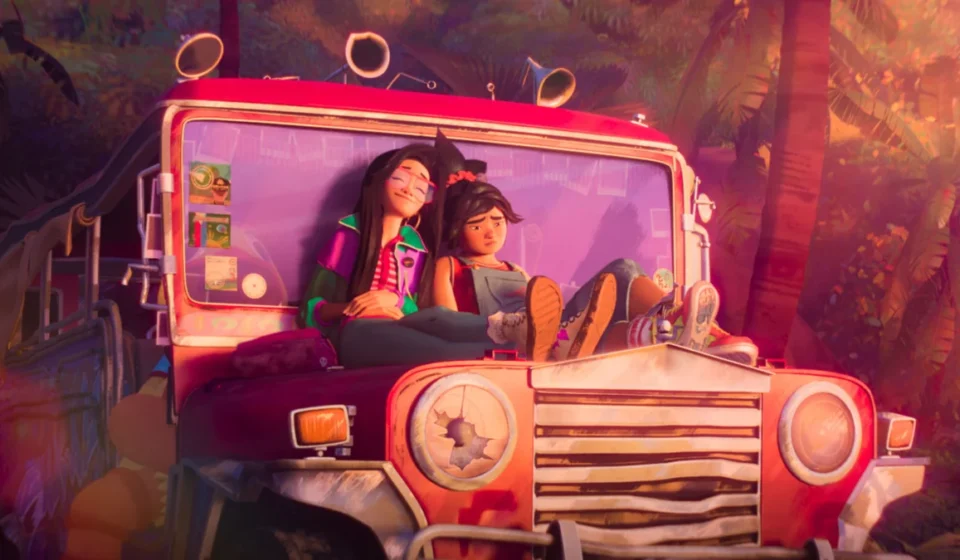
At its core, Forgotten Island is an intimate, touching exploration of the fragility of memory and the resilience of long-term friendship. The narrative follows two teenage girls, Jo (voiced by H.E.R.) and Raissa (Liza Soberano), as they navigate the transition from high school to adulthood. Jo is a creative, somewhat rebellious orphan with a penchant for the macabre, while Raissa is a studious, bookish girl from a more affluent background.
Their friendship, forged in the early 1990s—a time defined by the pop-culture dominance of INXS and a pre-texting social landscape—is the emotional anchor of the film. However, the discovery that Raissa has been accepted to Caltech, taking her halfway across the world, threatens to dismantle the life they had envisioned together. It is on the eve of this life-altering departure that the duo is whisked away to the mythical, eponymous island of Nakalimutan, a realm steeped in the very legends Jo’s grandmother, Lola (Dolly de Leon), once used to fill her imagination.
Chronology of the Chaos
The film’s pacing is, by design, relentless. It begins in a sun-drenched, nostalgic version of Manila, where the audience is introduced to the girls’ bond. This first act is characterized by a "rocket-fuel" energy, showcasing their formative years through a montage of misadventures and spirited karaoke sessions—most notably featuring Journey’s "Don’t Stop Believin’."
Once the narrative shifts to the magical realm of Nakalimutan, the film adopts a structure akin to a high-speed JRPG. Upon arriving through a sand-dollar-shaped portal, the girls experience a form of amnesia regarding the previous night’s events. They find themselves marked by bizarre tokens—a crown on Jo’s head, demon wings on Raissa—and pursued by a host of creatures from Filipino mythology.
The middle act of the film functions as a scavenger hunt, as the girls must retrace their steps, reconnect with a mysterious, forgotten "Wild Pack" of party monsters, and uncover the key to returning home before Raissa’s flight departs. While this sequence often prioritizes visual spectacle over narrative clarity, it serves as a showcase for the film’s unique aesthetic: a blend of anime-inspired speed lines and a "day-glo" fantasy color palette.

Supporting Data: A Cast of Mythical Proportions
The world-building of Forgotten Island is deeply rooted in the Aswang—the collective term for the shape-shifting monsters of Filipino folklore. The film’s commitment to this cultural source material is significant, marking a rare moment where a major Hollywood studio has leaned so heavily into non-Western mythos.
The cast of supporting characters includes:
- Raww: A "pubescent weredog" voiced by Dave Franco. Raww is a tragicomic figure who uncontrollably transforms into a tiny chihuahua when exposed to sticks, serving as an externalization of teenage insecurity and the desire to belong.
- Bungi Tiyanak: Voiced by Manny Jacinto, this three-eyed, 200-year-old infant provides both comic relief and a thematic parallel to the protagonists’ struggle to sever the umbilical cord of their childhood dependency.
- Prince Mermahn: Voiced by Kevin McCann, this vain, dehydrated water ghoul adds to the film’s penchant for physical comedy.
- Duwende King Truffle Wuffle: Voiced by Ronny Chieng, whose tribe’s "warrior" status is hilariously undercut by their overwhelming adorability.
- Manang: The film’s primary antagonist, voiced by Lea Salonga. A terrifying, vampire-like creature capable of splitting her body at the hips, Manang serves as a visceral metaphor for the violent, tearing sensation of losing one’s best friend to distance and time.
Implications: The "Too Much" Philosophy
Critics and audiences alike have noted that Forgotten Island is, at times, "exhaustingly hyper-frenetic." The film does not shy away from the kitchen-sink approach to storytelling. It includes meta-commentary, such as a joke regarding the 2022 Oscars "slap" incident, and even incorporates actual footage from the 1987 Arnold Schwarzenegger classic Predator.
The film’s refusal to slow down is its greatest strength and its primary weakness. On one hand, it creates a sensory-overload experience that feels remarkably distinct from the slower, more methodical pacing of Studio Ghibli or Pixar. On the other, it occasionally obscures the emotional stakes of Jo and Raissa’s journey. The "forgetfulness" of the island serves as a convenient narrative device, but it also reflects the film’s own inability to linger on its most poignant moments.
However, in an era where animated films are often criticized for being formulaic or "not enough," Forgotten Island is a bold, albeit messy, corrective. By refusing to conform to the standard beat-sheet of a "coming-of-age" story, the film forces the audience to engage with its chaotic energy. The message—that true friendship is sustained by the magic of shared memory rather than physical proximity—eventually cuts through the noise, leaving a lasting impression that is as sincere as it is strange.
Official Reception and Cultural Impact
The film has been hailed as a landmark in terms of cultural syncretism. By integrating Filipino folklore into a high-octane DreamWorks comedy, Crawford and Mercado have opened a door for a broader, more diverse range of stories to be told within the major studio system. While some critics argue that the Aswang creatures exist more as "slaphappy sight gags" than as fully realized entities with their own lives, the film’s willingness to center a Filipino-coded narrative is a significant cultural milestone.

The decision to cast H.E.R., Liza Soberano, and Dolly de Leon provides the film with a grounded, authentic emotional register that balances the absurdity of the dialogue. It is this core relationship that holds the film together when the plot threatens to dissolve into an avalanche of "loud stuff."
Conclusion
Forgotten Island is an imperfect masterpiece of manic creativity. It is a film that demands much from its audience, asking them to juggle slapstick humor, existential dread, and deep-seated cultural reverence all at once. While it may occasionally feel overstuffed, it is precisely this lack of restraint that makes the film feel alive.
As Jo and Raissa move toward the inevitable conclusion of their journey—realizing that they must eventually let go to grow—the audience is reminded that the "Forgotten Island" is not just a place in a story, but a space within our own memories where the people we love continue to exist, even as we move on to the next chapter.
Forgotten Island receives a Grade: B. It is a bold, vibrant, and deeply human adventure that serves as a testament to the fact that, even in the house that Shrek built, there is always room for something entirely new.
Universal Pictures will release "Forgotten Island" in theaters nationwide on Friday, September 25.