
Echoes of a Fractured Land: Lana Daher’s Do You Love Me and the Architecture of Memory

In the landscape of contemporary documentary filmmaking, few works possess the visceral, haunting resonance of Lana Daher’s debut feature, Do You Love Me (2026). A kaleidoscopic, 76-minute odyssey through the cultural and personal memory of Lebanon, the film functions as a defiant act of preservation in a nation defined by its lack of a national archive. Premiering to acclaim at Venice Days and currently enjoying a run at New York’s Metrograph, the documentary is more than a historical survey—it is a sensory reconstruction of a country trapped in a perpetual state of flux.
By stitching together seven decades of found footage—ranging from home movies and newsreels to independent fiction cinema—Daher dismantles the boundaries between the real and the staged, the past and the present. The result is a film that demands the viewer experience the "disorientation" of the Lebanese condition as a prerequisite for understanding it.
The Anatomy of an Archival Hunt
The genesis of Do You Love Me dates back to 2018, originating as a research project into the symbiotic relationship between music and conflict. Daher, a Beirut-based multidisciplinary artist, initially sought to explore how melodic memory travels through times of war. The project’s title itself serves as a nod to a song by the popular Lebanese band, the Bendaly Family.
However, as the project evolved, so did its scope. "It was always intended to be an archive-based doc," Daher explains, "but little by little, I realized that what mattered to me was much more personal: my own relationship with Beirut, my own childhood, my own traumas; our relationship to memory and history as a society."

The technical undertaking was monumental. Because Lebanon possesses neither a centralized national archive nor a unified, standardized history textbook, Daher’s methodology resembled a "hunt" rather than a traditional research process. Her team scoured over 100 fiction and documentary features produced between 1958 and the present day. Ultimately, Daher worked with a staggering 20,000 audiovisual fragments, navigating the legal complexities of nearly 400 rights contracts. The final cut, which utilizes approximately seven percent of her total research, is a testament to the meticulous labor required to reclaim a national narrative that has been systematically erased by decades of migration and conflict.
Chronology of a Crisis: A Non-Linear Tapestry
Daher made the deliberate, aesthetic choice to abandon chronological storytelling. Working alongside Paris-based Syrian editor Qutaiba Barhamji—whose portfolio includes the acclaimed Four Daughters (2023)—Daher prioritized "emotional logic" over historical sequence.
The Editing Philosophy
The collaboration between Daher and Barhamji was rooted in a desire for objectivity. By selecting an editor who did not share the specific cultural traumas of Lebanon, Daher was able to pressure-test the footage. If a scene could not transcend its specific context to speak to a universal human condition, it was discarded.
"I didn’t want a linear chronology precisely because memory isn’t linear and neither is trauma," Daher notes. The film toggles between disparate realities: a scene from a fictional action movie bleeds into authentic, harrowing newsreel footage of Beirut’s streets; a joyous birthday celebration is interrupted by the somber reality of a family searching for a missing loved one. This fragmentation mirrors the Lebanese experience, where the boundary between cinematic spectacle and street-level reality is often porous.

The Female Gaze in the Archive
A central pillar of the film is its insistence on centering the female perspective—an often-overlooked demographic in the official record. Daher highlights that while men were often the ones operating the cameras, women were the silent custodians of the nation’s history.
"So much of what survives as ‘the record’—home videos, family photographs, personal collections—was shot, kept, and passed down by women," Daher observes. The film serves as a subtle, yet powerful, homage to pioneers like the late filmmaker and journalist Jocelyne Saab. By weaving in excerpts from Saab’s work, such as Lebanon in Turmoil (1975), Daher places herself in a lineage of women who refused to let their homeland be reduced to a statistic.
In the film, a scene from I Want to See (2008) captures actress Catherine Deneuve questioning the status of an empty apartment building, only to learn it has been repurposed as a war monument. This interaction captures the essence of Daher’s thesis: that in Lebanon, the physical environment is constantly being rewritten by the trauma of the past.
Implications: The Reality of Perpetual Conflict
When asked about the current geopolitical climate, specifically the conflict between Israel and Hezbollah, Daher offers a sharp correction to the prevailing international narrative. She rejects the "crossfire" terminology, arguing that it creates a false equivalency that ignores decades of occupation and devastation.
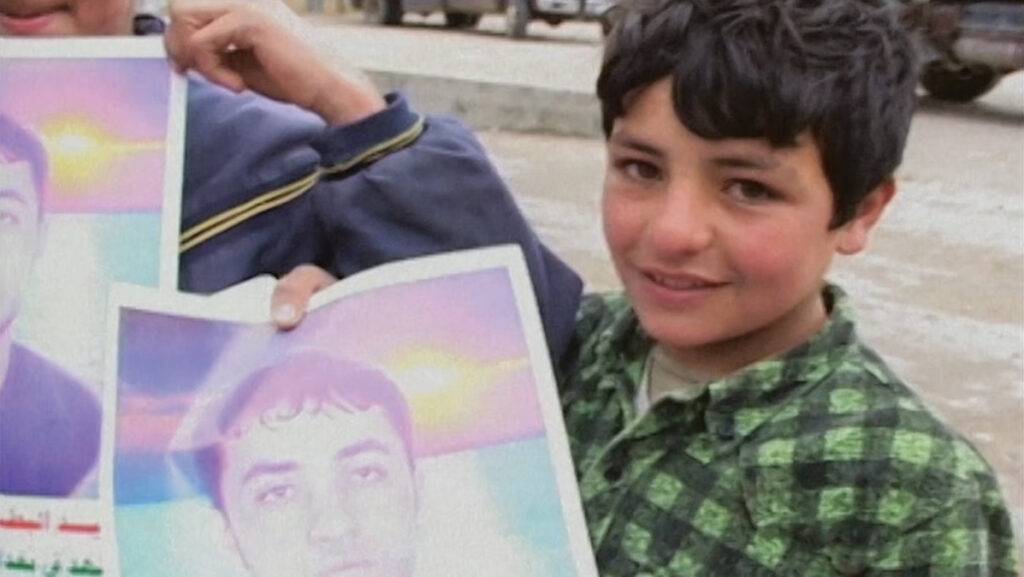
"The south of Lebanon has been devastated, with entire towns and villages erased," Daher emphasizes. "This history didn’t begin with Hezbollah." For Daher, the film is a vital response to the way the international community consumes news from the region. By focusing on the humanity, humor, and tenderness of the Lebanese people, she seeks to challenge the "war-torn" stereotype that flattens a complex society into a singular, tragic object of study.
The Impact of Reality on the Screen
The intersection of the film’s message and the current reality of Lebanon became disturbingly literal during the film’s Beirut premiere. At one screening, the ambient noise of an Israeli drone circling overhead became an unintended, terrifying addition to the film’s sound design. The collapse of the archive into the present moment solidified the film’s message: in Beirut, history is not a static thing kept in a vault; it is a living, breathing, and often violent force.
A Legacy of Resilience
Do You Love Me functions as a surrogate national archive. It does not provide the "official" version of history, nor does it attempt to provide a definitive account of the Lebanese Civil War. Instead, it offers an "alive and felt" record.
As the film continues its international run, its impact remains twofold. For the Lebanese diaspora, it serves as a painful yet necessary homecoming, a repository of lost family histories. For international audiences, it serves as an urgent reminder that behind the political headlines and the shifting maps, there exists a citizenry whose lives are defined by more than just their proximity to conflict.
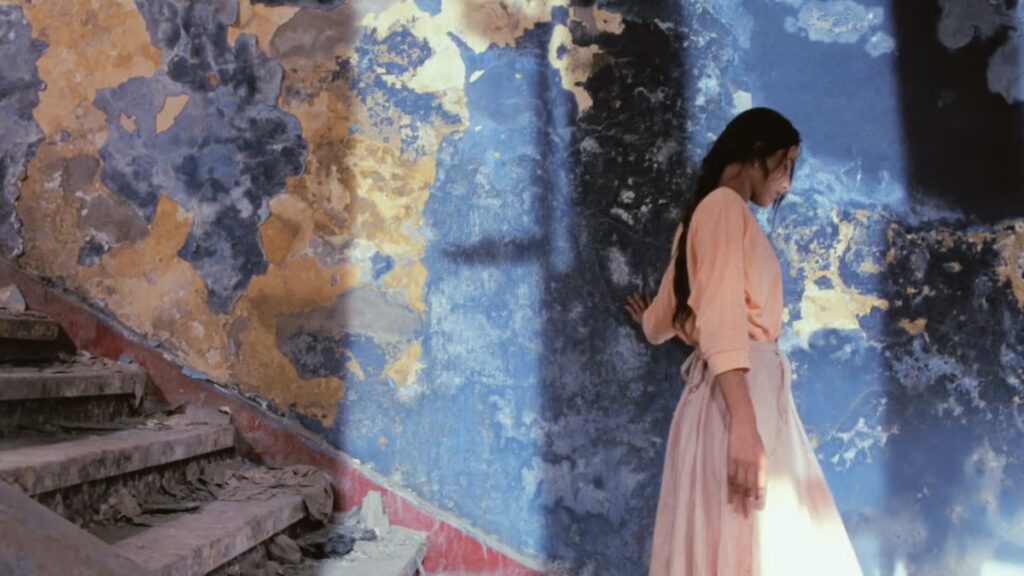
By centering the voices of those who have been marginalized by institutional silence, Daher has crafted a work that resists the erasure of time. Do You Love Me is a profound meditation on the necessity of memory, the endurance of the human spirit, and the enduring power of a story told by those who refuse to be forgotten. In the words of its creator, the film stands as a space held for the emotions of a people who have learned to live, love, and dream, even in the shadow of permanent crisis.