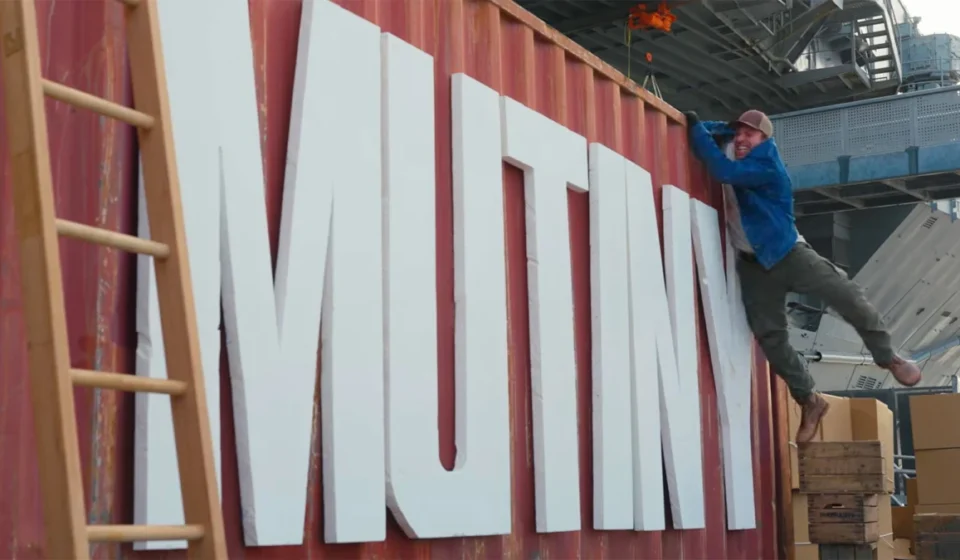
Chaos on the Hudson: Lionsgate Brings High-Octane Action to NYC for ‘Mutiny’ Viral Stunt

By Editorial Staff
August 5, 2026
In an era where digital trailers often blur into a monotonous stream of algorithmically optimized content, Lionsgate has opted for a decidedly visceral approach to marketing. To generate anticipation for the upcoming Jason Statham action vehicle Mutiny, the studio transformed a corner of New York City into a real-life combat zone. By staging an elaborate, five-minute live stunt show near the iconic USS Intrepid Museum, the studio successfully bridged the gap between cinematic spectacle and street-level immersion, reminding audiences that nothing captures the human imagination quite like the raw unpredictability of a physical performance.
The Spectacle: A Call to Action
The premise was deceptively simple: a large, unassuming red button was placed in a high-traffic area near the Intrepid Sea, Air & Space Museum. Pedestrians, initially skeptical, were invited to engage with the installation. Those who succumbed to curiosity and pressed the button were treated to a sudden, jarring display of professional stunt work.
Within seconds of the trigger, the area was swarmed by a team of highly trained stunt performers. The ensuing five-minute sequence was not merely a staged fight, but a complex choreography of hand-to-hand combat, tactical maneuvering, and simulated high-stakes conflict. By utilizing the urban backdrop of Manhattan, Lionsgate effectively mirrored the claustrophobic and high-pressure environment of the film’s central setting—a sprawling cargo ship.
While viral marketing campaigns often risk falling into the trap of being "cringe-worthy" or overly corporate, this initiative succeeded by respecting the physicality of the action genre. There were no CGI shortcuts or green screens; the audience witnessed the impact of hits, the precision of tactical movement, and the sheer athleticism required to pull off such a performance in a public space.
The Context: Behind the ‘Mutiny’ Narrative
Mutiny, directed by French genre maestro Jean-François Richet, is shaping up to be one of the most anticipated action releases of the late 2026 summer slate. The film stars Jason Statham as Cole Reed, a former Special Forces operative turned private security professional. The narrative trajectory is classic, yet high-stakes: Reed is thrust into the center of a geopolitical nightmare when his employer—a prominent Thai billionaire named Tibu—is murdered in his presence.
Framed for the crime and forced into the shadows, Reed must navigate an international conspiracy while simultaneously launching a one-man rescue mission. The film is largely set aboard a massive cargo ship, a setting that provides both a tactical playground for Statham’s character and a metaphorical prison for the victims he aims to save.
The project reunites Statham with Richet, a filmmaker whose resume—ranging from the gritty intensity of Assault on Precinct 13 to the kinetic momentum of Plane—suggests a director who understands the economy of movement and the importance of visual geography in action sequences. With a screenplay penned by J.P. Davis and Lindsay Michel, and produced by Statham himself alongside Marc Butan, the film is designed to play to the actor’s strengths: cold, calculating efficiency balanced with relentless, bone-crunching force.

Production Chronology: From Concept to Cargo Ship
The journey of Mutiny began long before the New York stunt, with an ambitious production schedule that spanned across 2024. The production team prioritized authentic locations, filming extensively in the United Kingdom, including the imposing industrial architecture of Canary Wharf, which served as a crucial stand-in for the film’s maritime settings.
Additional production took place in Malta, a global hub for water-based filming, which allowed the team to capture the nautical scale necessary for a film centered on a cargo ship. By avoiding a reliance on "Volume" LED stages, the production opted for a grounded, tactile approach to filmmaking. This commitment to physical production is exactly what Lionsgate sought to convey through their New York stunt. They aren’t just selling a movie; they are selling the "real deal"—an action film that prioritizes physical craftsmanship over digital artifice.
Supporting Data: Why Stunt Marketing Still Works
In the digital marketing age, the "viral" label is often applied to content that is essentially ephemeral. However, experiential marketing—the practice of bringing the film’s world into the real world—has statistically proven to foster higher levels of audience retention.
Data from the event in New York suggests a significant spike in social media engagement surrounding the keyword "Mutiny movie" within 24 hours of the stunt. By recording the reaction of the public—the genuine shock, the sudden shift from boredom to adrenaline—Lionsgate created a feedback loop of content. The stunt wasn’t just for the people standing on the sidewalk; it was designed for the millions of viewers who would eventually watch the recap video on YouTube.
This strategy acknowledges a fundamental shift in audience behavior: today’s viewers want to feel like insiders. When they see a stunt being filmed in a public space, it demystifies the production process while simultaneously heightening the stakes of the final product. It serves as a visual endorsement of the film’s quality. If the production is willing to put this much effort into a promotional stunt, the audience reasons, the quality of the action within the film must be equally high.
Official Responses and Creative Vision
Jean-François Richet has been vocal about his desire to return to the "classical" action style of the 80s and 90s, where the camera remains steady enough to let the viewer see the stunt work, yet frantic enough to maintain the tension.
"Action should be a language," Richet noted in an early production brief. "It should tell you where the characters are, what they are afraid of, and how they solve the problem of survival."
The casting of Annabelle Wallis, Jason Wong, Roland Møller, Arnas Fedaravicius, and Adrian Lester provides the necessary ensemble weight to support Statham’s lead performance. By filling the cast with character actors who are capable of handling their own physical performance, Richet ensures that the film avoids the "lone hero surrounded by stunt doubles" trope that often plagues lesser action movies.

Implications for the Future of Action Cinema
The success of the New York stunt highlights a shifting trend in how major studios are approaching theatrical distribution. As we move into the final quarter of 2026, the battle for theater-going audiences is fiercer than ever. Films that rely purely on intellectual property (IP) recognition are seeing diminishing returns, while films that lean into their unique selling proposition—in this case, high-octane, star-driven physical action—are thriving.
Lionsgate’s strategy for Mutiny suggests that the studio is doubling down on the "Statham brand." By highlighting the stunt team’s work in a public forum, they are positioning the film as a return to form for the genre. They are telling the audience: "This is a movie for people who miss the visceral thrill of a real stunt."
Furthermore, the integration of these viral moments into the pre-release cycle allows the film to transcend its niche genre audience. It appeals to the casual viewer who may not follow industry news but is caught in the gravity of a well-executed spectacle.
Final Analysis: The Countdown to August 21st
As the release date of August 21, 2026, approaches, the expectations for Mutiny have been set high. The combination of Richet’s direction, a stellar supporting cast, and a marketing campaign that dares to bring the action to the streets of New York creates a potent narrative for the film’s success.
The stunt near the USS Intrepid was more than just a viral moment; it was a promise. It promised that the action audiences see in theaters won’t be watered down or obscured by digital noise. It promised a level of intensity that is increasingly rare in the modern multiplex. For Jason Statham fans and action enthusiasts alike, the wait for Mutiny is becoming an exercise in patience, but if the recent stunt is any indication, the payoff will be worth the wait.
As we look toward the final weeks of the summer season, the question is no longer whether Mutiny will perform, but rather how much of a footprint it will leave on the action genre. If the film can capture even half of the energy displayed on that street corner in New York, it will undoubtedly cement itself as one of the definitive action films of the year.
Mutiny hits theaters nationwide on August 21, 2026. For those still on the fence, the trailers are available for viewing, though the true testament to the film’s intensity may very well have been the five minutes of chaos that stopped traffic in New York City.