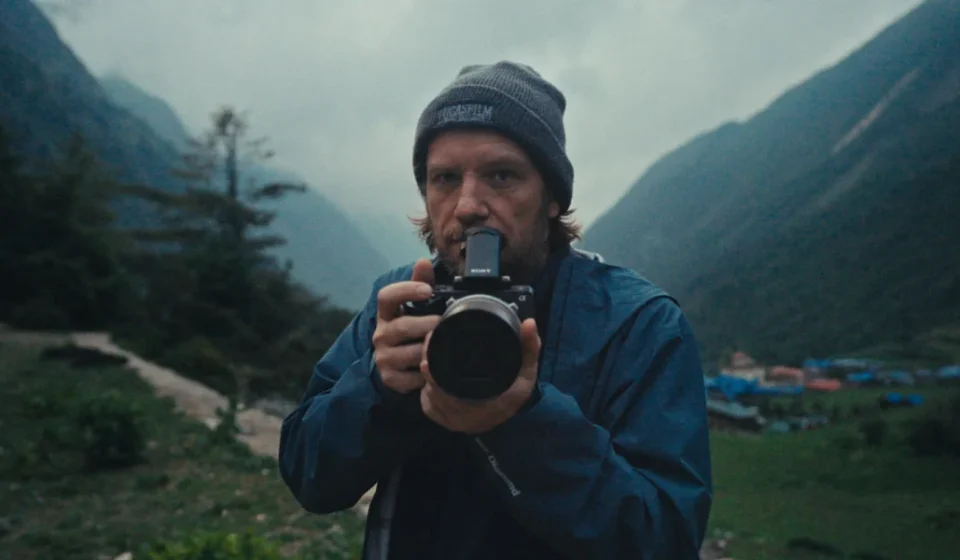
The New Frontier of Guerrilla Cinema: Sony’s FX5 Redefines the Portable Production Ecosystem

The boundaries between high-end theatrical cinematography and agile, "run-and-gun" documentary filmmaking have officially dissolved. With the unveiling of the Sony FX5, a compact full-frame powerhouse within the company’s celebrated Cinema Line, the industry is witnessing a paradigm shift. Featuring 5K Open Gate acquisition, internal 16-bit X-OCN recording, and a specialized AI-processing architecture, the FX5 is not merely an incremental update—it is a tool designed to allow filmmakers to operate with a level of creative freedom previously reserved for hobbyists, while delivering the technical fidelity required for global theatrical distribution.
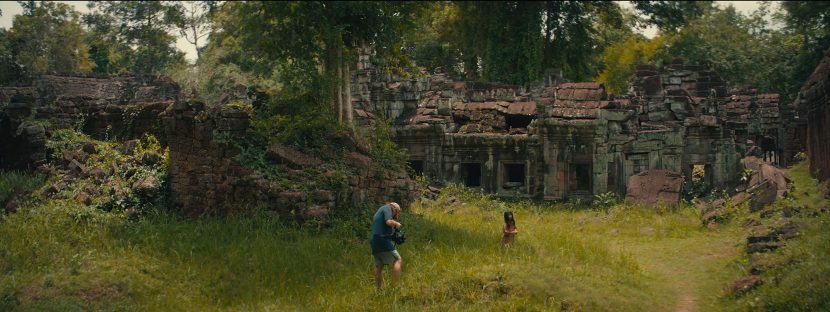
To prove the capabilities of this new system, Sony enlisted visionary director Gareth Edwards—the creative force behind The Creator, Rogue One: A Star Wars Story, and Jurassic World: Rebirth. Edwards took the FX5 into the field, capturing footage across Cambodia, Thailand, and Nepal, pushing the camera to its absolute limits in a week-long trial that spanned from bustling urban centers to the thin, frozen air of the Himalayas.
Main Facts: The Anatomy of the FX5
At the heart of the FX5 lies a newly engineered full-frame, stacked Exmor RS CMOS sensor. This sensor is paired with the BIONZ XR2 image processing engine and a dedicated AI unit, a combination that Sony claims provides more than 15 stops of dynamic range in S-Log3.
The camera’s technical specifications are designed to cater to the modern hybrid workflow:
- Resolution and Frame Rates: 5K at up to 60 fps, 4K at up to 120 fps, and Full HD at 240 fps.
- Recording Formats: For the first time in the FX series, the camera supports internal 16-bit scene-linear X-OCN (LT, C1, and C2 variants), allowing for a professional RAW workflow without the weight of external recorders.
- Open Gate Versatility: The FX5 offers 3:2 full-sensor Open Gate recording, alongside 17:9, 16:9, and Super 35mm crop modes, providing maximum flexibility for anamorphic lens users and varied delivery formats.
- Base ISO and Low Light: A triple-base ISO of 800, 4,000, and 12,800, bolstered by Dual Gain Shooting, ensures that the camera retains clean, cinematic textures even in extreme low-light environments.
A Chronology of Discovery: From ‘The Creator’ to the Himalayas
The philosophy behind the FX5 is deeply rooted in the production experiences of Gareth Edwards. In 2022, while filming The Creator, Edwards, along with cinematographers Greig Fraser and Oren Soffer, utilized the Sony FX3 to traverse 80 locations across Southeast Asia. By stripping away the traditional, bulky production hierarchy, the team managed to scout and shoot simultaneously, maintaining a "small footprint" that allowed for an organic visual style.
When tasked with testing the FX5, Edwards returned to this familiar territory. The week-long test in mid-2026 was a logistical marvel: the entire production kit was condensed into just three bags—one for the camera, one for a compact dolly/slider, and one for accessories. The team moved between extremes, facing temperatures ranging from 35°C in the tropical heat of Cambodia to a biting -5°C in the high-altitude villages of Nepal.
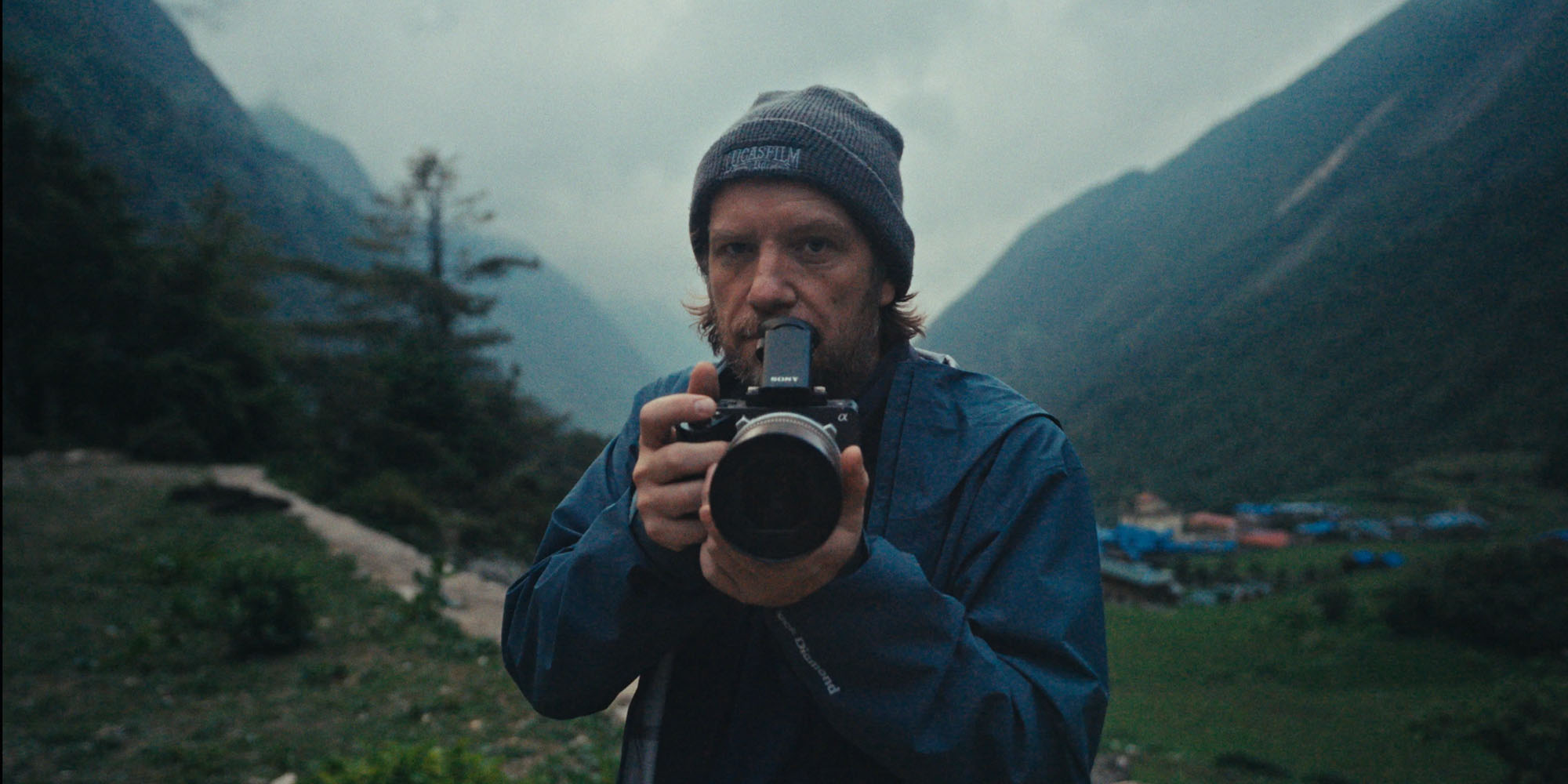
"I knew from The Creator that if I had a gun to my head and someone said, ‘You’ve got a day to shoot loads of great images, where would you go?’ I’d immediately say Kathmandu," Edwards noted. The resulting footage serves as a testament to the camera’s ability to capture high-fidelity images under immense time pressure.
The Evolution of Monitoring: iPhone as Command Center
Perhaps the most radical departure from traditional cinema setups is the FX5’s wireless monitoring ecosystem. Edwards configured his rig with a vintage 2x Japanese anamorphic lens on a lightweight gimbal, opting to eliminate external recorders and bulky video transmitters entirely.
Instead, he utilized an iPhone as a wireless viewfinder via the Monitor & Control 3.0 application. By leveraging the iPhone’s MagSafe technology, Edwards could snap the display onto the gimbal, his wrist, or a mounting point with ease.
"The iPhone is so bright and the battery is so good, it’s better than any five-inch field monitor you could get," says Edwards. "And because of the magnets, I could move it from the gimbal to my wrist like a watch if I was holding the rig low. You don’t need a transmitter, necessarily."
This setup allowed for a fluid, non-intrusive shooting style. Because the camera was powered directly from the gimbal handle, the need for V-mount batteries and complex power distribution was eliminated, effectively shrinking the "cinema" rig into something that could be carried in a single hand.
Supporting Data: AI-Driven Performance
The integration of AI-assisted autofocus represents a significant leap in the FX5’s reliability. The system uses human pose estimation—recognizing eyes, heads, and bodies—to maintain focus even in dimly lit environments. This is further complemented by "Auto Tracing White Balance," which fuses visible-light and infrared data with machine-learning-based light source estimation.
For Edwards, the camera’s high-sensitivity performance at ISO 12,800 was a revelation. "The best light starts happening as the sun is going down," he observed. "Essentially, if I could see it with my eye, I knew the camera could see it. I can’t go back from ISO 12,800; I’m just not interested in cameras that can’t do it now."
Furthermore, the inclusion of in-camera de-squeeze for various anamorphic ratios (1.3x, 1.5x, 1.6x, 1.8x, and 2x) allowed Edwards to use his preferred vintage glass while retaining the convenience of a modern digital workflow.
Official Responses and Strategic Vision
Sony has positioned the FX5 as the ultimate "run-and-gun" cinema camera. According to Sony’s design team, the "flat-top" body design—which features five-axis optical in-body stabilization—is intended for use in confined spaces and handheld scenarios where every ounce matters.
The software ecosystem is equally robust. Sony has ported its CineAlta "BIG6" interface to the FX5, grouping principal settings like frame rate, exposure, and LUTs onto a single, intuitive home screen. Additionally, the camera is designed for future longevity; a major version 2.0 firmware update is already slated for August 2027, promising high-frame-rate X-OCN recording at 240 fps and additional vertical-shooting interfaces.
Implications: The Death of the ‘Heavy’ Production
The most profound implication of the FX5’s release is the democratization of high-end, cinematic, "guerrilla" production. As Edwards noted during his field test, the camera allows a filmmaker to "hide in plain sight."
In a Himalayan monastery, Edwards and his small crew were able to film a sacred Buddhist ceremony without the typical disruption associated with a full production unit. "Because we looked so non-intrusive, it didn’t cause a problem," Edwards explained. "I really don’t want to look like I’m making a movie. I want to look like I’m just passing through. That’s when you get the really naturalistic behavior."
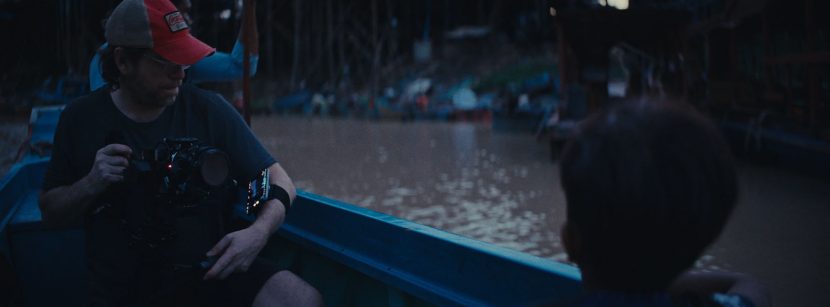
This ability to capture unscripted, raw human moments—while maintaining the technical latitude of 16-bit RAW files—is a game-changer. It means that the next generation of feature films may not require massive, blockading crews to look "cinematic."
As Edwards reflected, "Sometimes I’ve felt like there are little moments in the middle of a shot where you’re holding the camera, and you think to yourself, a year from now, this is going to get a major theatrical release. And you could argue that millions of people are going to see this. And to feel like, in such a small camera, to have that same feeling—it feels like a TARDIS."
The Sony FX5 is currently set to ship in early August 2026, with a retail price of A$7,849 for the body only. For independent filmmakers and seasoned professionals alike, it signals a new era where the technology no longer dictates the scale of the production; the vision does.