The Precision of Decay: Yaza Takenoshin’s ‘Hinotama: Ball of Fire’ and the New Wave of Japanese Realism

The 37th Tokyo International Film Festival (TIFF) has long served as a barometer for the health and direction of East Asian cinema. This year, the spotlight of the "Nippon Cinema Now" section—a curated space dedicated to the vanguard of emerging Japanese talent—fell squarely upon Hinotama: Ball of Fire. The debut feature from Yaza Takenoshin is more than just a first film; it is a meticulously calibrated exploration of domestic dissolution that signals the arrival of a major new voice in the industry.
Takenoshin, a recent Harvard University graduate, brings a distinctive, scholarly rigor to his filmmaking, blending a deep appreciation for the "Slow Cinema" movement with a contemporary Japanese sensibility. Hinotama does not merely tell the story of a marriage ending; it maps the topography of that end through the eyes of a child, utilizing a visual language that is as disciplined as it is devastating.
Main Facts: A Debut Defined by Discipline and Pedigree
At its core, Hinotama: Ball of Fire is a domestic drama that avoids the histrionics often associated with the genre. The film follows young Takeshi (played with haunting restraint by Riku Onishi) as he navigates the silent, suffocating collapse of his parents’ relationship. The title refers to a local legend—a "ball of fire"—that Takeshi’s friend Akari (Himena Irei) describes to him, serving as a metaphysical beacon of hope in an otherwise drab, suburban existence.
The film’s production pedigree is notable. Takenoshin managed to secure the services of Yoshio Kitagawa, the cinematographer known for his collaborations with Academy Award-winner Ryusuke Hamaguchi (Drive My Car). This partnership has resulted in a film that prioritizes "patient observation" over rapid-fire editing, allowing the weight of the characters’ unspoken frustrations to fill the frame.
The film’s inclusion in the "Nippon Cinema Now" selection places it alongside works that challenge the traditional structures of the Japanese studio system. It represents a shift toward independent, auteur-driven storytelling that seeks to dissect the modern Japanese family unit rather than sentimentalize it.
Chronology: From Rhythmic Mundanity to Allegorical Rupture
The narrative structure of Hinotama is a study in gradual escalation. Takenoshin organizes the film into distinct phases that mirror the psychological state of its protagonist.
The Clockwork of the Everyday
The opening moments of the film are a masterclass in rhythmic editing. Takenoshin establishes a "pleasing rhythm in everyday mundanities," as the director himself has described. The film cuts between the repetitive calling out of numbers for school test papers and a mother having her groceries scanned at a supermarket checkout. The sounds—the beep of the scanner, the scratch of a pen—are synchronized into a metronomic beat. This suggests a world of perfect order, but also one of mechanical soullessness. It establishes the "factory line" existence that the characters inhabit.
The Slow Creep of Dissatisfaction
As the film progresses, the visual neatness begins to fray. We see Takeshi’s father (a man of petty pride and suppressed anger) begin to voice his discontent through "small asides." These are not grand outbursts but rather "understated warning signs." A missed "thank you" from a child or a perceived lack of respect from his wife (Mari Kusu) serves as the catalyst for a slow-burning resentment. The film captures the "inevitable process" of a family fracturing, where the orderly compositions of the home begin to feel less like a sanctuary and more like a cage.
The "Dam Bursts"
The tension culminates in a pivotal scene involving a pair of pristine white sneakers. Takeshi, who has drifted through the film with an insular, stoic expression, finally snaps. He jumps into a muddy puddle, intentionally ruining the shoes. In a film characterized by "stillness of the camera" and "long takes," this sudden, violent burst of physical rebellion is startling. It marks the end of Takeshi’s compliance with the "automation" of his life.
The Time Jump and the Allegorical Shift
The final act of the film introduces a "sudden jump forward" of three months. This transition destabilizes the previously steady narrative, shifting the focus to the fallout of the parents’ separation. The film moves away from the grounded realism of its first hour toward a more "allegorical tone." While some critics have noted that this shift feels less cohesive than the film’s stronger, earlier elements, it allows for a poignant exploration of how the younger brother, Kento (Koe Odani), is forced to "grow up fast" to alleviate the family’s collective suffering.
Supporting Data: The Visual Language of Entrapment
The technical execution of Hinotama provides the data set for its emotional impact. Takenoshin and cinematographer Yoshio Kitagawa utilize specific visual motifs to reinforce the film’s themes:
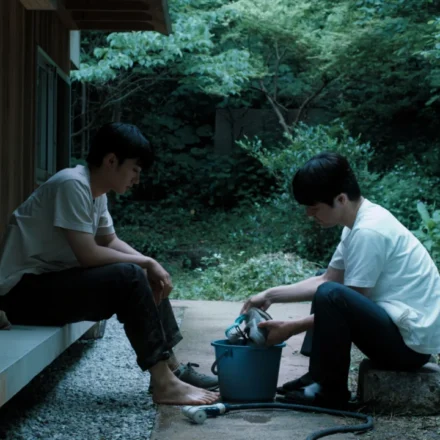
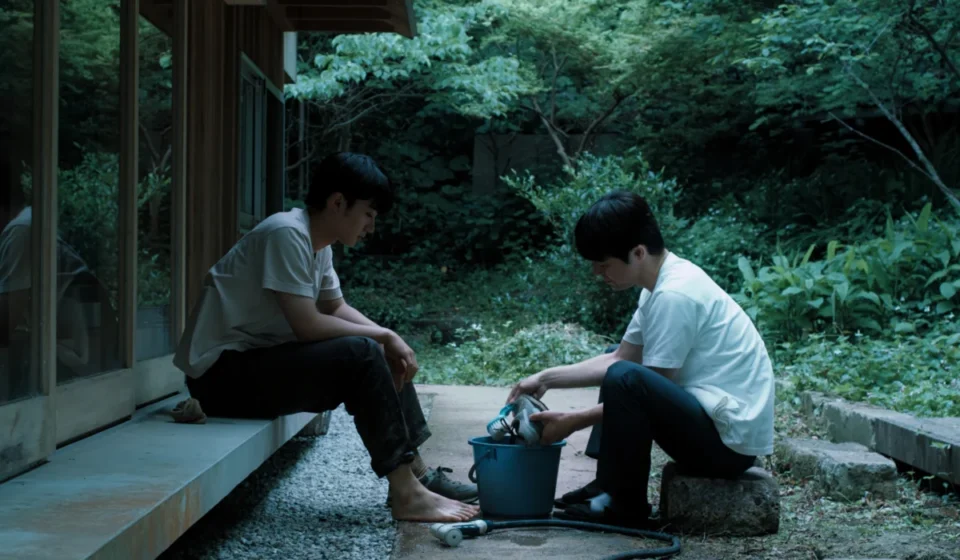
- Symmetry as a Constraint: Kitagawa’s cinematography frequently embraces perfect symmetry, placing a person or an object at the exact center of the frame. In the context of Takeshi’s home, these "clean geometric lines" create a sense of artificiality. The house looks like a showroom, highlighting the lack of warmth or genuine connection between the inhabitants.
- The Muted Performance Style: Takenoshin sought "subdued performances" from his cast. Riku Onishi’s Takeshi is often seen "gazing into space," a visual representation of his internal withdrawal. This lack of overt emotional signaling forces the audience to pay closer attention to micro-expressions and body language.
- The Soundscape of Automation: The film’s audio design emphasizes the "subtle sense of automation." Background noises—clocks, appliances, distant traffic—are heightened to suggest a world where humans are merely cogs in a larger, indifferent machine.
Official Responses and Festival Reception
While the film is a debut, it has already garnered significant attention within the Japanese film industry. The "Nippon Cinema Now" selection is highly competitive, and Takenoshin’s background as a Harvard graduate has made him a subject of curiosity in the local press.
In interviews following the premiere, Takenoshin has been vocal about his influences. He cites Ryusuke Hamaguchi as a primary inspiration, particularly in the way Hamaguchi handles "patient observation of characters navigating fracturing relationships." The director has noted that he reached out to Yoshio Kitagawa for advice as a student, and the veteran cinematographer was so impressed by the young director’s vision that he offered to shoot the feature himself.
Early critical response from the Tokyo Film Festival has been largely positive, though nuanced. Critics have praised the "visual neatness" and the "terse dialogue" that cuts through the domestic silence. However, some have pointed out that the "muted approach" can occasionally become "overbearing," particularly in scenes where children are depicted in overly orderly, almost "unnatural" formations. Despite these minor critiques, the consensus is that Hinotama marks the arrival of a "promising" talent who understands the power of cinematic restraint.
Implications: A New Trajectory for Japanese Independent Film
The emergence of Yaza Takenoshin and Hinotama: Ball of Fire carries several implications for the future of Japanese cinema:
1. The Globalized Japanese Auteur
Takenoshin represents a new generation of Japanese filmmakers who are globally educated and bring international perspectives back to domestic storytelling. His Harvard education likely informed his analytical approach to the "traditional family unit," viewing it through a lens that is both intimate and sociologically detached. This "outsider-insider" perspective is becoming more common in the Japanese indie scene.
2. The Legacy of the "Hamaguchi School"
The fact that Hamaguchi’s cinematographer collaborated on this film suggests the formation of a "stylistic lineage." Much like the "Ozu style" influenced generations of directors, the "Hamaguchi style"—characterized by long takes, literary dialogue, and a focus on the mundane—is now being adopted and adapted by younger filmmakers. Hinotama proves that this aesthetic can be successfully applied to stories about childhood and adolescence.
3. Deconstructing the "Ideal" Family
Japanese cinema has a long history of the "Home Drama" (Shomin-geki). However, Hinotama moves away from the nostalgia of the past. It portrays the "traditional family unit" not as a source of strength, but as a structure prone to "visible cracks." The film implies that the societal pressure to maintain a facade of "orderly" domesticity is precisely what leads to the "discontent from living as though on a factory line."
4. The Future of Riku Onishi
The performance of Riku Onishi is likely to be a career-making turn. His ability to anchor a film with such an "insular but troubled" presence suggests a maturity beyond his years. Industry insiders expect Onishi to become a staple of the independent circuit in the coming years.
Conclusion: A Promising First Step
Hinotama: Ball of Fire is a film of "neat and steady" brilliance. While it occasionally struggles with its own allegorical ambitions in the final act, its first hour is among the most controlled and evocative pieces of domestic drama to emerge from Japan in recent years. Yaza Takenoshin has demonstrated that he possesses the patience and the eye required to turn the "everyday mundanities" of life into a compelling cinematic experience. As the "ball of fire" in the film represents a search for "childlike wonder," the film itself represents a search for a new kind of truth in Japanese storytelling—one that isn’t afraid to look at the mud on the sneakers or the cracks in the walls.