
The act of writing has long been considered one of the most difficult professions to translate to the silver screen. In the visual medium of cinema, which thrives on action, movement, and externalized conflict, the internal, static, and often agonizingly slow process of literary creation presents a unique challenge. Filmmakers have traditionally relied on tropes—the crumpled ball of paper, the frantic clacking of typewriter keys, or the hallucinatory manifestation of characters—to bridge the gap between the writer’s mind and the viewer’s eye. However, in his feature debut Agata the Writer, video artist and director Kuba Dorabialski eschews these clichés in favor of something far more complex, elusive, and intellectually demanding.
Premiering at the Venice Film Festival within the prestigious Giornate degli Autori sidebar, Agata the Writer is a film that refuses to be easily categorized. It is at once a study of writer’s block, an exploration of the "Slavic soul," a critique of trauma tourism, and a meditation on the displacement of the immigrant identity. Starring Mia Wasikowska in a role that demands both intellectual rigor and physical vulnerability, the film marks a significant moment in contemporary independent cinema, challenging how we perceive the intersection of history, art, and personal heritage.
Main Facts: A Convergence of Talent and Vision
Agata the Writer is the brainchild of Kuba Dorabialski, a Polish-born, Australian-based artist whose background in video art heavily informs the film’s aesthetic and structural DNA. Dorabialski serves as a true auteur on the project, taking on the roles of writer, director, cinematographer, editor, and composer. This "one-man-band" approach allows for a singular, uncompromising vision that permeates every frame of the film’s runtime.
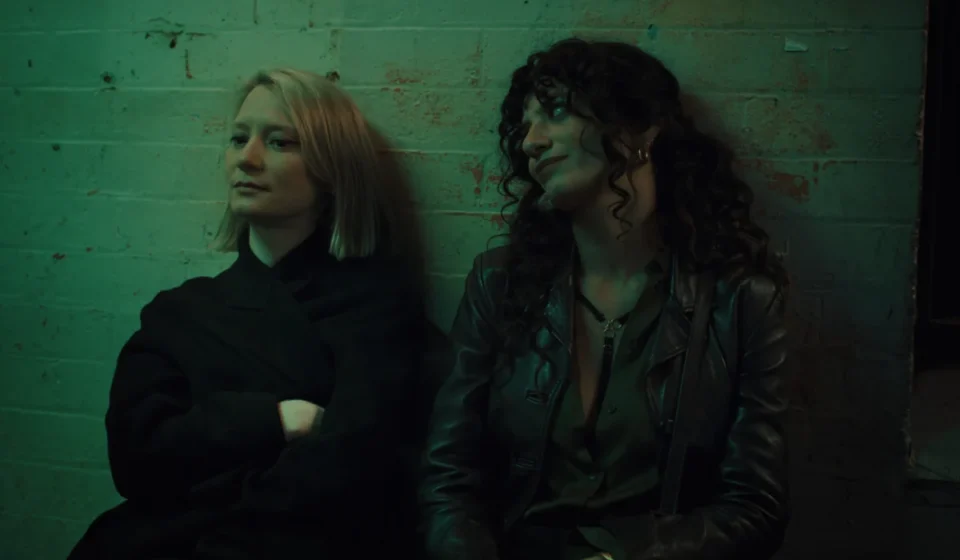
The film stars Mia Wasikowska as the titular Agata. Wasikowska, an Australian actress of Polish descent herself, brings a layered authenticity to the role. Agata is a Polish-Australian novelist who has achieved moderate success with satirical works but finds herself yearning for a deeper, more "earnest" creative breakthrough. This desire leads her to Sarajevo, the capital of Bosnia and Herzegovina, where she intends to research and write a novel set during the Bosnian War of the 1990s.
The supporting cast is led by Vedrana Božinović, who plays Jasmina, a local theater director. Jasmina serves as the film’s moral and historical anchor, providing a sharp, often abrasive counterpoint to Agata’s outsider perspective. Mia Morrissey also appears as Davina, Agata’s editor, representing the commercial and external pressures that haunt the creative process.
The film’s technical palette is deliberately restrained. Shot in "wintry and severe" tones, it utilizes the natural landscape of Sarajevo—its mineral shades and persistent, howling winds—to create an atmosphere of psychological isolation. The production is a testament to the possibilities of high-concept, low-budget filmmaking that prioritizes thematic depth over spectacle.
Chronology: The Journey from Concept to Screen
The Development Phase
The origins of Agata the Writer lie in Kuba Dorabialski’s ongoing fascination with the linguistic and cultural connections between various Slavic nations. Having spent years working in the realm of video installations and short-form experimental media, Dorabialski sought to expand his exploration of "Slavic similitude" into a narrative feature. The script was developed with a meta-narrative structure, intended to mirror the disjointed and often non-linear nature of the writing process itself.
Production and Casting
Filming took place on location in Sarajevo, a choice that was essential for capturing the city’s unique historical weight. The casting of Mia Wasikowska was a pivotal moment for the production. Having previously explored meta-fictional themes in Mia Hansen-Løve’s Bergman Island, Wasikowska was uniquely suited to inhabit a character who is constantly questioning the validity of her own creative voice. The production period was characterized by an intimate, small-crew environment, allowing Dorabialski to maintain tight control over the film’s distinctive visual and auditory textures.
Festival Circuit and Premiere
The film’s journey culminated in its selection for the 2024 Venice Film Festival. Premiering in the Giornate degli Autori sidebar (formerly known as Venice Days), the film was positioned alongside other "bracingly singular" works of international cinema. Its reception highlighted the film’s "ornery" and "elusive" nature, marking it as a work that would likely divide audiences while garnering respect for its stylistic boldness.
Supporting Data: Thematic and Technical Analysis
To understand the impact of Agata the Writer, one must look at the specific thematic pillars that support its narrative.
The Ethics of Trauma Tourism
A central tension in the film is Agata’s attempt to write about the Bosnian War—a conflict she did not experience and has no direct familial connection to. The film uses the term "trauma tourism" to describe the phenomenon of artists from stable, Western backgrounds mining the tragedies of other cultures for "authentic" material.
This is most poignantly illustrated in a scene where Agata asks Jasmina if she "enjoyed" the war years. Jasmina’s response—"It was genocide"—serves as a brutal reality check. The film posits that Agata’s search for "Slavic similitude" is, in some ways, a form of intellectual theft. This is echoed in a sub-plot involving a serial thief targeting the house where Agata is staying, suggesting that her artistic endeavors are another form of unauthorized taking.
Structural Innovation: The Narrative Pivot
Perhaps the most daring aspect of the film is its structural "coup." Mid-way through the story, Dorabialski abandons the traditional narrative progression to immerse the audience entirely in Agata’s unfinished manuscript. Delivered via voiceover, these segments stop the physical action of the film dead.
The text we hear sounds less like a polished novel and more like a fragmented screenplay, blurring the lines between the film we are watching and the book Agata is failing to write. This "monomaniacal pivot" honors the irrational rhythms of the writing process, where progress is rarely linear and often involves getting lost in one’s own creation.
The Aesthetics of Displacement
Visually, the film avoids the picturesque or the sentimental. Sarajevo is depicted in "damp mineral shades," emphasizing its cold, wintry severity. The sound design is equally crucial; Dorabialski himself appears briefly as a sound recordist trying to capture the "white noise" of the Sarajevo wind. This wind becomes a character in itself—a constant, varying chorus that underscores Agata’s internal instability.
Official Responses: Critical and Creative Perspectives
The critical response to Agata the Writer has emphasized its "impressive poise" and "confidently willful storytelling." Critics have noted that while the film’s narrative swerves and "culs-de-sac" may frustrate viewers seeking a traditional story, they are essential to its exploration of creative limbo.
The Director’s Philosophy
In interviews and press materials, Kuba Dorabialski has discussed the film as an extension of his work as a video artist. He views the project not just as a story about a writer, but as an interrogation of the "Slavic" identity in a globalized world. For Dorabialski, the film is "wisely knotty," designed to be a "subtly tricky" experience that reflects the loneliness of finding a story.
Mia Wasikowska’s Performance
Reviewers have praised Wasikowska for her "quizzical" and "tensely amusing" performance. Known for being a "visible and deliberate thinker" on screen, she portrays Agata’s uncertainty through her "halting, loping gait and murmuring delivery." Her performance is seen as a return to "substantial film roles" that utilize her ability to convey complex internal states with minimal outward expression.
Implications: The Future of the "Author Biopic"
Agata the Writer has significant implications for how cinema handles the subject of artistic creation. By focusing on the failure to write, and the ethical dilemmas inherent in storytelling, Dorabialski has moved the genre away from the hagiographic "great-author" biopic and toward a more honest, albeit uncomfortable, investigation of the writer’s psyche.
Redefining Immigrant Identity
The film also contributes to the evolving dialogue on immigrant identity. Agata is not a traditional "refugee" or "exile"; she is a Polish-Australian woman looking backward at a history she feels she should belong to but doesn’t. This "strange, dissonant homecoming away from home" reflects the experience of many in the diaspora who feel caught between two worlds, belonging fully to neither.
A Model for Multi-Hyphenate Filmmaking
Finally, the film serves as a model for the "one-man-band" approach to filmmaking. In an industry often dominated by committee-driven decisions, Dorabialski’s ability to execute a film where he controls the writing, shooting, editing, and scoring provides a blueprint for other artists seeking to maintain a singular vision. It suggests that the future of bracingly singular cinema may lie in those who are willing to embrace the "necessarily lonely" process of telling a story that refuses to behave.
As Agata the Writer moves from the festival circuit to international distribution, it stands as a testament to the power of "pleasingly ornery" cinema. It is a film that does not offer easy answers or tidy resolutions, but instead invites the viewer to sit within the cold, windy, and deeply uncertain space of a mind trying—and failing—to make sense of the world through words.