The New Gatekeepers: How Letterboxd Is Upending the Traditional Film Distribution Model

For decades, the path for an independent filmmaker was etched in stone: endure the grueling festival circuit, secure a sales agent, and hope for a bidding war at Sundance, SXSW, or Cannes. For directors like Alexander Ullom, whose psychological thriller It Ends struggled to find a home despite months of festival buzz, this traditional route had begun to feel less like a highway and more like a dead end. In an era where legacy distributors are tightening their belts and traditional markets have slowed to a crawl, the once-reliable festival system is undergoing a profound identity crisis.
However, a new power broker has emerged from an unlikely place: the social film-logging app Letterboxd. By transforming its “Unreleased Gems” shelf—a curated corner of its burgeoning Video Store—into a high-visibility incubator, the platform is effectively bypassing the traditional gatekeepers and providing a lifeline for indie films languishing in the purgatory of "festival-only" status.
A Stagnant Market: The Decline of the Festival Deal
The 2026 Sundance Film Festival served as a sobering bellwether for the industry. While the festival showcased over 90 films and episodic series, the frenzy that once defined the “Sundance deal” was largely absent. Only a dozen projects arrived with pre-sold distribution; the remaining 80-plus films were left to fend for themselves on the ground, with many failing to secure buyers until months after the festival’s final curtain.
This follows a 2025 market that was so quiet it left industry analysts questioning the very health of the independent film ecosystem. As traditional buyers pull back, favoring the safety of established IP and low-risk catalog titles, the gap has been filled by finance-backed distributors like Row K and Black Bear. But for the average filmmaker, these shifts have made the “direct route to distribution” a myth. The reality is now one of extreme caution, where buyers are incentivized to wait, watch, and let the filmmaker shoulder the financial burden of marketing and promotion.
The Rise of the “Unreleased Gems” Strategy
Into this vacuum steps Letterboxd. What began as a niche app for cinephiles to log their watch history has rapidly evolved into a commercial force. Filmmaker Chris Merola, director of the indie feature Lemonade Blessing, is among those who have leveraged the platform to flip the script. After a frustrating run on the festival circuit that yielded no acceptable offers, Merola turned to the Video Store’s "Unreleased Gems" shelf.
“Festivals are not what they were in the mid-90s and 2000s,” Merola told IndieWire. “The post-COVID landscape accelerated viewing patterns and purchasing patterns into the digital sphere. Festivals have not been able to fully recover.” For a first-time filmmaker, the financial toll of this traditional route is staggering—thousands of dollars in publicist fees and travel costs for cast and crew, often for minimal return.
By contrast, the Video Store offers a high-impact, low-friction alternative. Once a film is selected for the shelf, Letterboxd utilizes its massive, engaged user base—now exceeding 30 million members worldwide—to create instant, organic awareness.

Case Study: The "It Ends" Phenomenon
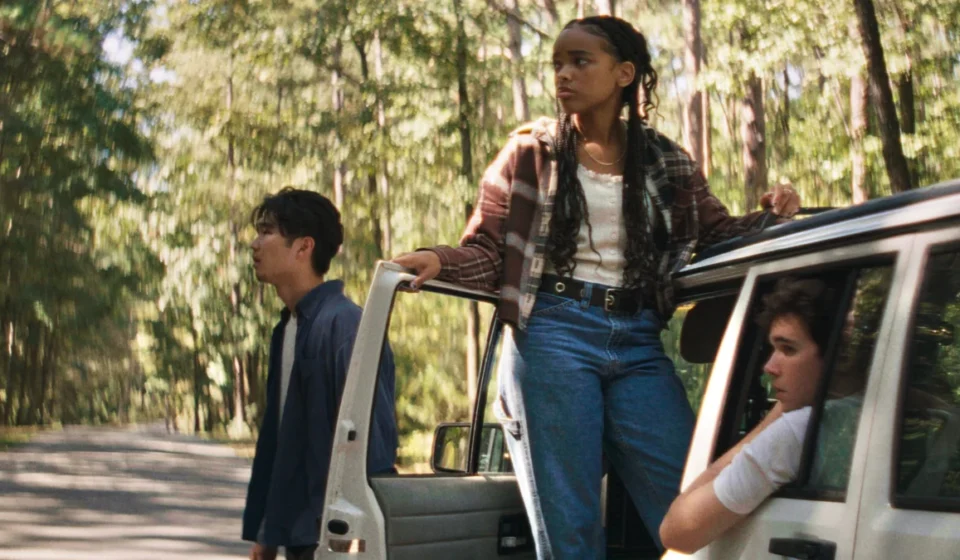
The success of Alexander Ullom’s It Ends serves as the gold standard for this new model. The film had spent months on the festival circuit without a single substantial offer. In the current market, Ullom noted, he didn’t hear of a single minimum guarantee exceeding $50,000, even from major players.
The turning point for It Ends was a stroke of serendipity mixed with modern influencer marketing. After a chance encounter at a studio event, horror creator and screenwriter Nicolas Curcio championed the film on TikTok and Instagram, generating nearly a million combined views. When Letterboxd CEO Matt Buchanan noticed the growing chatter, the film was fast-tracked to the "Unreleased Gems" shelf.
The result was a textbook case of data-driven acquisition. During the film’s eight-day tenure on the platform, the number of users logging it as "watched" quadrupled. By the time Neon acquired the film, the "groundswell" wasn’t just a marketing pitch—it was a quantifiable, irrefutable data set. The platform’s ability to provide proof-of-concept—demonstrating that an audience for a specific title actually exists—has fundamentally changed the negotiation power of the filmmaker.
Data-Driven Decision Making: The New Currency
The effectiveness of the Letterboxd model lies in its shift away from subjective, "gut-feeling" programming toward transparent, audience-led validation. According to Courtney Mayhew, Head of Video Store Content at Letterboxd, the selection process for the shelf is less about internal metrics and more about external momentum.
“You want to make sure for each shelf you’re not having the same types of films, and you’re hopefully serving different audiences,” Mayhew said. “Lemonade Blessing stood out because it felt really authentic. It was from a young director, very much in his voice, very specific to his experience.”
This strategy creates a flywheel effect:
- Audience Chatter: Organic buzz forms off-platform.
- Shelf Placement: Letterboxd amplifies that buzz to its 30 million users.
- Data Collection: "Watchlist" volume typically jumps 40 times for featured titles.
- Distributor Conversion: Skeptical buyers are presented with clear, hard evidence of demand.
For filmmakers, this is a revolutionary shift. Where a traditional distributor might charge for Print and Advertising (P&A) as a debt against the filmmaker, the Video Store model prioritizes revenue sharing. It removes the predatory "debt" structure that has historically crippled independent creators.

Official Responses and Industry Implications
The implications of this shift are being felt across Hollywood. Traditional distributors are finding that the old "wait and see" approach is becoming less viable when a competitor can see real-time engagement data on a platform like Letterboxd.
However, Letterboxd leadership remains careful not to overstate their role as a replacement for the traditional studio system. Mayhew emphasizes that their goal is not to dictate the path of every film, but to offer a viable alternative for those who find themselves locked out of the traditional gate. “We would never presume whether these filmmakers want to have a traditional distribution,” Mayhew stated. “Even if it’s just five really strong ambassadors for these independent gems… that’s something that has value.”
This perspective is shared by filmmakers like Merola, who noted that the mere presence of the film on the platform serves as a powerful lever. “As far as leverage and getting a pound-for-pound result, you can’t really beat the Video Store. Letterboxd is posting about the film. They have three million followers. Your Instagram accounts will blow up.”
The Future of the "Unreleased Gems" Shelf
As the platform continues to grow, the "Unreleased Gems" shelf is becoming a destination for curators and scouts. The upcoming slate of additions highlights the eclectic nature of the program:
- "Downbeat": A character-driven drama about a struggling musician finding his voice.
- "The Weed Eaters": A genre-bending horror-comedy from New Zealand.
- "I Only Rest in the Storm": A Cannes-prizewinning project from Portugal that delves into post-colonial identity.
This variety suggests that Letterboxd is not looking to build a specific "type" of library, but rather to create a mirror for the diverse tastes of its massive community.
Conclusion: A Shift in Power
The traditional festival circuit is unlikely to disappear, but its monopoly on discovery has been effectively broken. The success of films like It Ends and Lemonade Blessing proves that in the digital age, audience attention is the most valuable commodity in the film industry.
By decentralizing the discovery process and empowering filmmakers with concrete, shareable audience data, Letterboxd has created a new, sustainable pipeline for independent cinema. For filmmakers who once viewed the festival circuit as a necessary evil, the path forward is increasingly clear: build your audience first, and let the distributors come to you. As the industry looks toward the next cycle of film markets, the question is no longer who will be accepted into the "official" festivals, but who will be featured on the "Unreleased Gems" shelf. The gatekeepers have changed, and the power of the audience has never been more evident.