Lost in the Cretaceous: The Resurrection of the Scrapped 1993 Escape from Jurassic Park Animated Series

By Alex Billington
November 1, 2026
For over three decades, the legend of a "lost" Jurassic Park animated series has circulated within the deepest corners of internet film forums and fan circles. It was a whispered myth—a relic of the early 90s media landscape that vanished before it could ever reach the public consciousness. Now, in a stunning archaeological find for film historians and pop culture enthusiasts alike, that myth has become reality. A long-lost promotional pitch trailer for Escape from Jurassic Park has finally surfaced, providing a rare, haunting glimpse into a version of the franchise that never was.
The Genesis of a Lost Project
The year was 1993. Steven Spielberg’s Jurassic Park had just roared into theaters, shattering box office records and fundamentally altering the trajectory of blockbuster filmmaking. As the world became obsessed with the dinosaurs of Isla Nublar, Universal Cartoon Studios moved swiftly to capitalize on the momentum. Long before the era of Jurassic World: Chaos Theory or the modern digital saturation of the franchise, the studio commissioned a project intended to translate the tension and awe of the film into an episodic animated format.
The resulting project, titled Escape from Jurassic Park, was not designed as a Saturday morning cartoon for children. According to verification from the premier fan authority Jurassic Outpost, the series was intended to mirror the tone of the original feature film, targeting the same demographic of teenagers and adults who had flocked to theaters that summer. The goal was to expand upon the lore of the island, utilizing a sophisticated visual language that pushed the boundaries of what television animation could achieve at the time.

A Chronology of Cancellation
The production history of Escape from Jurassic Park is a fascinating study in creative friction and studio politics. When Universal Cartoon Studios initiated the project, they brought in industry heavyweights to steer the ship. The production was overseen by Will Meugniot, a veteran of animated classics such as The Real Ghostbusters and Captain Planet and the Planeteers. To define the visual identity of the series, they enlisted the legendary artist William Stout, whose work had previously graced films like Conan the Barbarian and Pan’s Labyrinth.
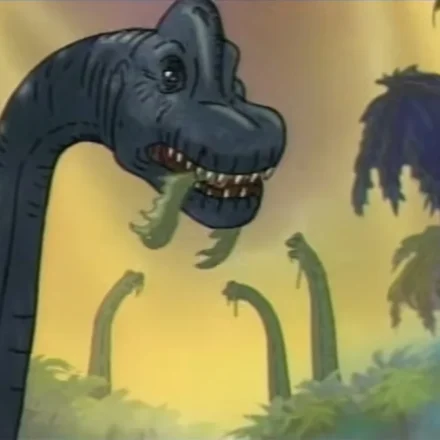
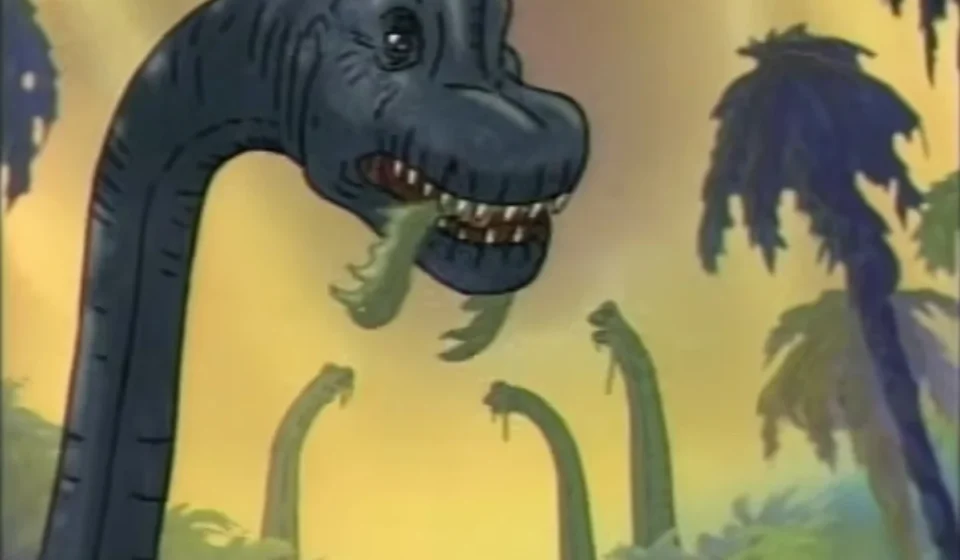
The scope was immense: a full season of 23 episodes was outlined, promising a deep dive into the survivors’ struggle against the prehistoric menagerie of Isla Nublar. The one-minute pitch film—the very piece of footage that has now resurfaced—was designed to showcase the marriage of traditional 90s cel animation and groundbreaking CGI elements, the latter of which were being developed by the visual effects house MetroLight.
Despite this momentum, the project hit a terminal wall during the development phase. The reasons for its demise have remained speculative for 33 years. William Stout has previously recounted that Steven Spielberg was simply "burnt out" on the Jurassic property after the grueling production of the original film and had no appetite to oversee or authorize an animated continuation. However, secondary accounts and industry whispers suggest a more volatile reality: Spielberg was allegedly incensed that the series had been commissioned by the studio without his direct input or blessing. Faced with a lack of support from the franchise’s creator, the studio quietly shelved the project, and the files were relegated to the archives, where they remained untouched until this year.
Technical Ambition: The Marriage of 2D and CGI
What makes the resurfaced footage so compelling is the sheer technical ambition on display. In 1993, the integration of CGI into television animation was in its infancy. By utilizing the talents of MetroLight, the production team aimed to replicate the sense of scale found in the live-action film.

The animation style, as seen in the pitch trailer, captures the distinct aesthetic of the early 90s—a gritty, hand-drawn look that emphasizes lighting, shadow, and scale. Unlike the brightly colored, high-saturation cartoons that defined the decade, this teaser utilizes a palette reminiscent of the source material: deep greens, muddy browns, and the stark, terrifying yellow of the dinosaur’s eyes. The use of CGI, while rudimentary by today’s standards, was revolutionary for a television pitch, intending to give the dinosaurs a sense of weight and "heft" that 2D animation alone could not provide.
This footage serves as a time capsule for an era where the television industry was willing to take massive creative risks to maintain the relevancy of a blockbuster hit. The fact that this material has survived—and is now available for public viewing—allows us to see what could have been a seminal piece of 90s animation.
Official Verification and Fan Reaction
The authenticity of the footage has been thoroughly vetted by Jurassic Outpost, which cross-referenced the video with previously discovered production materials, including storyboards and internal memos from the early 90s. The community response has been overwhelmingly nostalgic, with many fans noting that the mature tone of the series would have been a significant departure from the more sanitized versions of the franchise that emerged in later years.
The discovery was brought to light through the efforts of the archival community, specifically with assistance from @JurassicLibrary on X (formerly Twitter). The video, now hosted on YouTube, provides a direct link to a version of history that was previously accessible only through rumor.

Implications for Franchise Historians
The cancellation of Escape from Jurassic Park represents a major "what if" in the history of science fiction television. Had the show been produced, it could have served as a bridge between the first and second films, potentially establishing a precedent for serialized storytelling that the Jurassic franchise wouldn’t fully embrace until decades later.
Furthermore, the failure of this project underscores the immense influence of the "auteur" director in the 1990s. Spielberg’s refusal to engage with the series highlights a era where the vision of the filmmaker often outweighed the commercial ambitions of the studio. While it is understandable that a director might want to protect the integrity of their vision from being diluted by a spin-off, the loss of Escape from Jurassic Park deprived fans of an ambitious, adult-oriented animated adventure that could have redefined the genre.
Today, as we look back at the footage, we are reminded of the rapid evolution of animation. The industry has moved from the hand-painted cels and experimental CGI of the early 90s to the full-scale, real-time rendering of contemporary shows like Chaos Theory. Yet, there is a haunting quality to the Escape footage that modern animation often lacks. It is a reminder of a time when the "Jurassic" brand was still shrouded in mystery, and the idea of seeing a dinosaur on a television screen was a novelty that required immense creative effort to achieve.
Final Reflections
In the words of the fictional Dr. Hammond, "Everyone in the world has the right to enjoy this." While he was speaking of the park itself, the sentiment rings true for this piece of lost media. The rediscovery of the Escape from Jurassic Park pitch trailer is more than just a curiosity; it is a vital piece of the puzzle that helps us understand the evolution of one of the world’s most enduring franchises.

Whether it would have been a masterpiece or a cautionary tale, we will never know. But for a few minutes, thanks to the internet’s relentless commitment to preservation, we can all step back into 1993, watch the pitch unfold, and imagine a world where the gates to Jurassic Park opened on our television screens. It is a bittersweet reminder that even the most ambitious projects can go extinct, but in the digital age, nothing stays lost forever.